Buceando en Norway
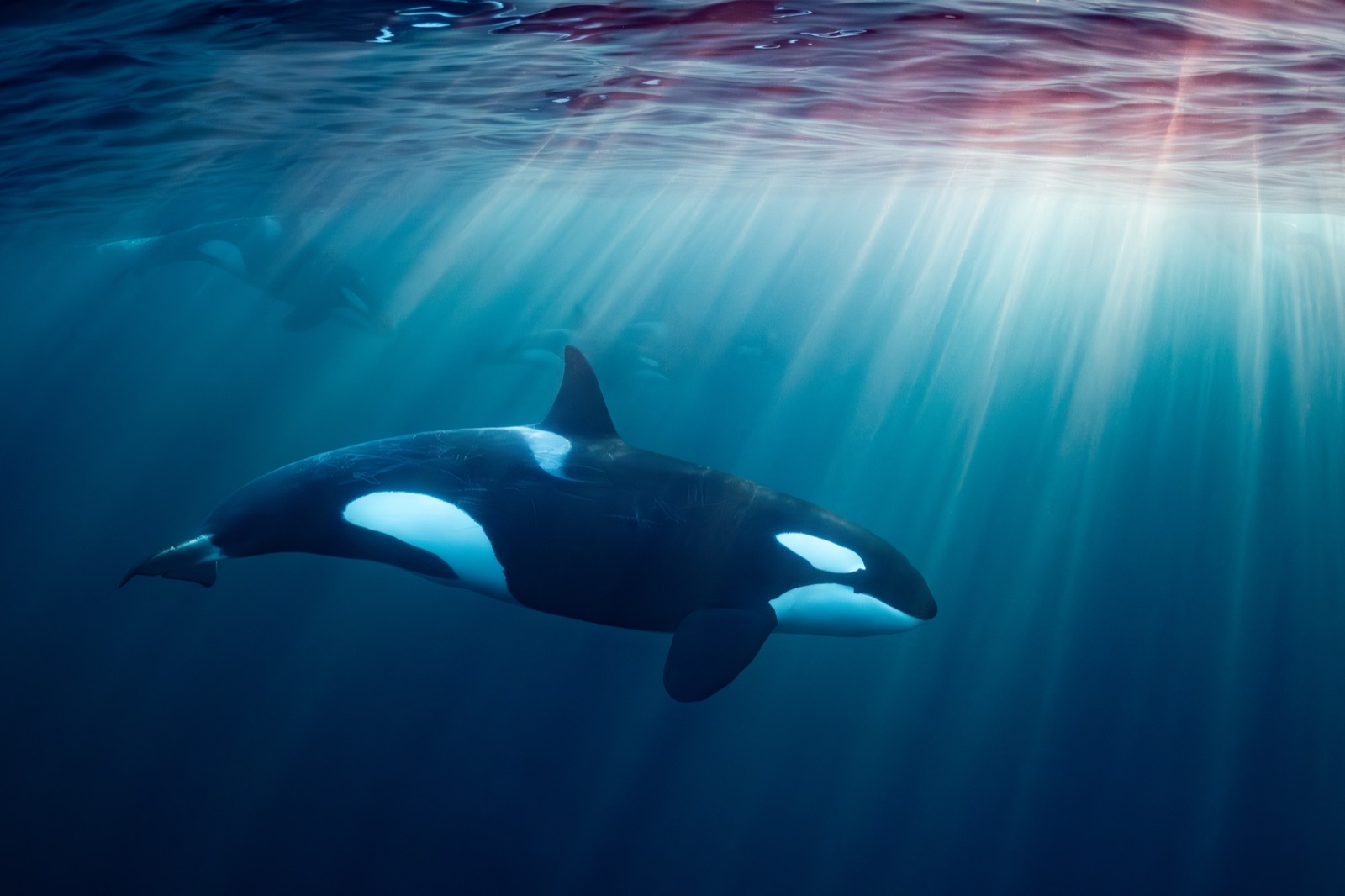
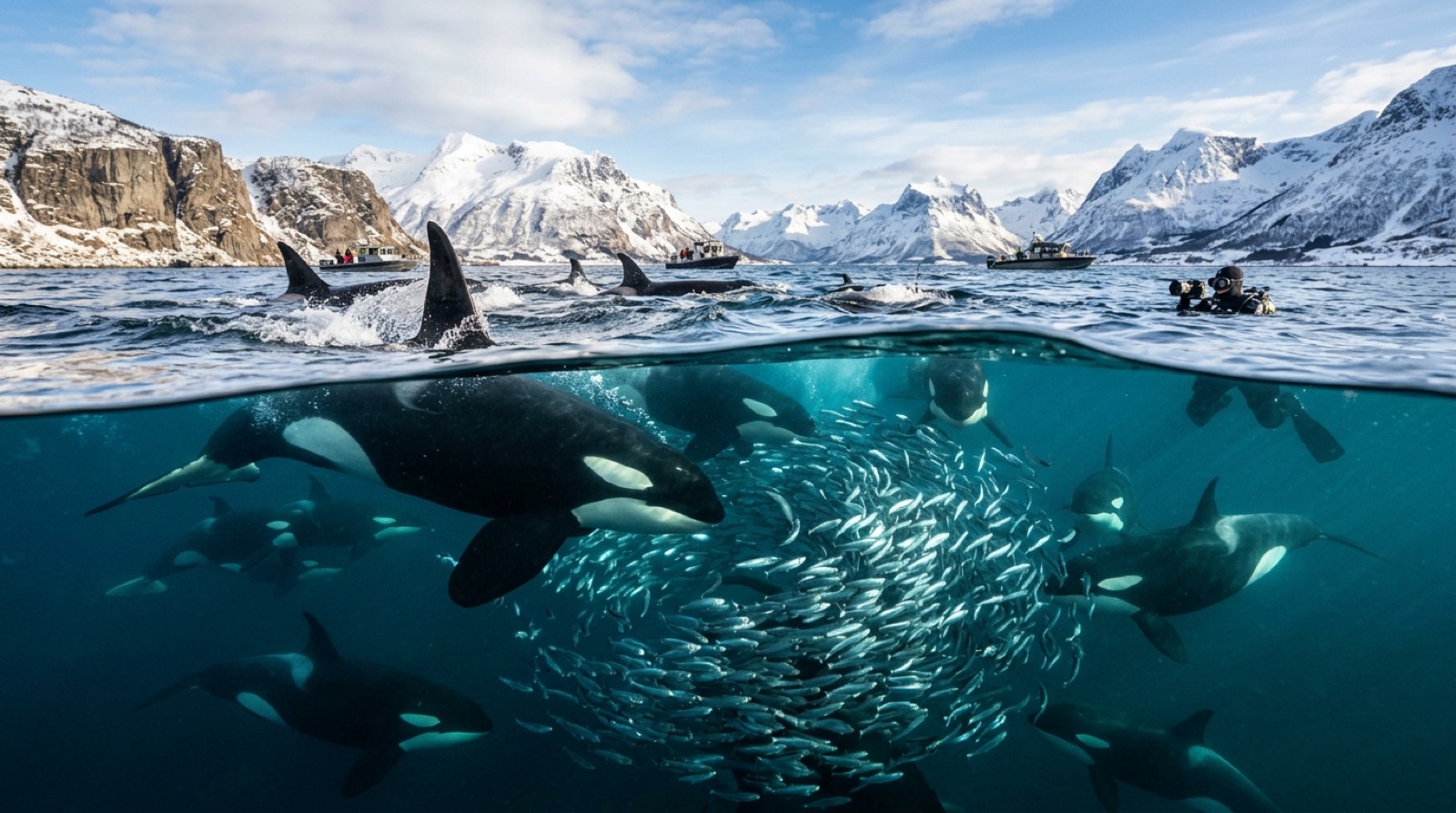
Norway is cold-water diving at its most cinematic, and the registry's focus is the Arctic north, where fjords cut between snow-covered peaks and the sea stays clear and dark through the polar winter. The headline is the herring run: each winter, enormous schools draw orcas and humpback whales into the fjords around Tromsø and Skjervøy, and licensed operators run snorkel encounters with them in near-freezing water under low pink light. Scuba here means kelp forests, wolffish, king crabs in the far northeast, and steep walls dropping into blackness. Everything demands drysuit competence, redundancy, and respect for short daylight and fast weather. It is expensive, logistically serious, and utterly unlike tropical diving; divers come home talking about the light as much as the animals.
Arctic Norway is the registry destination: the Tromsø and Skjervøy area for winter orca and humpback encounters, plus fjord and kelp diving along the northern coast. Operations run from small liveaboards and hardy day boats, with surface intervals spent scanning for blows and, on clear nights, aurora.
Experiencias distintivas: Slipping off a RIB into a bait ball as orcas carousel-feed beneath you; humpbacks lunging through herring in the half-light of polar noon; drysuit dives over kelp and boulder fields; northern lights over the fjord after the boats come in.
Temporadas: The orca and humpback season tracks the wintering herring, roughly late October into January or February in recent years, centered on the fjords north of Tromsø; the aggregation's exact location shifts between years. General fjord diving is possible much of the year, with winter often bringing the clearest water.
Los destinos
Puntos de buceo destacados
| Sitio | Destino | Tipo | Profundidad | Nivel |
|---|---|---|---|---|
| Georg Thiele | Arctic Norway | Wreck | — | Advanced |
| Saltstraumen | Arctic Norway | Channel | 5–30 m | Advanced |
| Skjervoy Orca Grounds | Arctic Norway | Blue water | 0–5 m | Advanced |
Todos los puntos cartografiados en Norway →
Vida marina
El archivo práctico
Cómo llegar: Fly to Oslo (OSL) and connect to Tromsø (TOS), the practical hub for Arctic operations; some seasonal direct flights reach Tromsø from European cities. Skjervøy and the fjords are reached by road transfer or expedition boat from Tromsø.
Entrada y visados: Norway is in the Schengen area, so Schengen short-stay rules apply for most visitors; verify current requirements for your nationality before travel.
Cuánto cuesta bucear: Norway is one of Europe's most expensive countries, and multi-day whale expeditions or liveaboard berths commonly run into the low thousands of US dollars per person; day diving, food, and lodging all price well above European norms.
Idioma: Norwegian is the national language; English is spoken fluently almost everywhere, including by dive and expedition crews.
Propinas: Tipping is not expected; rounding up a bill or leaving 5-10 percent for excellent service is plenty.
Seguridad en el viaje: Norway is extremely safe as a country; the risks are environmental. Near-freezing water, wind chill, short polar daylight, and fast-changing sea states demand real cold-water experience, quality exposure protection, and conservative planning. Snorkeling with feeding whales is regulated and should only be done with licensed, briefed operators.
Cobertura de recompresión: Norway maintains hyperbaric medicine capability at major hospitals, including Haukeland University Hospital in Bergen and the University Hospital of North Norway in Tromsø. Emergencies go through 113 and DAN; availability and referral routes change.