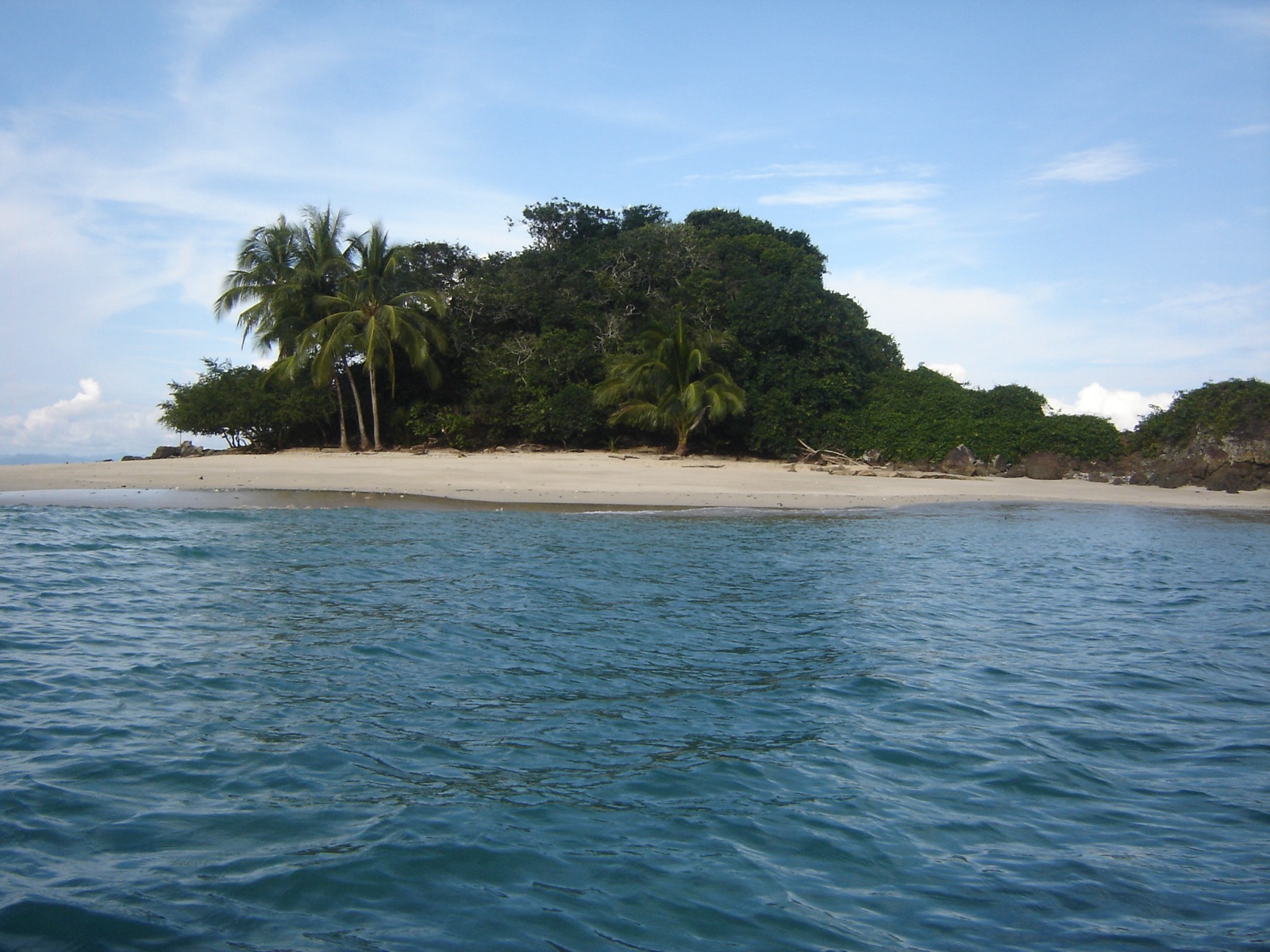
Coiba
Coiba, the largest island in Central America and a former Panamanian penal colony until 2004, anchors a UNESCO-listed national park in the Gulf of Chiriqui. Its isolation as a prison kept the forests and reefs largely intact, and today day boats from the surf town of Santa Catalina work pinnacles and islets where whitetip reef sharks pile up by the dozen, whale sharks cruise through in the dry season, and humpbacks fill the channels with song from July to October.
Por qué bucear aquí
Coiba offers Pacific-Panama diving with the volume turned up but the logistics kept simple. An hour's boat ride from Santa Catalina puts you inside the park, where sites like Granito de Oro pack whitetip reef sharks, turtles, eagle rays, and thick snapper schools into an area the size of a football field. Upwellings from January to April drag in cool, rich water and with it the headline animals: whale sharks on the outer banks, mobulas, and occasional hammerhead schools over deeper structure like Hannibal Bank. The southern-hemisphere humpback migration parks itself in the gulf from about July through October, and hearing whales is routine even when seeing them is luck. Visibility is honest Gulf of Chiriqui fare - green some days, 25 m on others - and thermoclines can drop the temperature sharply mid-dive. The reward for accepting that variability is a big, lightly dived marine landscape where the prison-era emptiness still shows in the fish sizes.
Mes a mes
December-April (dry season) brings the calmest seas, the best visibility, and the strongest whale shark odds, along with cool upwelled water. July-October is rainy and greener but adds humpback whales; May-June and November are transitional.
| Mes | Agua | Visibilidad | Cómo es |
|---|---|---|---|
| January●●●●● | 22–28 °C / 72–82 °F | 12–25 m | Dry season; upwelling cools the water and draws big animals. |
| February●●●●● | 21–27 °C / 70–81 °F | 12–25 m | |
| March●●●●● | 21–27 °C / 70–81 °F | 12–25 m | Strong whale shark window on the outer sites. |
| April●●●●○ | 22–28 °C / 72–82 °F | 12–25 m | |
| May●●●○○ | 25–29 °C / 77–84 °F | 8–18 m | |
| June●●●○○ | 25–29 °C / 77–84 °F | 8–18 m | |
| July●●●●○ | 25–29 °C / 77–84 °F | 8–18 m | Humpbacks arrive in the gulf. |
| August●●●●○ | 25–29 °C / 77–84 °F | 8–18 m | |
| September●●●●○ | 25–29 °C / 77–84 °F | 8–18 m | Whale song on most dives; rain squalls between boats. |
| October●●●○○ | 25–29 °C / 77–84 °F | 8–18 m | |
| November●●●○○ | 25–29 °C / 77–84 °F | 10–20 m | |
| December●●●●○ | 24–29 °C / 75–84 °F | 12–25 m | Seas settle as the dry season begins. |
Confianza en los datos mensuales: Editorial estimate. Los meses sin fila no tienen datos verificados. Preferimos mostrar una laguna antes que inventarla.
Los puntos de buceo (4)
| Sitio | Tipo | Profundidad | Nivel | Acceso | |
|---|---|---|---|---|---|
| Bajo Veinte Baitball crowns, whitetips in the gullies, cool-season pelagic wildcards | Pinnacle | 12–30 m | Intermediate | Boat | |
| Granito de Oro Whitetips by the dozen in the shallows, turtles at close range, a reef that… | Reef | 3–18 m | Beginner | Boat | |
| Hannibal Bank Seasonal whale sharks, hammerheads below the thermocline, big-fish traffic… | Seamount | 18–40 m | Advanced | Boat | |
| Islas Frijoles Frogfish and seahorse hunting, nudibranch variety, gentle profiles close to… | Reef | 8–25 m | Intermediate | Boat |
Cómo llegar y dónde alojarse
Cómo llegar: Fly to Panama City, drive or take buses via Santiago to Santa Catalina, then ride 45-75 minutes by boat into the park. There is no airstrip service for visitors and no fuel dock inside the park - everything stages from Santa Catalina.
Dónde alojarse: Santa Catalina is a small surf-and-dive town with guesthouses and a few dive shops; basic ranger-station bunks on Coiba itself can be booked for multi-day trips.
Costes: Two-tank park trips from Santa Catalina generally run about US$110-170 plus the Coiba National Park fee. Multi-day stays at the park ranger station can be arranged through operators.
Entre inmersiones: Surfing at Santa Catalina, park hikes to see scarlet macaws and monkeys, snorkeling at Granito de Oro, and the sobering remains of the penal colony.
Esnórquel: Granito de Oro is a first-rate snorkel stop with turtles and whitetips in a few meters of water.
Seguridad y aspectos prácticos
Riesgos: Currents around exposed pinnacles, abrupt thermoclines, variable visibility, long boat rides in open water, and afternoon squalls in the wet season. Crocodiles inhabit Coiba's rivers and mangroves - a shore hazard to respect, not a dive-site one.
Standard recreational care plus park discipline: dive with the guide, carry a DSMB for the outer sites, and build conservative profiles - the nearest substantial medical care is hours away on the mainland, so emergencies go through EMS and DAN.