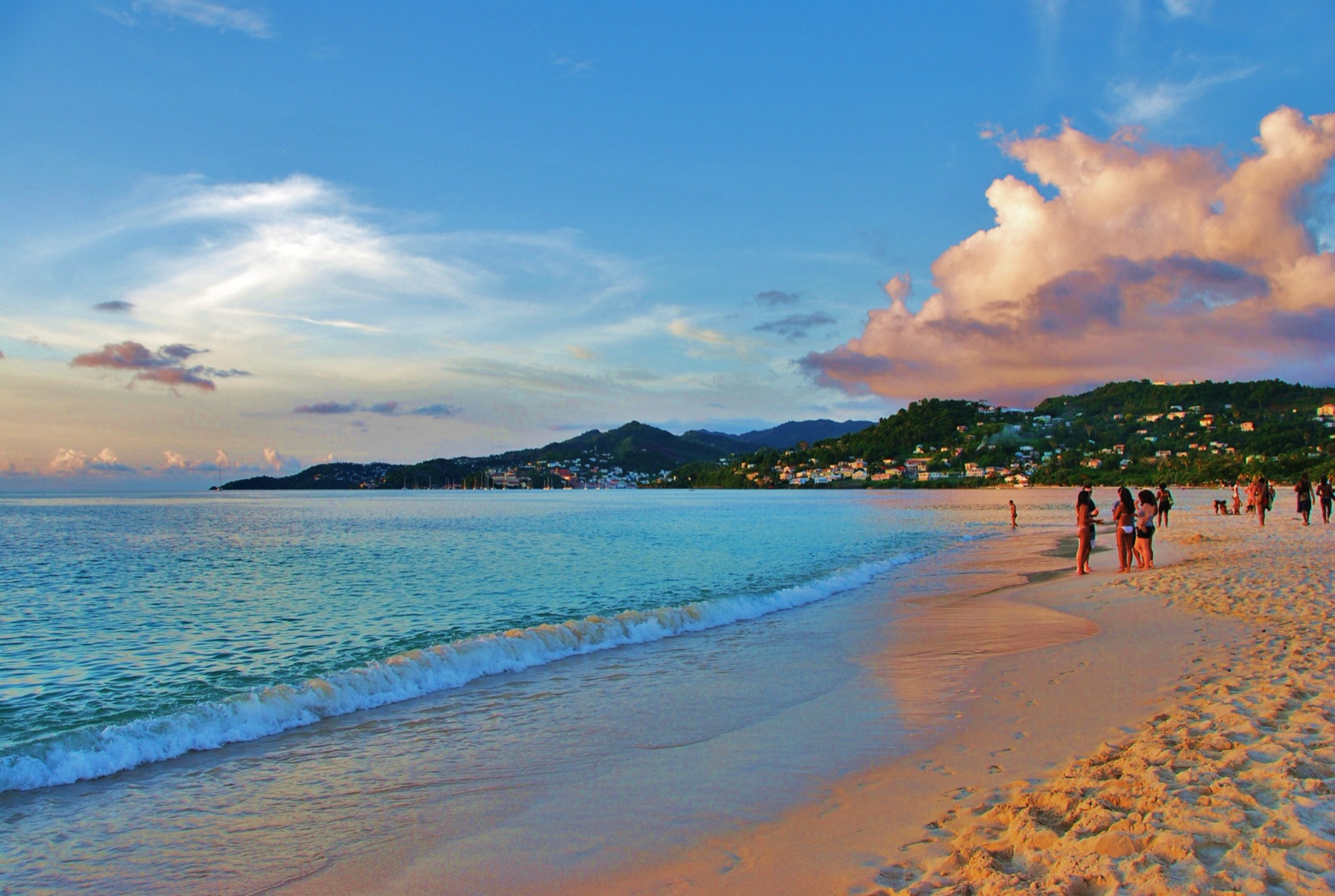
Grenada
Grenada markets itself as the wreck capital of the Caribbean, and the claim rests on one extraordinary hull: the Bianca C, a 180-meter ocean liner lying in deep water off Grand Anse. Around it, the island stacks up smaller wrecks, drift dives streaming with creole wrasse, and the world's first underwater sculpture park, all within a short run of St George's picture-book harbor.
Why dive here
The Bianca C alone justifies the flight for experienced divers: a genuine cruise liner, burned and sunk in 1961, whose swimming pool and tilting decks now loom out of the blue at depths that demand respect and reward it with eagle rays and barracuda. But Grenada is not a one-wreck town. The Shakem sits upright with its cement cargo still stacked in the holds, reef dives like Flamingo Bay and Purple Rain run as easy drifts through dense soft coral and fish schools, and the Molinere sculpture park has grown from an art project into a working artificial reef where corals slowly claim a ring of cast figures. Conditions favor drift-style diving on the Atlantic-influenced sites, while the leeward coast stays gentle enough for training. Add nutmeg-scented hills, waterfalls, and a working spice economy ashore, and it is an unusually complete island for mixed groups.
Month by month
December-May is the dry season with the most settled seas. Grenada sits at the southern edge of the hurricane belt but is not immune, as Hurricane Ivan proved in 2004; late summer warrants forecast-watching.
| Month | Water | Visibility | What it's like |
|---|---|---|---|
| January●●●●● | 26–27 °C / 79–81 °F | 15–30 m | |
| February●●●●● | 26–27 °C / 79–81 °F | 15–30 m | |
| March●●●●● | 26–27 °C / 79–81 °F | 15–30 m | |
| April●●●●● | 26–28 °C / 79–82 °F | 15–30 m | |
| May●●●●○ | 27–28 °C / 81–82 °F | 15–30 m | |
| June●●●○○ | 27–29 °C / 81–84 °F | 12–25 m | Wet season begins. |
| July●●●○○ | 28–29 °C / 82–84 °F | 12–25 m | |
| August●●●○○ | 28–30 °C / 82–86 °F | 12–25 m | |
| September●●●○○ | 28–30 °C / 82–86 °F | 12–25 m | Peak of the Atlantic storm season. |
| October●●●○○ | 28–29 °C / 82–84 °F | 12–25 m | |
| November●●●●○ | 27–29 °C / 81–84 °F | 15–30 m | |
| December●●●●○ | 26–28 °C / 79–82 °F | 15–30 m |
Monthly figures confidence: Editorial estimate. Months without a row have no verified data. We would rather show a gap than invent one.
The dive sites (5)
| Site | Type | Depth | Level | Access | |
|---|---|---|---|---|---|
| Bianca C Cruise liner scale, the famous pool deck, eagle rays in the blue | Wreck | 28–50 m | Advanced | Boat | |
| Flamingo Bay Dense soft-coral color, seahorse hunting, gentle multi-level profile | Reef | 6–25 m | Beginner | Boat | |
| Molinere Underwater Sculpture Park Vicissitudes ring of figures, art dissolving into reef, easy shallow profile | Artificial reef | 3–9 m | Beginner | Boat | |
| Purple Rain Sheets of creole wrasse, relaxed scrolling drift, regular turtles | Reef | 10–20 m | Beginner | Boat | |
| Shakem Upright intact freighter, cement cargo still in the holds, easy layout to… | Wreck | 22–32 m | Advanced | Boat |
Marine life you can plan around
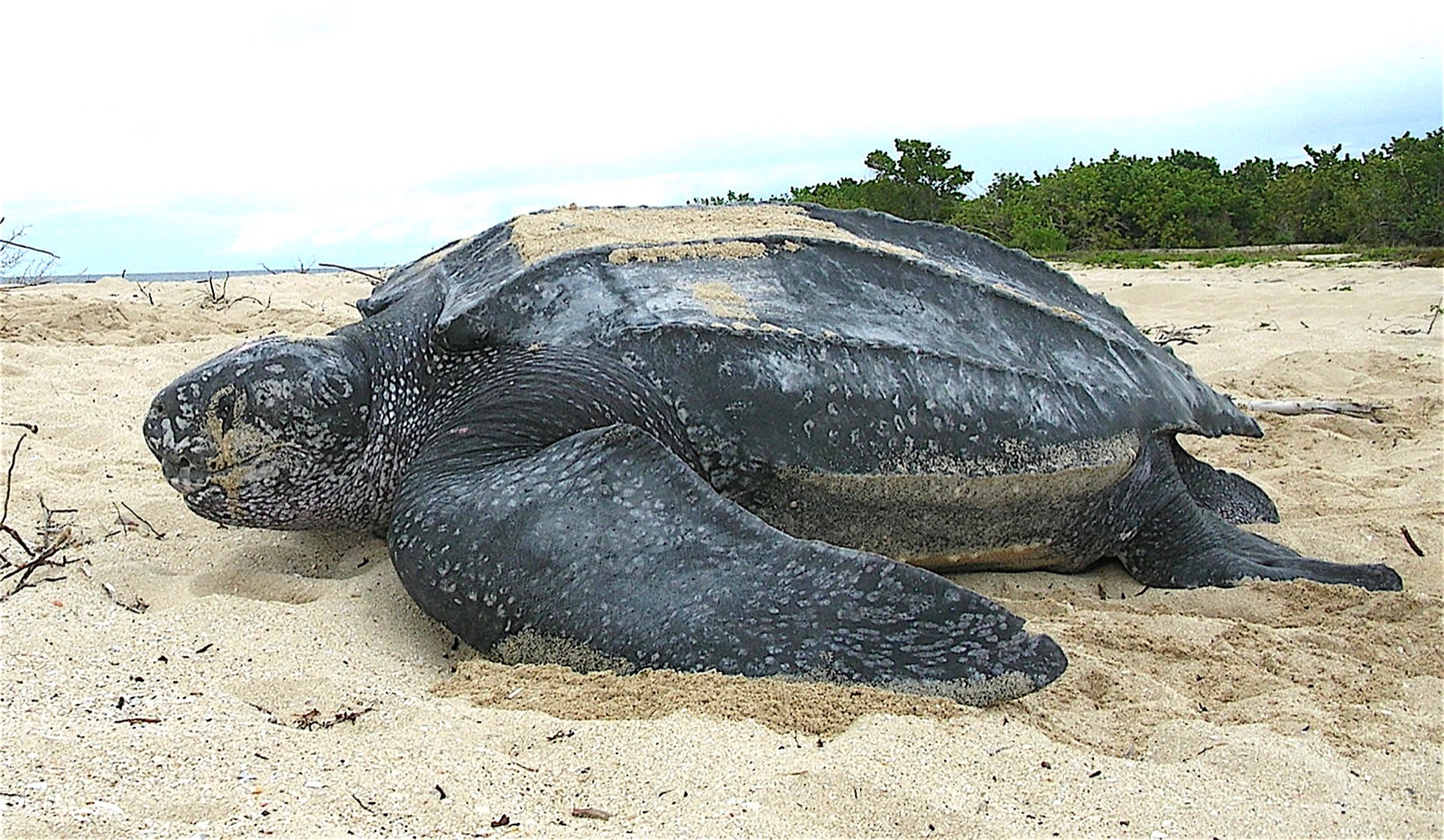
Green and hawksbill turtles are regulars, southern stingrays and spotted eagle rays work the sand around the wrecks, and nurse sharks tuck under ledges. Creole wrasse stream over the reefs in huge violet schools, with barracuda supervising from above. Seahorses turn up for sharp-eyed guides.
Wrecks here
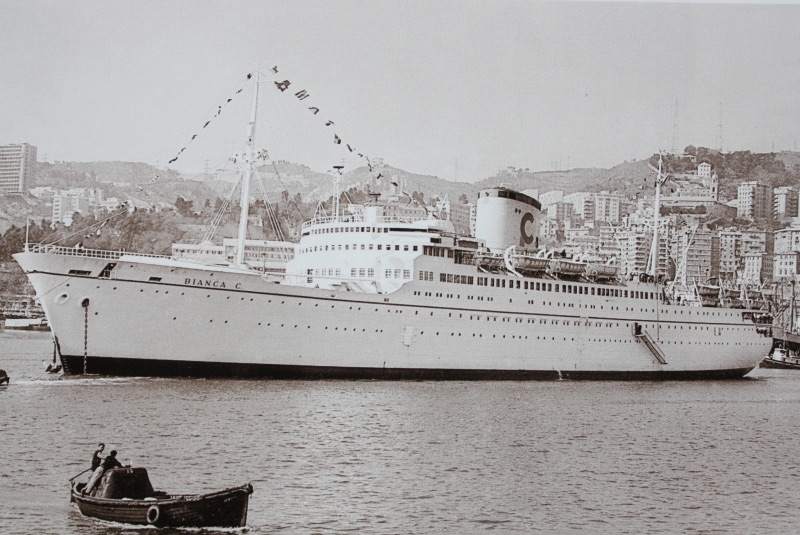
Bianca C
Getting there & staying
Getting there: Direct flights arrive from the US, Canada, UK, and Caribbean hubs. Most operators work from Grand Anse or St George's, minutes from the main sites.
Where to stay: Grand Anse puts the beach, the boats, and the restaurants within walking distance; quieter lodges dot the southern coast.
Costs: Bianca C trips usually price as premium dives. Editorial estimate; confirm current rates.
Between dives: Spice plantations and nutmeg stations, Grand Etang's crater lake and monkeys, waterfalls, and Friday fish fries at Gouyave.
Safety & practicalities
Hazards: The Bianca C is deep, often current-swept, and unforgiving of poor gas planning; several sites sit in open water where surface conditions change quickly.
Treat the Bianca C as an advanced dive with hard limits; most of the ship lies beyond recreational depths and the current can be strong at the mooring.
Nearest recompression: A recompression chamber has operated on Grenada; availability changes, so emergencies go through EMS and DAN first.