Little Cayman
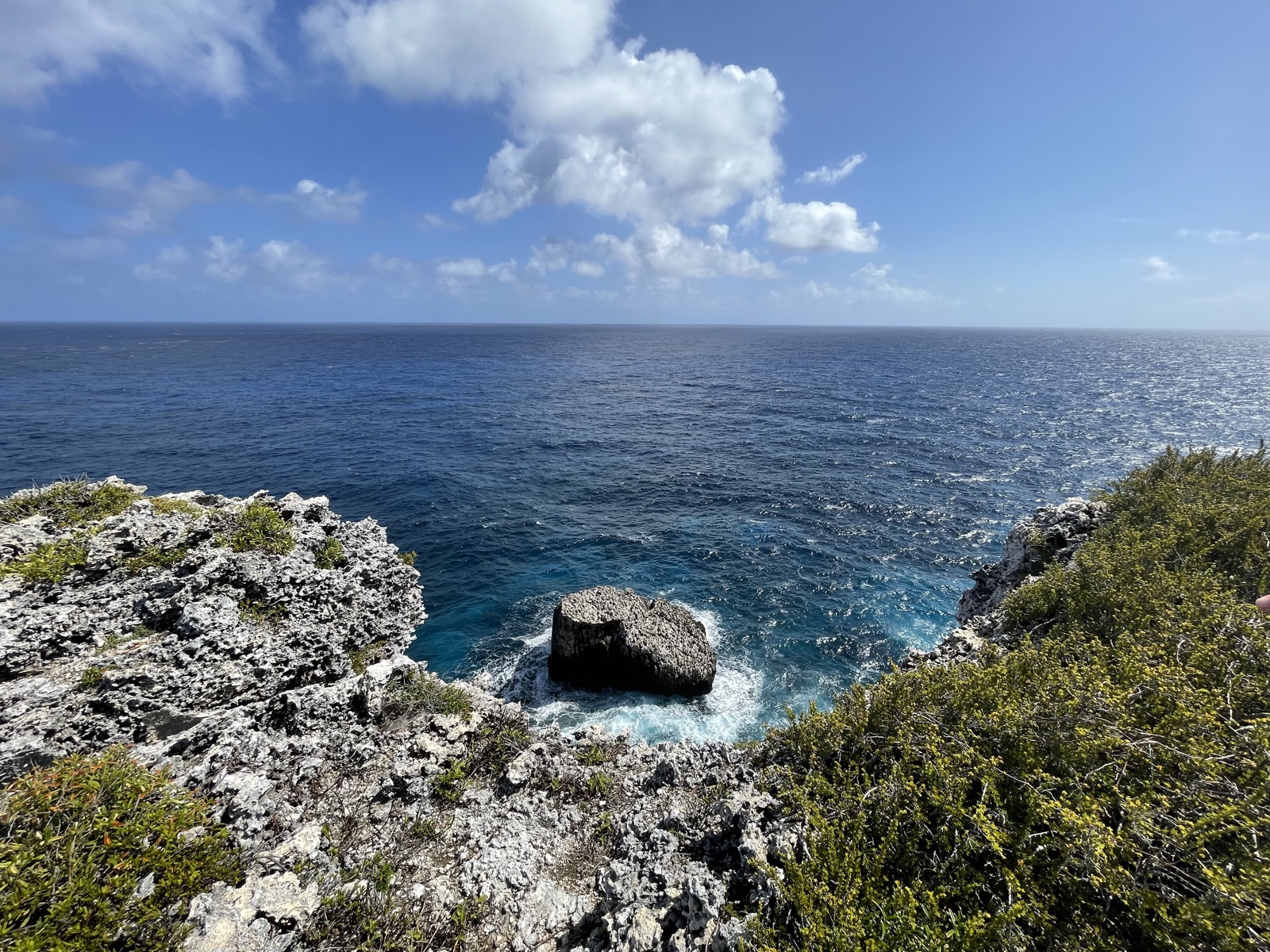
Little Cayman is a ten-mile island with a few hundred residents and one of diving's most storied walls. Bloody Bay Wall begins in five or six meters of turquoise water and drops, vertically and in places undercut, into deep blue, an edge you can peer over from snorkel depth. Add tame Nassau groupers, a marine-park mooring system, and near-zero crowds, and it is the Caribbean at its most distilled.
Why dive here
The wall is the reason. Along Bloody Bay and Jackson Bight the reef shelf is barely a boat-length wide, so you fin from bright sand straight over a lip that falls away like the side of a building. Sites read as variations on that theme: the sheer face of Great Wall, the chimney and arches at Randy's Gazebo, the sand chute at Mixing Bowl where two marine parks meet. Sponges (rope, barrel, and vase) do the decorating, and Nassau groupers follow divers around with terrier confidence, a legacy of decades of protection and the Grouper Moon research project on the island's spawning aggregation. Trips often add the Captain Keith Tibbetts, a Russian-built frigate scuttled off neighboring Cayman Brac in 1996. Diving here is unhurried: small resorts, repeat guests, two-tank mornings, and an island where bicycles outnumber cars.
Month by month
Bloody Bay faces north, so winter cold fronts can push boats to the south side for a day or two; late spring through summer gives the most reliable access to the marquee wall. September–October is hurricane season's peak.
| Month | Water | Visibility | What it's like |
|---|---|---|---|
| January●●●●○ | 26–27 °C / 79–81 °F | 20–40 m | Clear water; fronts can close Bloody Bay. |
| February●●●●○ | 26–27 °C / 79–81 °F | 20–40 m | Dry season; north side weather-dependent. |
| March●●●●○ | 26–27 °C / 79–81 °F | 20–40 m | Settling seas; grouper season ends. |
| April●●●●● | 27–28 °C / 81–82 °F | 25–40 m | Calm, clear, reliable wall access. |
| May●●●●● | 27–29 °C / 81–84 °F | 25–40 m | Prime conditions on the north wall. |
| June●●●●● | 28–29 °C / 82–84 °F | 25–40 m | Warm, flat mornings. |
| July●●●●● | 28–30 °C / 82–86 °F | 25–40 m | Hot; long calm spells. |
| August●●●●○ | 29–30 °C / 84–86 °F | 20–40 m | Warmest water; tropical systems possible. |
| September●●●○○ | 29–30 °C / 84–86 °F | 15–30 m | Peak storm risk; some resorts close. |
| October●●●○○ | 28–30 °C / 82–86 °F | 15–30 m | Unsettled; season restarts late month. |
| November●●●●○ | 27–29 °C / 81–84 °F | 20–35 m | Drying; first fronts of winter. |
| December●●●●○ | 26–28 °C / 79–82 °F | 20–40 m | Clear water between northers. |
Monthly figures confidence: Documented. Months without a row have no verified data. We would rather show a gap than invent one.
The dive sites (5)
| Site | Type | Depth | Level | Access | |
|---|---|---|---|---|---|
| Great Wall (Bloody Bay) A sheer face beginning at 6 m, sponge-packed vertical terrain, wall scenery… | Wall | 5–40 m | Intermediate | Boat | |
| MV Captain Keith Tibbetts Cold War frigate with gun turrets, the storm-torn break amidships, easy… | Wreck | 12–27 m | Intermediate | Boat | |
| Marilyn's Cut Escort-service Nassau groupers, the sponge-lined cut, pristine vertical… | Wall | 6–35 m | Intermediate | Boat | |
| Mixing Bowl Two reef styles from one mooring, the sand amphitheater, jawfish and rays… | Wall | 5–35 m | Beginner | Boat | |
| Randy's Gazebo The arch, the chimney descent through the reef, dense wall decoration. | Wall | 6–35 m | Intermediate | Boat |
Wrecks here
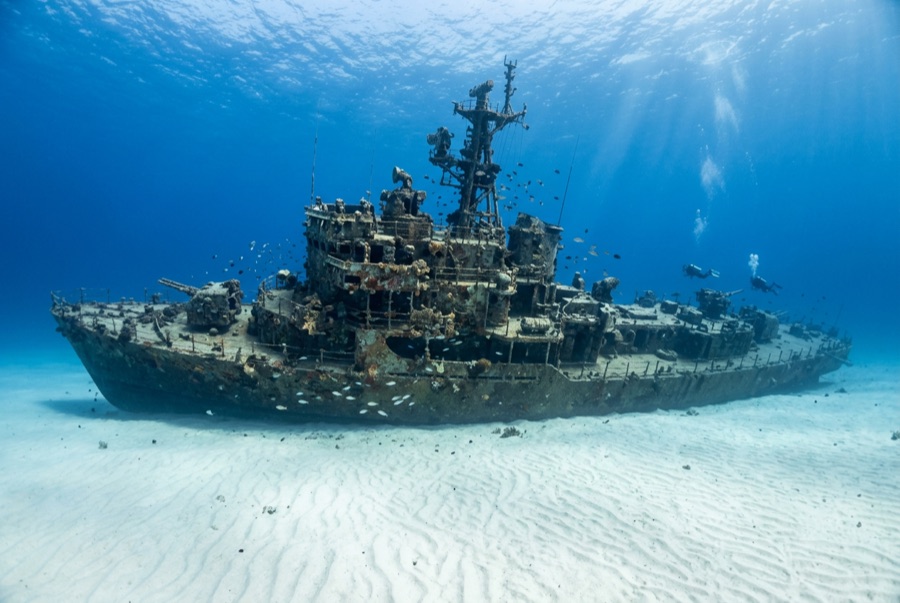
MV Captain Keith Tibbetts
Getting there & staying
Getting there: Fly to Grand Cayman, then a short island-hopper to Little Cayman's airstrip. Resorts collect guests from the runway; some itineraries pair the island with Cayman Brac.
Where to stay: A handful of dive lodges and condos line the south coast; book well ahead for winter and spring weeks.
Costs: Most diving is sold through small resort packages including boats and meals; walk-in two-tanks are possible but the island runs on weekly bookings.
Between dives: The booby-colony viewing platform on the Booby Pond reserve, kayaking Owen Island, bonefishing the flats, and very little else. That is the point.
Safety & practicalities
Hazards: The wall's top is shallow but its face is bottomless; depth creep is the main risk. Winter swell can make north-side moorings untenable.
Plan wall dives as multilevel profiles with a hard floor and generous reserve; the clarity flatters depth. Give the groupers their space even when they insist otherwise: no touching, no feeding.
Nearest recompression: The nearest hyperbaric chamber is on Grand Cayman; evacuation adds time, so dive conservatively and route emergencies through EMS and DAN.