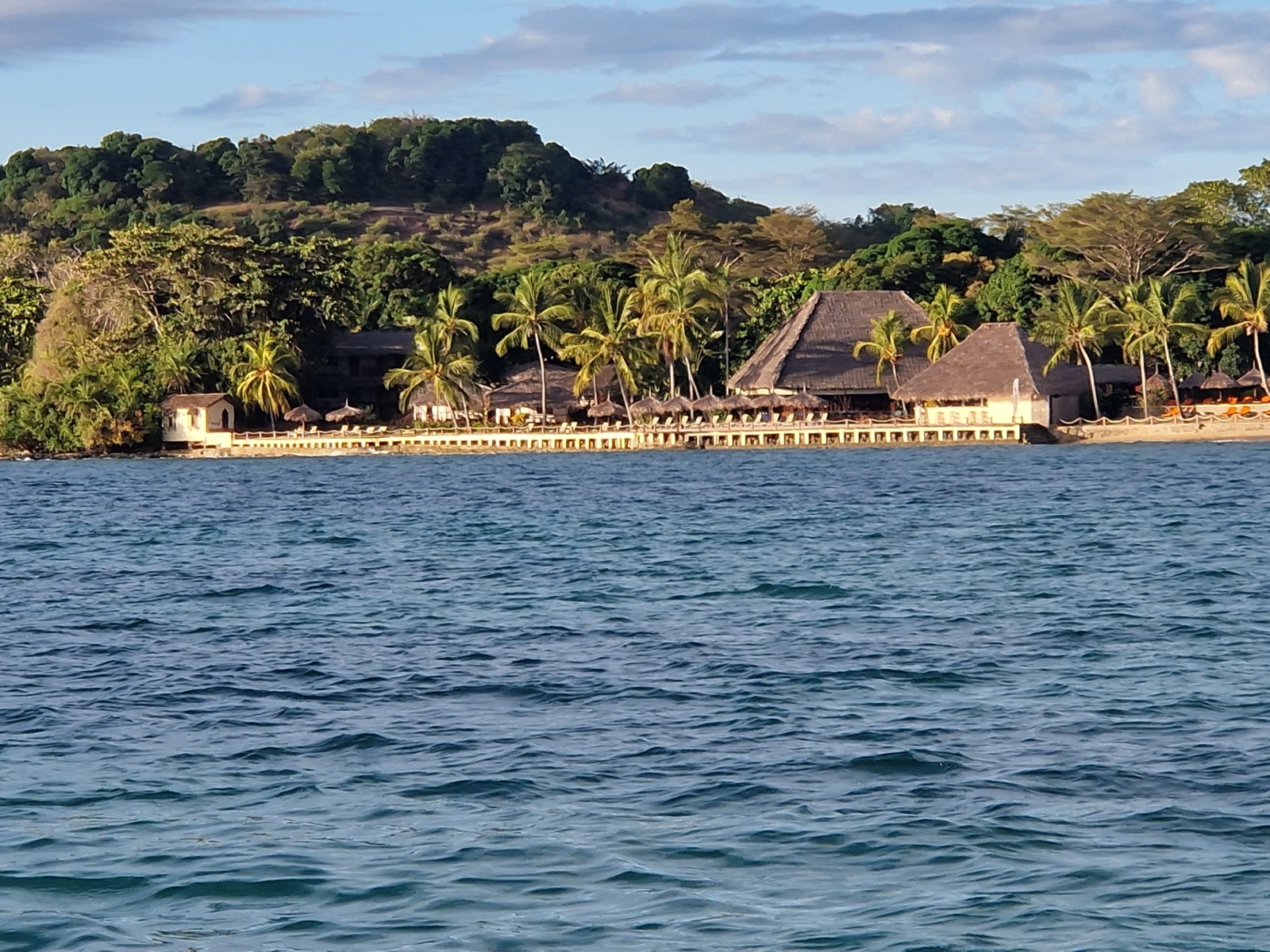
Nosy Be
Nosy Be, off Madagascar's northwest corner, mixes easy reef diving with a serious seasonal show: from roughly September to December, whale sharks feed in the surrounding channels, often alongside mobula rays and, a global rarity, Omura's whales. The Nosy Tanikely marine reserve delivers turtles and dense small-fish life minutes from shore, green turtles graze the seagrass off Sakatia, and humpbacks fill the winter months. Infrastructure is simple; the biology is not.
为何选择这里潜水
Nosy Be's calling card is the spring plankton season, when juvenile whale sharks gather to feed in the lee of the island. Encounters run snorkel-style from small boats, frequently sharing water with mobulas, and the same season brings regular sightings of Omura's whale, a species barely known to science until researchers began documenting the population here in the 2010s. Below the surface the year is steadier: Nosy Tanikely, a small island reserve, packs turtles, anemonefish colonies, octopus, and nudibranch-rich rubble into an easy, protected dive and snorkel site; Sakatia's seagrass meadows host grazing green turtles at close range. Visibility is honest rather than heroic, and the far-flung Mitsio and Radama archipelagos reward those who take multi-day trips. July through September adds humpbacks on every crossing. Madagascar asks more logistics than the Maldives or Zanzibar, and repays it with encounters few dive destinations can list at all.
逐月概览
The dry season runs roughly April-November. September-December is the whale shark and Omura's window; July-September brings humpbacks; January-March is cyclone-prone and wet, with reduced operations.
| 月份 | 水况 | 能见度 | 体验如何 |
|---|---|---|---|
| January●●○○○ | 28–30 °C / 82–86 °F | 8–15 m | Rainy season; storms and reduced visibility. |
| February●●○○○ | 28–30 °C / 82–86 °F | 8–15 m | Wettest month; cyclone risk. |
| March●●●○○ | 28–30 °C / 82–86 °F | 8–18 m | Rains taper. |
| April●●●●○ | 28–30 °C / 82–86 °F | 10–20 m | Drying; calm seas return. |
| May●●●●○ | 27–29 °C / 81–84 °F | 12–25 m | Dry season; settled diving weather. |
| June●●●●○ | 26–28 °C / 79–82 °F | 12–25 m | Cooler and clear; humpbacks arrive. |
| July●●●●○ | 25–27 °C / 77–81 °F | 12–25 m | Humpback season in full swing. |
| August●●●●○ | 25–27 °C / 77–81 °F | 12–25 m | Whales and calm mornings; coolest water. |
| September●●●●● | 25–28 °C / 77–82 °F | 12–25 m | Humpbacks linger; first whale sharks. |
| October●●●●● | 26–29 °C / 79–84 °F | 12–25 m | Whale shark season builds; Omura's whales about. |
| November●●●●● | 27–29 °C / 81–84 °F | 10–20 m | Whale sharks most reliable; warm and calm. |
| December●●●○○ | 28–30 °C / 82–86 °F | 8–18 m | Heat and first rains; whale sharks taper. |
月度数据置信度: Documented. 没有对应行的月份表示暂无核实数据。我们宁愿留白,也不愿凭空填写。
潜点 (4)
| 潜点 | 类型 | 深度 | 级别 | 访问 | |
|---|---|---|---|---|---|
| Manta Point (Nosy Be) Seasonal chance of mantas at an offshore cleaning bank | Reef | — | Intermediate | Boat | |
| Nosy Be Whale Shark Grounds Snorkel encounters with feeding juvenile whale sharks, mobulas alongside | Blue water | 0–10 m | Beginner | Boat | |
| Nosy Tanikely Madagascar's most reliable reef: turtles, dense fish, easy conditions | Reef | 2–18 m | Beginner | Boat | |
| Sakatia Turtle Grounds Large grazing green turtles at snorkel depth, meters from shore | Shore | 1–8 m | Beginner | Shore |
抵达与住宿
如何抵达: Fly to Nosy Be via Antananarivo, Réunion, or seasonal regional links; transfers cross the island by road to Ambatoloaka and the west-coast beach bases.
住宿推荐: Ambatoloaka and Madirokely concentrate dive operators and nightlife; quieter lodges sit on Sakatia and the northwest beaches.
费用: Diving is reasonably priced; whale shark and whale-watching excursions are sold separately, and marine-reserve fees apply at Tanikely.
两潜之间: Lokobe reserve's lemurs, ylang-ylang and rum distillery tours, Nosy Komba village visits, sunset dhow sails, and Mont Passot's crater-lake viewpoints.
浮潜: Whale shark trips are snorkel-based, Tanikely is a first-class snorkel reserve, and Sakatia's turtle seagrass sits in a few meters of water.
安全与实用信息
危险因素: Boat traffic in the whale shark season, tidal currents between islands, and remoteness (medical infrastructure is thin across Madagascar).
Keep encounters to code-of-conduct distances (no touching, no chasing, boats at idle), and dive well within limits given the distance to advanced medical care.
最近的减压舱: No recompression chamber serves Nosy Be; serious cases mean long-distance evacuation. Dive conservatively, and emergencies go through local EMS and DAN.