Gear · Photography
Cameras & Housings
From compacts in polycarbonate to mirrorless systems in machined aluminum: how housings, ports, and O-ring discipline actually work, and what the full system honestly costs.
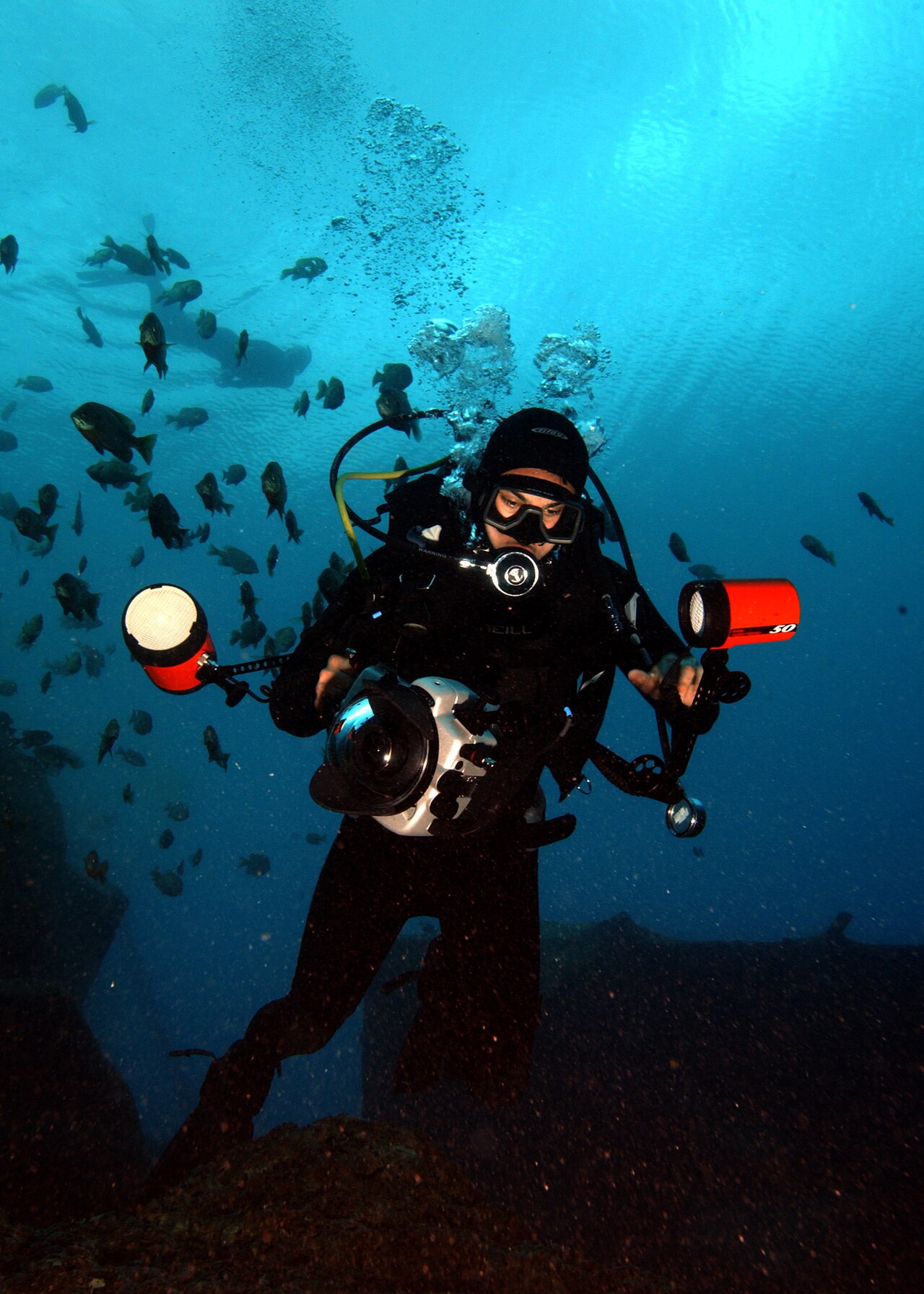
Underwater photography is a systems purchase disguised as a camera purchase. The camera is the smallest decision; around it stack a housing matched to that exact body, a port matched to each lens, lighting to put color back into the water, and the arms and trays that hold it all - and the stack's price routinely exceeds the camera's several times over. Understanding that early prevents the classic mistake of buying a wonderful camera nobody makes a good housing for.
The paths are three. Compact cameras in manufacturer or third-party polycarbonate housings are the gentle entry: small, flight-friendly, and capable of superb results within their sensor limits, especially for macro. Mirrorless systems in machined aluminum housings are the modern center of gravity - large sensors, interchangeable lenses behind dome or flat ports, controls translated through buttons and levers to your thumbs - at real cost and real bulk. Full-frame systems extend the same logic upward for specialists. Within any path, the housing questions repeat: depth rating comfortably beyond your diving, controls reachable with gloves, port availability for the lenses you actually want - wide zooms behind domes, macro lenses behind flat ports - and, increasingly standard, a vacuum-check system that lets you pull a slight vacuum before the dive and verify overnight that the seal holds. That one feature has prevented more floods than any other invention in the field.
Floods are the discipline that keeps the hobby honest. Housings seal on O-rings, and O-rings fail almost exclusively through operator ritual: a hair or grain of sand on the seal, a twisted ring, grease used as glue rather than lubricant. The countermeasures are unglamorous and absolute - inspect and clean the main ring every session under good light, grease sparingly, close the housing in a dry calm place rather than a rocking camera table, and treat the first minutes of every dive as a leak check with eyes on the housing. Insurance for flood-prone rigs exists through dive-equipment insurers and is worth honest consideration once the system's value passes comfortable-loss territory.
Money, in ranges because configurations sprawl: compact camera plus housing commonly lands around US$500-1,200 all-in; mirrorless body, aluminum housing, one port, and a used lens rarely start below US$2,500-4,000; and lighting - covered in its own guide - adds more. The used market is unusually liquid and unusually sane, because housings only fit their one camera generation; buying the previous generation complete is the community's standard thrift move. Prices here are the housing-and-camera core: roughly US$200-600 for compact housings alone, US$1,500-4,000 for aluminum system housings.
Travel is its own skill: camera, housing, and glass fly carry-on, padded and within weight rules, while trays, arms, and clamps ride checked; domes travel in covers and never touch anything harder than neoprene. And the oldest advice in the field still leads every honest guide: bring your buoyancy before you bring a camera. A photographer who cannot hover is a reef hazard holding an expensive distraction - the camera should arrive after the skills, and it rewards the wait.
Prices are honest market ranges, not offers; no manufacturer pays for placement here.