Gear · Accessories
Dive Bags
Mesh for the boat, wheels for the airport, dry bags for everything that must not get wet: choosing luggage that protects gear without eating your baggage allowance.
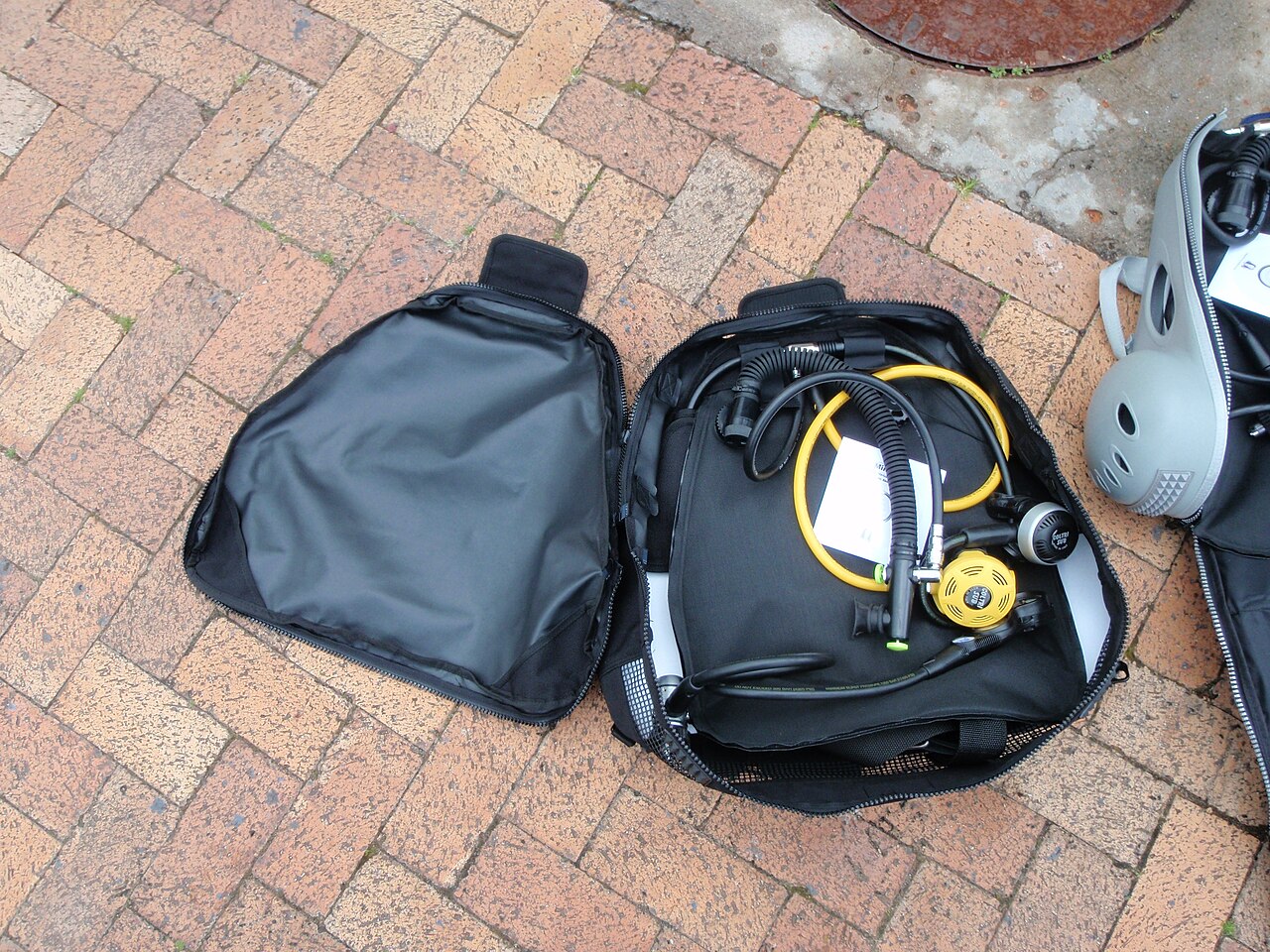
Dive gear is heavy, wet, salty, and oddly shaped, and ordinary luggage hates all four facts. The dive-bag shelf exists to make peace between your equipment and the ways it travels - across a boat deck, through an airport, down a shore path - and most divers end up owning two or three bags for different jobs rather than one bag that does everything poorly.
The boat bag is the simple one: open-weave mesh, as a duffel or backpack, that lets a wet kit drain and breathe on the ride home and doubles as the rinse-tank carrier. Look for rot-proof webbing, a zipper that shrugs off salt, and a size that swallows fins diagonally. Collapsible mesh versions pack flat inside travel luggage, which is exactly where they should live between trips.
The travel bag is the real purchase decision, and its enemy is arithmetic: airline checked allowances commonly sit at 20-23 kg, a full recreational kit runs 12-18 kg before clothes, and heavy luggage spends your allowance on itself. Purpose-built roller duffels split the difference - soft-sided for give, skeletal frames and big wheels for abuse, cavernous single compartments that swallow fins and a rolled wetsuit - and the specification worth reading first is the bag's own empty weight, because the difference between a 3 kg and a 5 kg roller is a regulator's worth of allowance. Backpack-style duffels suit island-hopping and rough transfers; hard cases suit camera gear and almost nothing else a recreational diver owns. Nondescript bags have one further virtue worth naming plainly: luggage that shouts expensive dive gear is luggage that gets opened, so many traveling divers deliberately choose plain.
Two satellites complete the system. A padded regulator bag protects the most delicate core item and slides into carry-on, where regulators and computers belong anyway. Dry bags - roll-top sacks from a few liters to expedition size - keep phones, documents, and warm layers dry on wet boat rides, and a 10-20 L one earns its place on every liveaboard and day boat; a small dry case does the same for the phone that will otherwise ride in someone's damp towel.
Money: mesh boat bags run about US$30-70, dry bags US$15-60, padded regulator bags US$30-80, and quality wheeled dive duffels US$130-400, with the premium end buying fabric and wheel durability more than features. Rental does not exist in this category, but improvisation does - any tough duffel can start the job, and upgrading after the first trip that breaks it is a well-trodden path.
Care is minimal and mostly about salt and sun: rinse mesh and dry bags fresh, dry everything before storage so mildew finds no purchase, rinse zippers and run wax or zip lubricant through them seasonally, and check wheels and stitching before each trip rather than at the check-in desk. Store bags dry and empty with zips open. A good roller lasts a decade of trips; the mesh bag lasts until the ocean finally claims it, as it does everything left too close to the transom.
Prices are honest market ranges, not offers; no manufacturer pays for placement here.