Gear · Exposure
Hoods, Vests & Rash Guards
The small layers that fix cold divers cheaply: hoods and hooded vests for real warmth, rash guards and skins for sun, stingers, and suit-donning ease.
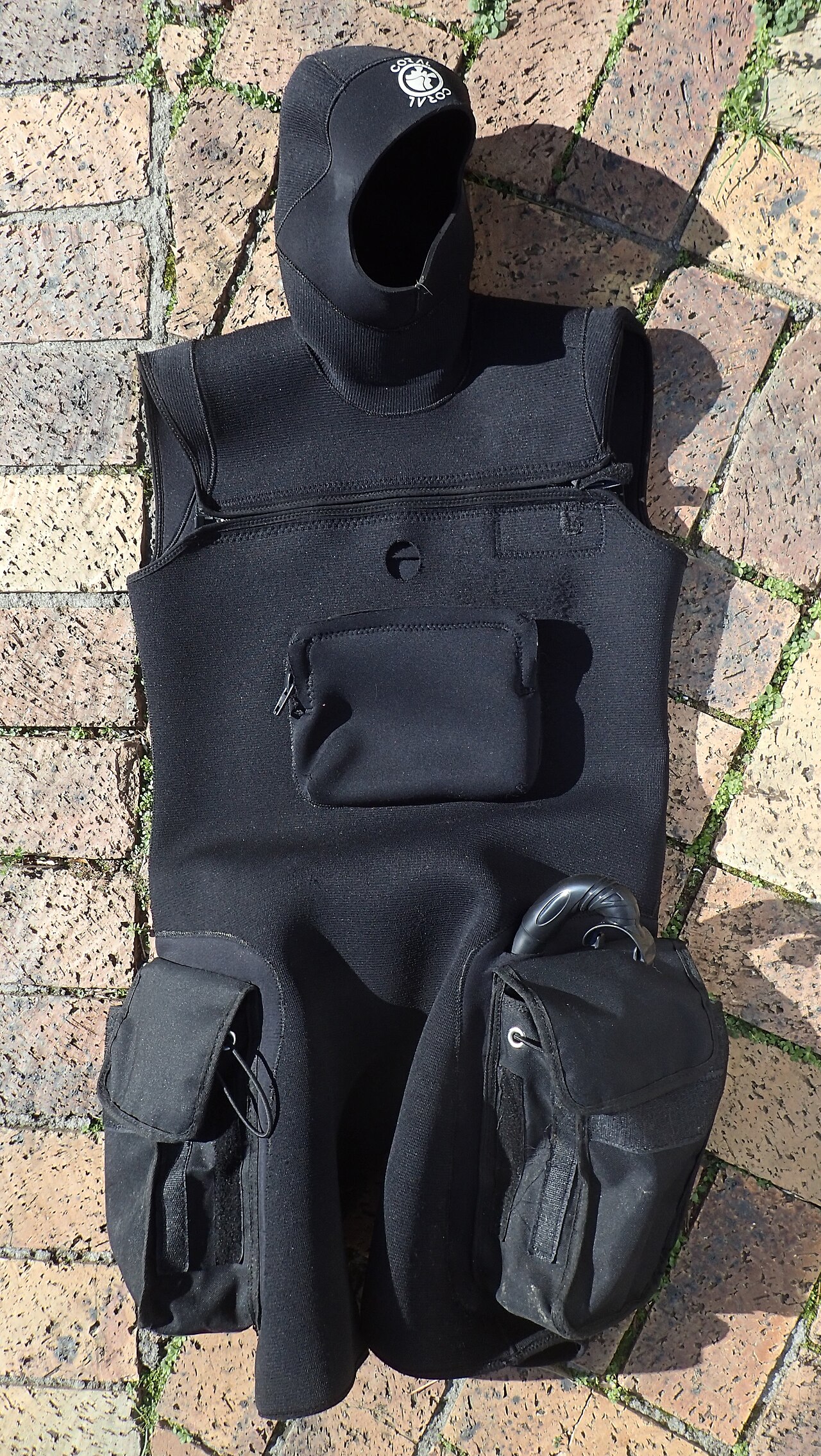
Between the wetsuit rack and the drysuit budget sits a shelf of modest garments that solve temperature problems out of all proportion to their price, and the hood leads it. The head is well supplied with blood and poorly supplied with fat, and an uncovered one sheds heat continuously into cool water; covering it changes a diver's whole thermal budget, which is why the classic advice for anyone shivering in a suit that should be warm enough is a hood before anything else. A 3 mm hood suits water in the low twenties, 5-7 mm serves genuinely cold diving, and fit is the entire art: snug at the face seal without pressing your throat, trimmed to overlap the suit collar so water cannot flush the neck. Divers who find hoods claustrophobic can start with a beanie-style cap or a vented hood and acclimatize.
Next up in warmth per dollar is the vest, and especially the hooded vest - a 2-5 mm neoprene core layer worn under the wetsuit, sealing the torso and neck as one system with no flush path between hood and collar. It converts a marginal 3 mm suit into a comfortable one and stretches a 5 mm suit into water it had no business visiting, which makes it the traveling diver's favorite hedge: one packable garment covering the destination's cold surprises. Sleeveless cuts layer cleanly under suits without bulking the shoulders.
Warm-water divers have their own shelf. Rash guards and lycra dive skins add almost no insulation but earn their place three ways: sun protection on surface intervals and snorkel swims - a real issue on liveaboard weeks, and one where fabric beats reapplied sunscreen for reefs and skin alike - a slick layer that makes wetsuit donning effortless, and a barrier against stinging plankton and brushes with hydroids on days when the water is warm enough to tempt bare skin. Full-length skins are the standard stinger-season wear in some regions. Leggings, shorts, and thermal-fleece-lined suits fill the gaps between lycra and neoprene for divers who run cold in nominally warm seas.
Prices are the friendliest in diving: rash guards and skins run roughly US$15-60, hoods US$25-60, and vests and hooded vests US$40-120, with little reason to spend beyond US$150 on any single piece. Rental fleets rarely stock these items at all - one more argument for owning - and fit rules are simple: snug like a base layer, flat seams against the skin, and for anything neoprene, the same no-gaps standard as a wetsuit.
Care and travel could not be easier. Everything here rinses in fresh water, dries fast in shade, and packs flat into corners of a dive bag; hoods keep their shape best dried over a ball or jar rather than creased. Lycra lives longest away from rough velcro, which snags it, and away from a boat's sun-baked rails. Replace a hood when the face seal loosens, a skin when the fabric thins - and until then these are the cheapest, lightest fixes in diving for the oldest complaint in it, which is being cold.
Prices are honest market ranges, not offers; no manufacturer pays for placement here.