Ekipman · Exposure
Gloves & Boots
Hands and feet decide how a cold dive feels and how a rocky entry goes: thickness by water temperature, sole types for shore diving, dry gloves, and the marine parks where gloves are banned.
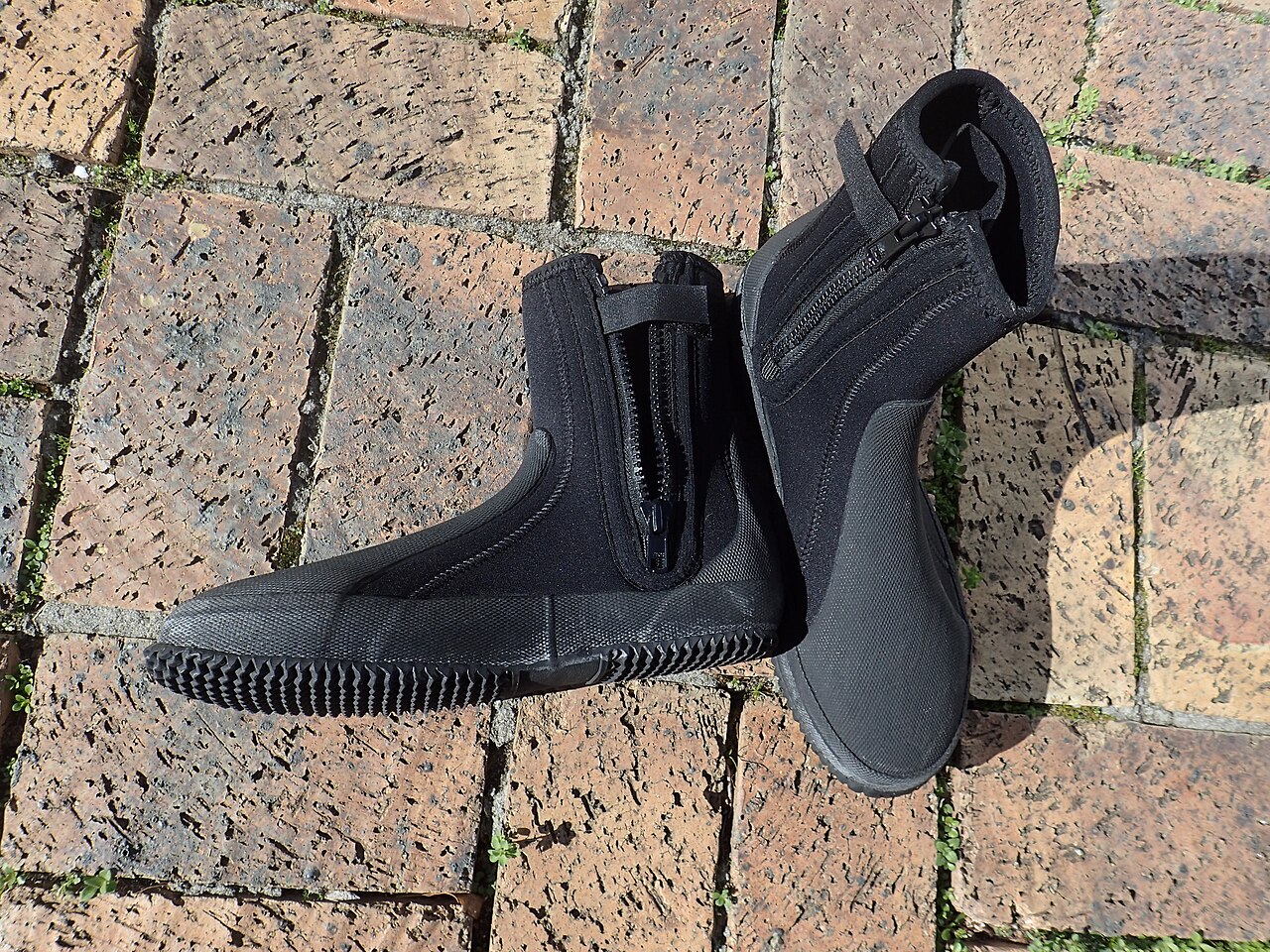
Extremities surrender heat first and complain loudest, which is why gloves and boots - cheap, unglamorous, easy to forget until the boat ride home - shape a dive's comfort out of proportion to their cost. They also do protective work that has nothing to do with temperature: soles between feet and urchin-spiked rocks, fabric between palms and the granny line's barnacles, a layer against fire coral and hydroid stings on the descent line you were always going to grab anyway.
Boots first, because nearly every open-heel fin assumes them. The choice is sole and height. Thin-soled low-cut boots or neoprene socks serve boat diving and travel, adding warmth and blister protection inside the fin pocket and little else. Thick-soled high-cut boots are shore-diving equipment: real rubber lugs for wet rocks, ankle coverage for cobble entries, 5-7 mm of neoprene for cold water. Fit like firm shoes - snug without crushed toes, minimal water exchange - and always buy boots before open-heel fins, since the fin pocket must fit the booted foot. Zippered models don and doff easily but admit a little more water at the zip; pull-on styles seal better and fight you on a rocking deck.
Gloves scale with temperature. Thin 1.5-2 mm gloves keep dexterity for warm-water utility work; 3-5 mm covers temperate diving with a real dexterity tax - practice clips and computer buttons in them before they matter; 5-7 mm mitts and three-finger designs serve serious cold, trading finger independence for warmth. Cold-water drysuit divers graduate to dry glove systems - rigid rings mating rubber gloves to the suit's wrist, worn over insulating liners - which cost more, need a small ritual to don, and end cold hands so decisively that few users ever go back. Kevlar-reinforced palms suit wreck divers; textured grips suit everyone.
Now the rule that surprises traveling divers: in a meaningful number of marine parks and destinations, gloves are prohibited or restricted for conservation reasons - the logic being that bare-handed divers touch the reef less. Local rules vary and change, so ask the operator before packing insulation you will not be allowed to wear; warm-water reef destinations are where the bans concentrate, and the polite default there is gloves off unless wreck lines or stinging season argue otherwise and the operator agrees.
Prices stay friendly across the shelf: neoprene socks and thin gloves from about US$15-30, standard boots US$30-70, cold-water gloves and premium boots US$40-90, and dry glove systems above the band at roughly US$100-250 including liners. Rental fleets stock boots routinely, gloves rarely and unappealingly; both fit personally enough that ownership is the comfortable answer, and neither strains a budget or a baggage allowance.
Care is the usual neoprene routine with two additions: dry boots fully inside - a boot dryer or newspaper stuffing defeats the swamp smell that otherwise colonizes them - and check sole stitching and zips each season. Rinse, shade-dry, store unfolded, and replace when seams weep or soles smooth out. Feet and hands will report the difference on the very next cold morning.
Fiyatlar, teklife değil gerçek piyasa aralıklarına dayanmaktadır; hiçbir üretici burada yer almak için ödeme yapmamıştır.