Uitrusting · Technisch
Rebreathers (CCR)
Closed-circuit rebreathers recycle every breath (silent, warm, and extraordinarily gas-efficient) in exchange for real money, unit-specific training, and a discipline the machine never stops demanding.
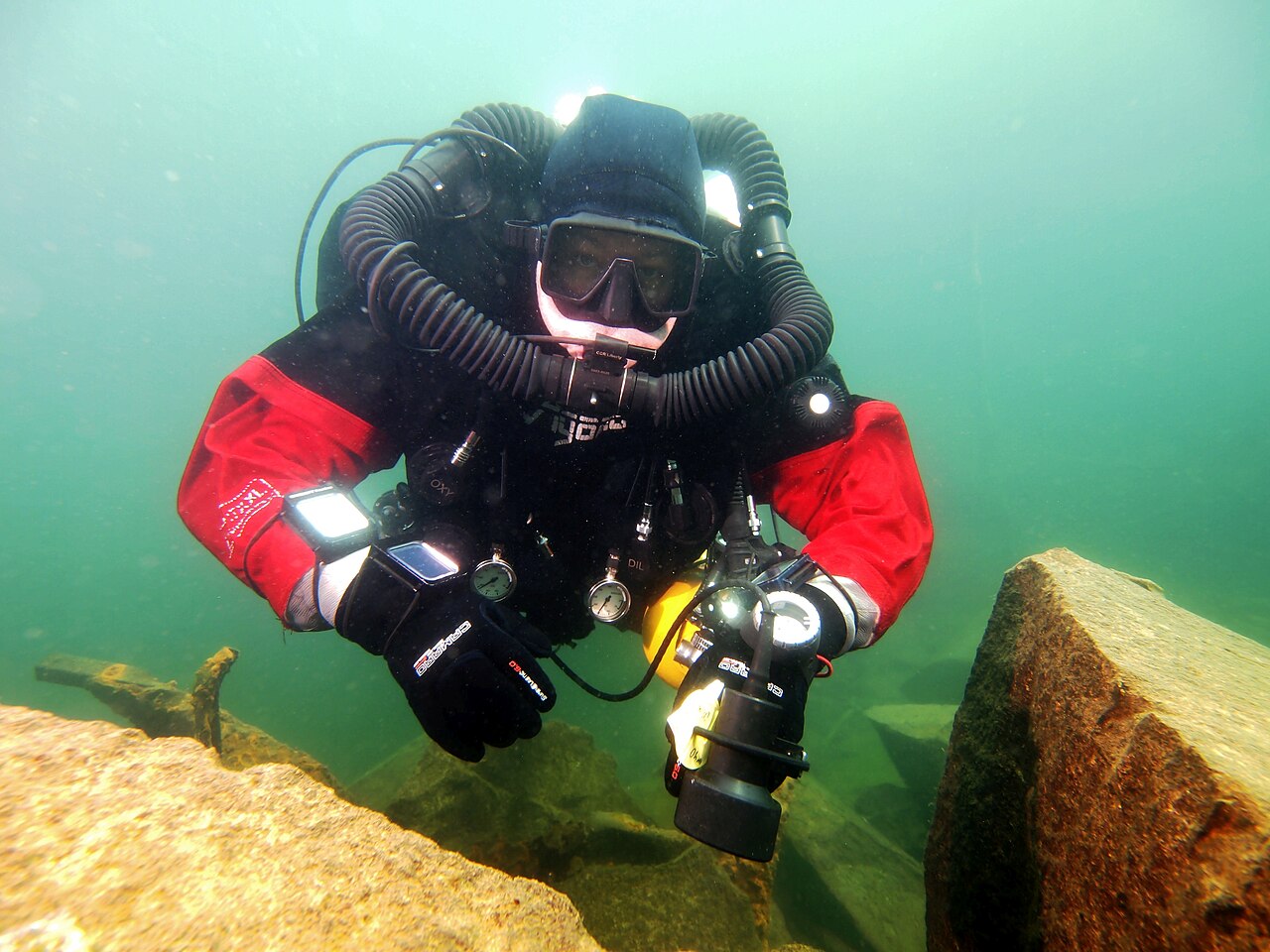
A rebreather does the one thing open-circuit scuba refuses to do: it keeps your breath. Exhale into a conventional regulator and nearly all of that gas, still rich in oxygen, rattles away as bubbles. A closed-circuit rebreather (CCR) instead routes each exhale around a loop: a chemical scrubber strips out the carbon dioxide, a small oxygen cylinder injects back the few percent your body actually consumed, and the loop hands the refreshed gas back for the next breath. Electronic units hold a chosen oxygen level using sensors and a solenoid valve; manual units leave injection to the diver. A second small cylinder of diluent (air or trimix) supplies volume as depth compresses the loop.
The rewards are real and specific. Silence first: no exhaust bubbles except on ascent, which transforms wildlife encounters. Animals that vanish from a noisy open-circuit group will circle a rebreather diver, which is why underwater filmmakers adopted CCRs early. Duration second: because you only consume metabolized oxygen, a few liters of gas can support many hours underwater, and expensive helium mixes stretch across whole expeditions. Efficiency third: the loop delivers warm, moist gas and holds oxygen at an optimal level throughout, which makes long, deep decompression dives dramatically more practical than on open circuit.
The costs are equally real. New units run roughly $6,000–15,000 before training, and the meter keeps running: oxygen sensors are replaced on schedule, scrubber absorbent is consumed every dive, and annual service is not optional. Training is unit-specific (your certification is for that model, not for rebreathers in general), and entry-level courses, typically around a week, certify to roughly 30–40 meters depending on agency and unit, with further levels gated by logged hours. Budget four figures per course level, and expect reputable instructors to want prior experience and nitrox certification before you start.
Honesty about risk is part of mainstream rebreather teaching, so it belongs here: a CCR adds failure modes open circuit simply does not have. Too little oxygen, too much oxygen, or carbon dioxide breakthrough can each incapacitate a diver, and some of these arrive with little or no warning sensation: the loop can hand you a breath that feels normal and is not. Published analyses have estimated fatality rates on rebreathers at several times those of open-circuit scuba. The mitigations are famously unglamorous: written pre-dive checklists actually used, disciplined sensor replacement, conservative bailout planning with enough open-circuit gas to surface from any point of the dive, and the humility to cancel when the unit shows a fault. Currency matters too: a rebreather dived twice a year is a different risk proposition from one dived weekly.
Who should want one? Divers with a concrete need the tool answers (long, deep, or animal-intensive diving) plus the time and budget to stay current. If that is you, try several units at a demo event before committing, because ergonomics differ sharply and the training investment marries you to your choice.
Prijzen zijn eerlijke marktbandbreedtes, geen aanbiedingen; geen enkele fabrikant betaalt voor vermelding hier.