器材 · Ownership
Servicing & Maintenance
What owning dive gear actually costs per year: regulator and BCD service schedules, tank testing, computer batteries, and the rinse-and-storage habits that are free but worth more.
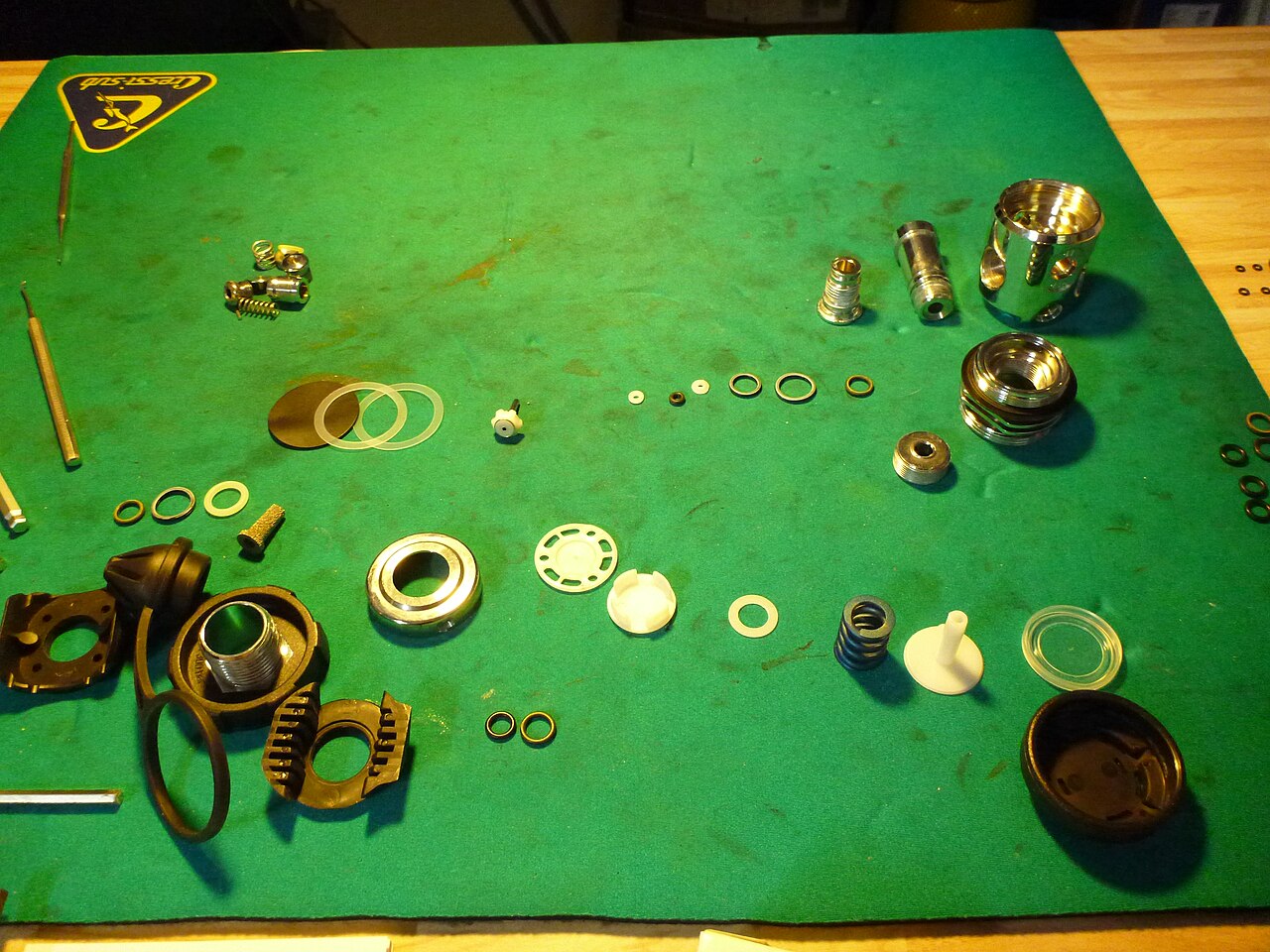
Life-support equipment earns that name by being maintained, and the good news is that the regime is neither mysterious nor ruinous - it is a short list of scheduled professional work sitting on top of free daily habits, and the habits do most of the heavy lifting.
The habits first, because they cost nothing. Fresh-water rinsing after diving - thorough, not ceremonial - removes the salt that otherwise crystallizes in valves and corrodes springs; regulators rinse with the dust cap sealed and purge buttons untouched underwater, BCDs get their bladders flushed and drained, and everything dries in shade before storage, since ultraviolet ages rubber and neoprene faster than use does. Storage means cool, dry, and unstressed: suits on wide hangers, regulators coiled loosely, nothing under compression. Between-trip checks - breathe the regulator, inflate the BCD and leave it overnight, power the computer - move failures from the boat to the living room, where they are cheap.
The scheduled work centers on the regulator, whose manufacturers specify service - commonly annual, or every two years with interim inspections under several current programs; hours and fills matter as much as calendars, so follow your maker's actual schedule rather than folklore in either direction. A service strips, cleans, and rebuilds the stages with fresh seats and O-rings, then tunes pressures; expect roughly US$80-150 in labor plus parts kits per set, with some brands offering parts-for-life programs that trade paperwork diligence for kit costs. Use technicians certified for your brand - the tooling and specifications are model-specific, and this is not garage work.
Around the regulator, the calendar fills in modestly. BCD inflators and dump valves deserve service when they stick, seep, or on a yearly check alongside the regulator - typically US$20-60. Dive computers need batteries: user-changeable coin cells with a fresh O-ring and care, or shop changes with pressure tests for sealed models, at US$10-50; rechargeables just need charging discipline and eventual professional battery replacement. Cylinders, for those who own them, carry the legal schedule - periodic hydrostatic testing per national rules plus annual visual inspections, at roughly US$15-60 per event. Drysuits consume seals and zips on multi-year cycles at real but predictable cost, and wetsuits, fins, and masks ask only for glue, straps, and honesty about retirement.
Budgeting it all: a full single-tank kit, professionally maintained on schedule, runs most owners somewhere in the region of US$100-300 in an average year - more in a year that includes a drysuit zip or a computer battery service, less in the years between. Against rental prices, ownership still wins for frequent divers, but this line belongs in the honest math.
Two closing rules from the accident literature. Service before trips, never the week of one - fresh-from-service equipment deserves a pool shakedown, because maintenance-induced faults are a real category. And gear that has slept for years - the garage-sale regulator, your own kit after a long layoff - gets professional inspection before it gets wet, no matter how clean it looks. Rubber ages in the dark all the same.
掲載している料金は誠実な市場相場の範囲であり、販売価格ではありません。メーカーやショップから掲載料は一切受け取っていません。