Gear · Accessories
Surface Markers (SMBs & DSMBs)
The inflatable tube that tells boats where you are: surface markers versus delayed SMBs, deployment gear and technique, and why this is mandatory personal kit in current country.
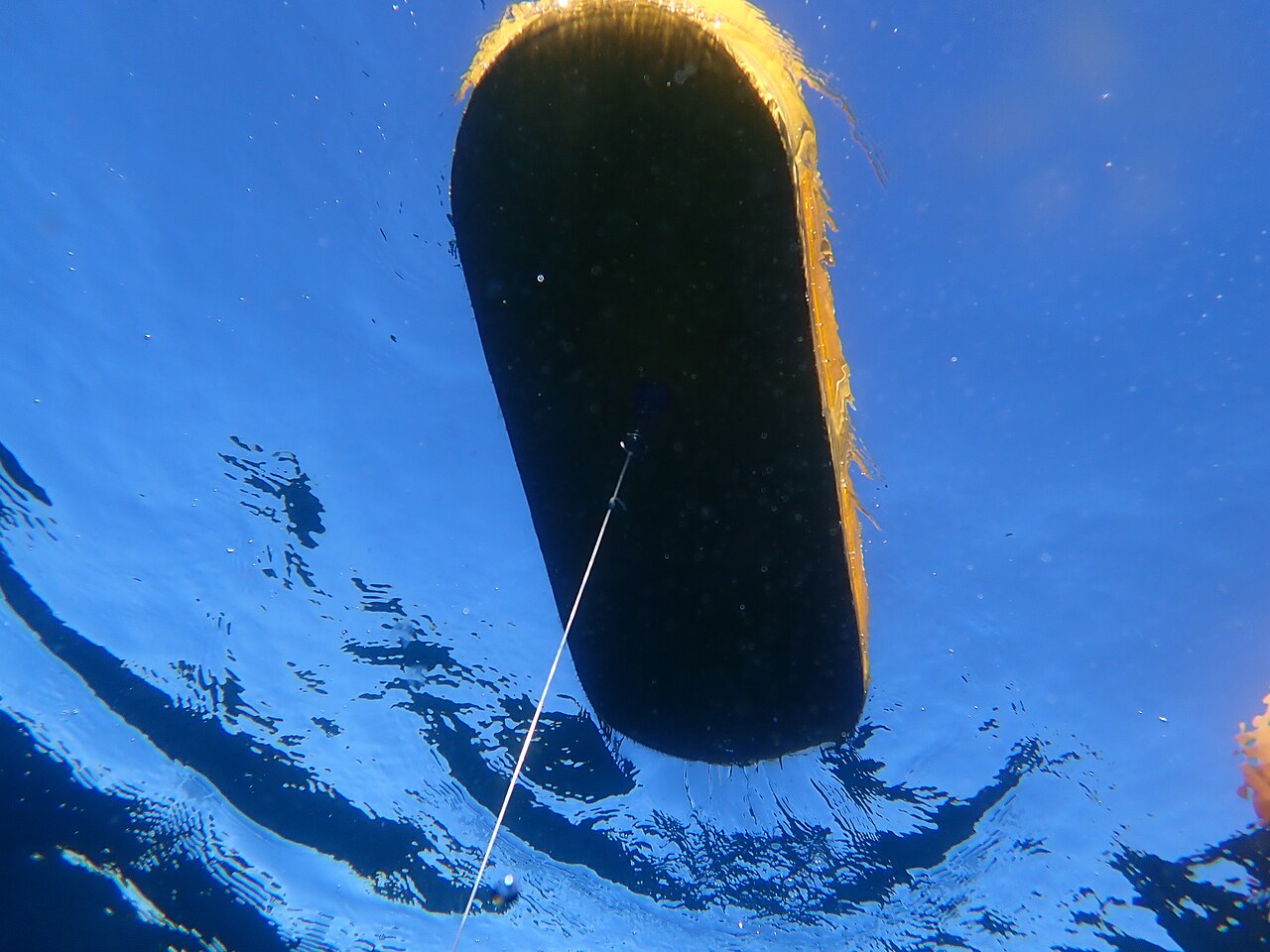
A surface marker buoy is a brightly colored inflatable tube that makes a small, low-lying diver visible to a large, fast-moving world. In its towed form - the SMB proper - it floats above you throughout the dive so boats can track the group. In its delayed form, the DSMB, it rides rolled in a pocket until the end of the dive, when you inflate it at depth and send it up a line ahead of your ascent, announcing to your boat - and to passing traffic - that divers are coming up beneath it. Between those two sentences sits a large share of modern boat-diving safety, which is why drift destinations treat a DSMB and spool as personal equipment on par with a mask, and why many operators and training standards now expect every buddy pair to carry one.
Buying decisions are few but real. Size: tubes around 1.2-1.8 m stand visibly in chop; pocket-sized novelty markers disappear in exactly the seas that matter. Color follows convention - high-visibility orange or red is the standard marker, and in some regions a yellow tube carries the specific meaning of a problem requiring assistance, so know the local code and do not mix signals casually. Inflation: open-bottom tubes fill from an exhaled breath or a regulator purge and are simplest; semi-closed and valve designs hold air more securely and suit deeper deployment. Features that earn their cost include a one-way valve, an over-pressure dump, reflective tape, and a sturdy attachment point; features that mostly add tangle are everything else. Pair the tube with a spool - see the reels guide - and rig them together, stowed where a gloved hand finds them.
Deployment is a skill, not an accessory, and the honest advice is to learn it under supervision - it features in drift and advanced training precisely because a mismanaged deployment can drag a diver upward. The working method is calm and mechanical: unclip and unroll at the safety stop or below, attach or confirm the line, add a measured puff of gas, let the tube leave vertically while the spool pays out freely, then keep gentle tension and reel up as you ascend. Practicing in benign water until it is boring is the entire trick.
Prices are modest for what the tube does: basic DSMBs run about US$25-50, robust semi-closed models US$50-90, and premium tubes with valves and crossover hardware US$90-120, plus a spool. Rental rarely covers markers at all, which settles the buy-or-rent question - this is owned kit, cheap enough to buy once and early.
Care and travel are easy: rinse, dry inflated or hanging, check the valve and tape occasionally, and repack it rolled the same way each time so deployment stays familiar. A DSMB packs flat in any bag and weighs nothing worth mentioning. Carry it on every boat and drift dive, deploy it before every free ascent away from a line, and it will spend years doing quiet nothing - which is exactly the record you want from safety gear, right up until the afternoon a current moves the plan and the orange tube becomes the most important thing you own.
Prices are honest market ranges, not offers; no manufacturer pays for placement here.