Equipo · Fotografía
Strobes & Photo Lighting
Why flash matters more than megapixels underwater: strobes versus constant video lights, positioning to beat backscatter, and the arms, batteries, and habits that complete a lighting rig.
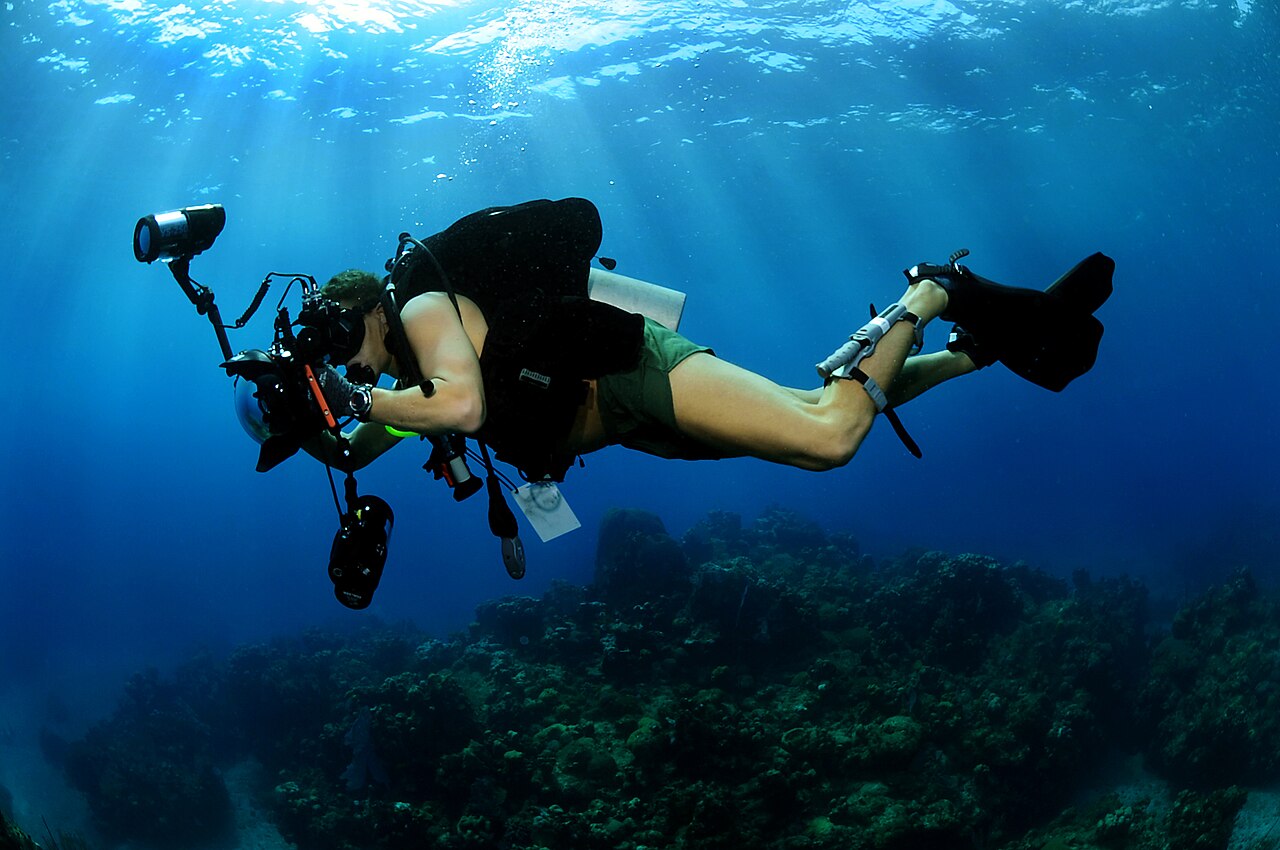
Water is a color thief and a contrast thief, and lighting is how photographers steal both back. Ambient light loses red within meters of the surface, so an unlit photo at 20 m is a study in blue; a strobe fired from centimeters-to-arm's-length away restores the full spectrum the reef actually wears. That, not sensor size, is the biggest single upgrade in underwater imaging - which is why the standing advice runs: after a housed camera, buy light before buying better glass.
The fork is strobe versus constant light, and it maps to stills versus video. Strobes are underwater flashguns: brief, powerful bursts that freeze motion and overpower ambient light, triggered through fiber-optic cables (the modern standard - simple and floodproof) or electrical sync cords. Constant video lights burn continuously - measured in lumens rather than flash power - and serve video, macro focus assistance, and close-in stills, but cannot match a strobe's punch at wide-angle distances. Many rigs carry both jobs in two tools; hybrid units exist and compromise both ways. Within strobes, the practical variables are recycle speed, beam angle (wider and softer generally flatters), power adjustability in fine steps, TTL automation versus manual control - beginners profit from TTL, most experienced shooters end up manual - and battery format, where common rechargeable AA cells keep a traveling kit simple and airline-friendly.
Positioning is the craft, and one principle organizes it: light what you shoot, not the water between. The column of water in front of the lens is full of particles, and light thrown straight down that column bounces back as backscatter - the snowstorm that ruins beginner photos. The fixes are geometry: strobes held out wide on arms, angled so the beam's edge rather than its center crosses the lens axis, pulled in tight and high for macro. Arms and clamps - the ball-joint skeleton connecting housing to lights - are their own modest budget line and worth buying sturdy once; floats on the arms tame a rig's in-water weight.
Money: capable strobes run roughly US$200-500 each, flagship models US$500-1,000, and video lights span US$150-1,000 by output and beam quality; serious wide-angle shooters eventually run pairs, doubling the arithmetic. The used market is active and reasonable. Rental is patchy - photo-destination shops and liveaboards sometimes rent strobes, and it is a fair way to learn positioning before committing.
Care is O-ring religion in miniature: battery doors sealed on clean greased rings, opened only with dry hands, cells out for storage and flights - spare lithium and loose batteries ride carry-on under airline rules, and every battery door travels open or taped. Rinse and dry after salt, work the buttons in the rinse tank, and store cool. Fiber cables snap if crushed, so coil them loose. Treat contacts to an occasional clean, and a good strobe outlives several cameras - which, given where the money goes in this hobby, is exactly the durability you want from the piece doing the actual painting.
Los precios son rangos de mercado reales, no ofertas; ningún fabricante paga por aparecer aquí.