Equipamento · Exposure
Wetsuits
Neoprene thickness matched to water temperature, the fit rules that make or break warmth, and why the wetsuit is among the most personal - and most rented-badly - items in diving.
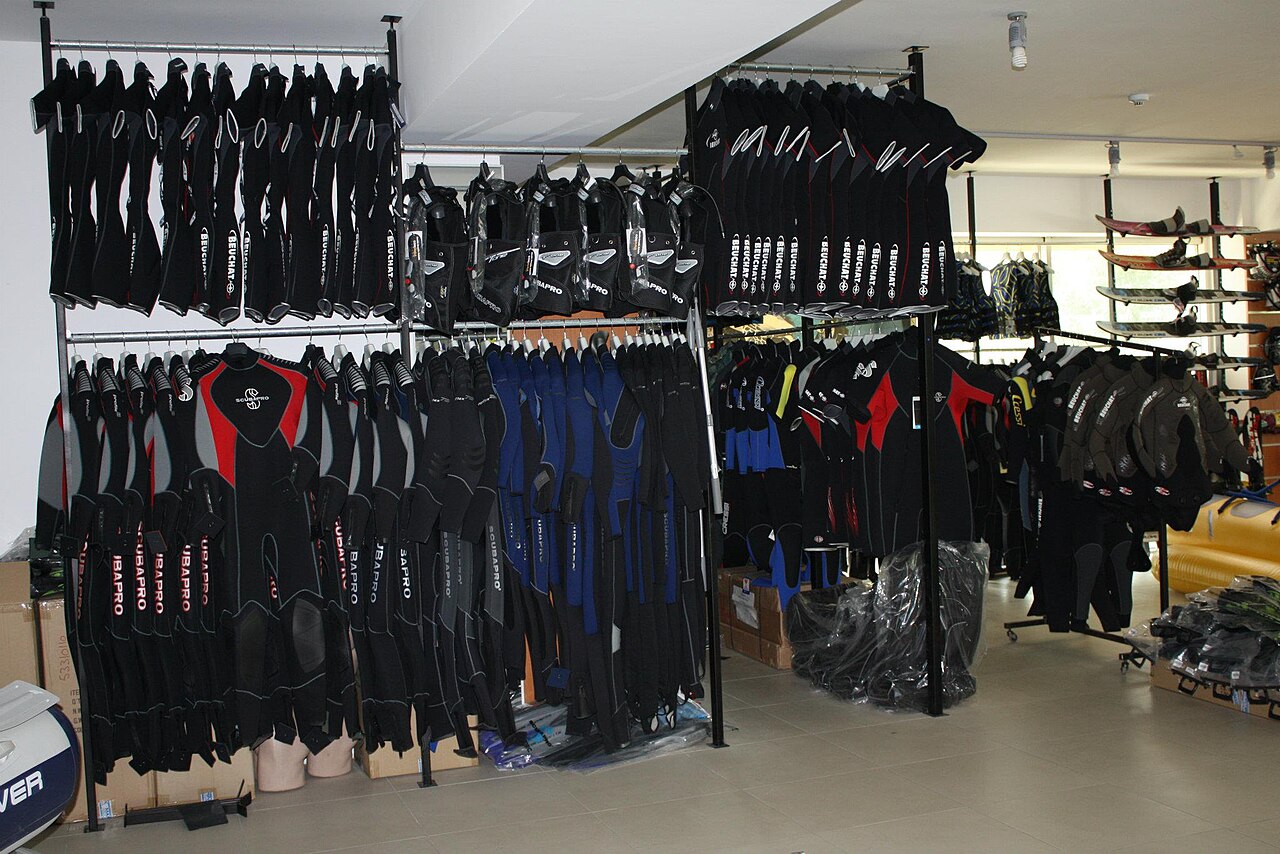
A wetsuit works by trapping a thin film of water against your skin and letting your body heat it once, while the neoprene's gas-filled cells slow the heat's escape. Two consequences follow. First, fit is function: a suit that lets water flush through with every kick is a heat exchanger, not insulation, so snug-everywhere-restrictive-nowhere is the entire fitting standard. Second, neoprene compresses with depth, so a suit is measurably thinner and less warm at 30 m than at the surface - one reason divers feel colder on deep dives and one reason thickness guidance errs warm.
Thickness is chosen by water temperature, with personal cold tolerance moving everyone a step in one direction or the other. As rough, honest guidance: in genuinely warm water above about 27 °C, skins and 2-3 mm suits or shorties keep sun and sting off and take the edge from long repetitive days; around 22-27 °C most divers are happy in 3-5 mm full suits; from roughly 16-22 °C, 5-7 mm suits with hoods enter the picture; and below the mid-teens, 7 mm semi-dry suits - wetsuits with seals that minimize flushing - compete with drysuits, which win decisively as temperatures and dive counts drop. Repetitive diving shifts everything warmer: the fourth dive of a liveaboard day in a damp suit is where thin-suit optimism goes to die.
Fit checks at the rack: the suit should press evenly at chest, back, and thighs with no air pockets, gaps at the spine or lower back, or bunching behind knees; you should be able to squat, reach overhead, and breathe deeply; neck snug without choking; and no cold-water suit should be judged until it has been zipped fully. Bodies vary far more than size charts, which is why cuts for women and short/tall variants matter, and why custom-cut suits - at a premium - solve problems off-the-rack shoppers spend years working around. Back zips are easiest with a buddy, front and shoulder zips seal better, and integrated hoods add real warmth for their cost.
Money: shorties and skins run about US$40-120, quality 3 mm full suits US$100-250, 5 mm suits US$150-350, and 7 mm and semi-dry designs US$250-600, with custom work above that. Rental suits exist everywhere and are the right call for occasional warm-water trips, but they are also the most complained-about rental item - sized approximately, compressed by hundreds of dives, and shared - so the wetsuit is many divers' second purchase after the mask, on hygiene and fit grounds alike.
Care determines lifespan. Rinse inside and out in fresh water, dry inside-first out of direct sun, and store hanging on a wide suit hanger or flat - folded neoprene creases permanently, and a hot car trunk ages a suit faster than a season of diving. Wetsuit shampoo occasionally, and treat small tears promptly with neoprene cement; zips like an occasional wax. Travelers should pack suits rolled, not folded, and remember they come up a size when wet and a shade tighter after a winter ashore - both normal, only one fixable by the suit.
Os preços são faixas de mercado honestas, não ofertas; nenhum fabricante paga por destaque aqui.