編集部より · 4 分で読めます
The Best Liveaboard Diving Destinations
Where sleeping on the boat genuinely beats sleeping on land: the routes, seasons, and sea-state realities of the world's great liveaboard regions.
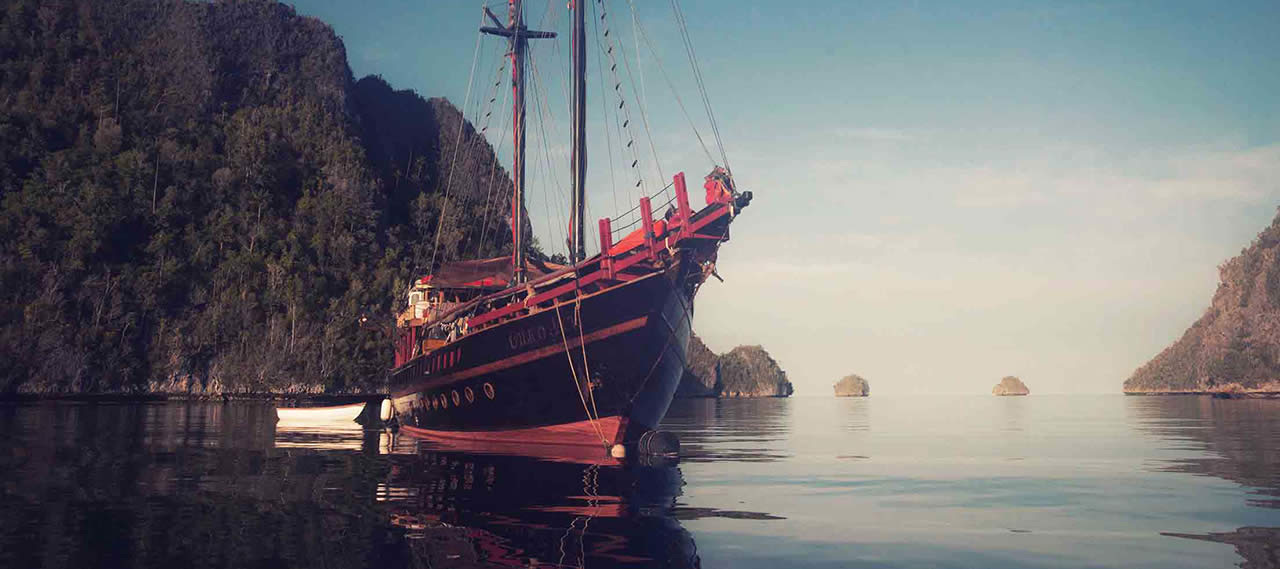
A liveaboard buys three things a resort cannot: reefs beyond day-boat range, four or five dives a day with no commute, and first water at sites the fleets reach by mid-morning. It costs you steady ground, privacy, and flexibility if weather turns. Whether that trade suits you is covered in liveaboard vs resort; where it pays off best is below. One filter before the routes: boat life suits divers who can enjoy four dives a day for a week (a first liveaboard sits best after a few land-based trips, not before), and itineraries reward reading the fine print on park fees, fuel surcharges, and rental gear.
The Egyptian Red Sea
The world's best value afloat. Northern routes stack wrecks and reefs; southern routes run the marine parks of Brothers, Daedalus and St John's, where October and November bring oceanic whitetips to the moorings. Boats range from budget to boutique, crossings can be lumpy, and marine-park fees come on top of the fare.
Raja Ampat, Indonesia
The archipelago's scale is the argument: the best of Raja Ampat spreads across hundreds of kilometers, from Dampier Strait's fish storms to Misool's soft-coral ridges, and only a boat connects them in one trip. The season runs about October to April. Indonesian routes price by romance as much as length; read itineraries closely.
Komodo, Indonesia
Komodo compresses cool-water mantas, current-swept pinnacles, and warm northern reefs into a national park a boat crosses in hours, which is why short liveaboards here outperform any land base. Tides set the schedule and guides earn their keep; this is drift-and-hook country. See reef hooks and currents before you go.
Tubbataha, Philippines
A reef system in the middle of the Sulu Sea with a ten-week window: boats run Tubbataha only from mid-March to mid-June, when the sea lies down. Walls, sharks on nearly every dive, and a ranger station guarding a UNESCO site. The season sells out far ahead; this is the trip you book a year early.
The Maldives
Maldivian atolls are made for boats: a week's loop through the Malé atolls and Ari Atoll chains channel dives, night feeds, and manta stations no single resort can match. Currents run the show and groups follow the guide's tide reading. Nitrox earns its keep on repetitive channel profiles here more than almost anywhere.
Galápagos, Ecuador
Darwin and Wolf sit a night's steam from the main islands, so the Galápagos at full strength is liveaboard-only. Hammerheads, whale sharks in season, and the strangest cast in diving justify the highest prices in the liveaboard world. Cold water and working currents make this the region where experience requirements are meant seriously.
Socorro and Cocos
The eastern Pacific's pelagic outposts are pure boat trips: Socorro lies a long crossing off Mexico with friendly oceanic mantas and a November-to-May season, while Cocos asks roughly 36 hours each way for hammerhead schools. Both reward sea legs; neither suits a first liveaboard.
Thailand and beyond
The Similans run short, friendly, affordable liveaboards inside a park that opens roughly mid-October to mid-May, a gentle first boat trip with Richelieu Rock as the crescendo. For the ambitious, Indonesian crossing routes through the Banda Sea chase hammerheads and empty volcanic ridges between seasons.
The honest asterisks
Sudan's celebrated southern routes have been suspended since conflict broke out in 2023; Port Sudan waits. And every liveaboard shares two universal costs: seasickness, manageable with planning (see seasickness management), and cabin fever if weather locks the fleet in a lee. Choose a midship, lower-deck cabin if motion worries you, book insurance that covers missed itineraries and evacuation, tip the crew properly, and the boat becomes the best dive buddy you ever had.