Sicurezza · 5 min di lettura
Cavern vs. Cave Diving
Where the daylight zone ends, recreational diving ends with it. The real difference between cavern and cave, what each demands, and why the distinction is written in accident statistics.
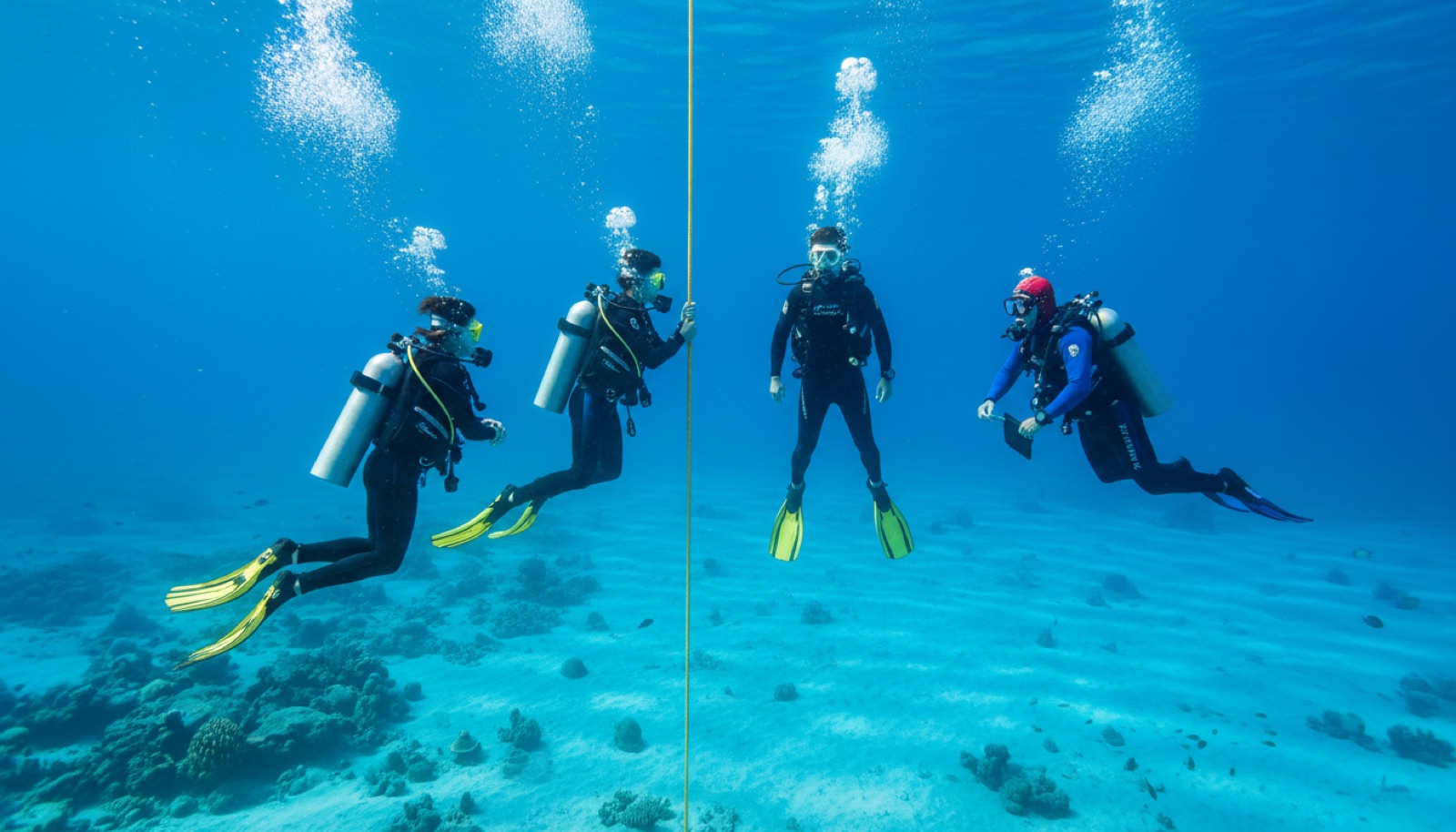
The two words get used interchangeably by people standing safely on land, and the difference between them is one of the sharpest safety boundaries in diving. A cavern is the entrance chamber of an overhead environment: you are under rock, but natural daylight from the opening remains visible, and the way out is short and lit. A cave is everything beyond: passages where sunlight cannot reach, where the exit may be hundreds of meters of navigation away, and where nothing about open-water training applies. The cenote lines of Mexico's Riviera Maya made this distinction famous, because their sunlit entrance pools are among the most beautiful cavern dives on earth, and their dark continuations are absolutely not part of the tour.
What cavern diving is
Cavern diving is structured so that recreational skills, conservatively applied, remain sufficient. The conventions taught by cavern programs and applied by good cenote operations run along these lines: stay within sight of daylight from the entrance at all times, keep total swim distance to the surface modest (figures around 40 linear meters appear across agency standards), remain well inside no-decompression limits, avoid restrictions too tight for two divers to pass together, and follow a fixed guideline installed or laid to the open water. Add lights (with backups), small guided groups with a certified cavern or cave professional, and buoyancy good enough not to touch floor or ceiling, and you have the format used daily in the cenotes: guided cavern tours for Open Water-and-above divers, run along permanent lines through the daylight zones. Done this way, divers with no overhead training safely see sun beams cutting through blue rooms, haloclines shimmering like oil, and stalactite fields grown when the caves were dry.
What lies past the light
Cave diving proper is a technical discipline with its own multi-stage training ladder (cavern, then introductory cave, then full cave, through agencies and communities like TDI, GUE, the NSS-CDS and NACD) and its own equipment doctrine: redundant gas supplies and the rule of thirds for planning, multiple lights, line protocols and lost-line drills, anti-silt propulsion as a survival skill rather than a courtesy, and team procedures rehearsed until they are reflexes. The reason the ladder exists is written in decades of accident analysis, and the pattern has barely changed: the overwhelming majority of cave-diving fatalities are untrained or under-trained divers who went past the light, often with working gear, and could not find their way back when visibility or gas failed. Signs posted at cave mouths in Florida and Mexico say this in blunt language over a drawing of the Grim Reaper, and they are not decoration.
The honest guidance
- Never enter any overhead (cave, deep cavern, wreck interior) without the specific training and equipment for it. Curiosity plus a torch is the accident recipe.
- If caverns tempt you, do it the right way: a guided cenote or cavern tour with a qualified professional, or a cavern course to hold the qualification yourself.
- If the dark passages genuinely call (and for some divers they do, leading to one of the sport's most demanding and rewarding disciplines), the path is formal cave training, taken slowly, with your skills honestly assessed at each gate.
- Inside any cavern, the abort rules are absolute: any diver can end the dive at any time, silt-outs and light failures mean out, and the guideline is never left.
Respected on its own terms, the boundary gives you both worlds: the sunlit rooms that need only care, and, for those who train for it, the rest, earned properly.