Kỹ năng · 5 phút đọc
Drift Diving: A Practical Guide
How diving in current actually works (negative entries, group discipline, marker buoys and live-boat pickups) and why drift destinations produce the sport's easiest great dives.
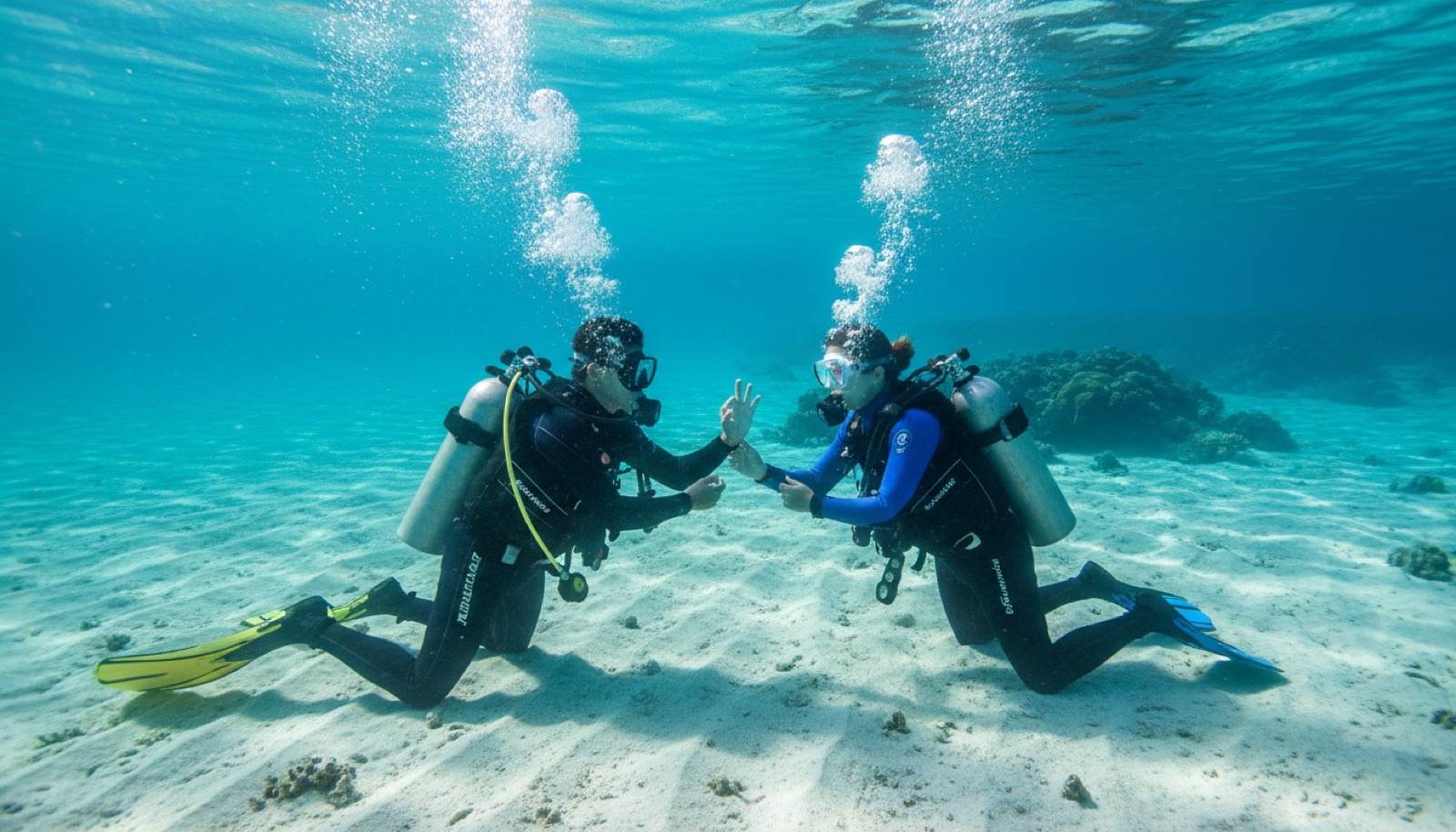
The first surprise of drift diving is how little swimming it involves. Done properly, you descend into moving water, match its pace, and the reef scrolls past like scenery from a train window while you steer and watch. Cozumel built an entire diving economy on this sensation; the channels of Palau, Komodo and the Tuamotu atolls like Rangiroa run stronger versions where the current is also the reason the big animals are there. Current concentrates food, food concentrates fish, and sharks hold station where the water funnels, so learning to dive comfortably in moving water is the price of admission to much of the world's best diving.
How a drift dive is organized
The defining feature is the live boat: nobody anchors. The boat drops the group up-current of the site and then follows the divers' bubbles and the guide's towed surface marker, meeting the group wherever it surfaces. That changes several habits at once:
- Entries are brisk and often negative: gear fully ready, BCD empty, descending immediately on entry so the group starts together before the current spreads it. Fumbling at the surface for two minutes can mean starting the dive a hundred meters from everyone else.
- The group stays together as a unit, at similar depth, because the boat can only follow one bubble cluster. This is not the dive for private detours.
- The guide typically tows or deploys the marker; every buddy pair still carries its own DSMB and deploys it if separated, which turns separation from a problem into a minor logistics event.
- Ascents happen in open water, drifting: safety stop at 5 meters while the world slides by underneath, marker up, then surface compactly and wait (inflate, signal OK, keep fins on until the ladder).
Skills that make current feel easy
Move with it, not against it. Face the direction of travel, keep trim flat, and use fins for steering and small corrections rather than opposition; fighting a real current is a losing cardio event that empties tanks. Use the terrain the way fish do: currents slacken behind coral heads, in gullies and close to the bottom, so dropping a meter or tucking into the lee of a bommie is the pause button. Watch the guide for signals about eddies and down-currents near walls and corners; the standard response to being caught in descending water is taught everywhere current diving is serious: fin up and away from the wall, inflate modestly if needed, and never chase the depth gauge into a fight. Keep gas margins generous, because current diving compresses decision time, and know the site's plan for hooking or holding if there is one (some channel dives pause at viewpoints; that is what reef hooks are for, covered separately).
Etiquette and honest self-assessment
Drift diving is buddy diving at close quarters: stay within a couple of meters, keep the group's formation loose but real, and never surface alone without a marker except in emergency. Listen to briefings with more than usual attention: drift sites have specific entry windows, tide timing and abort plans, and operators in places like Komodo schedule dives around slack and moving water deliberately. Be honest about grading yourself up: a gentle Cozumel drift over sand at half a knot is beginner-friendly; a full-moon channel drain at an atoll pass is not, whatever the certification card says. Guides read conditions daily precisely so guests do not have to guess. Tell them your experience level and let them place you. Divers who learn the drill usually convert completely: the same distance for a tenth of the effort, better animals, and the small permanent pleasure of flying.