Siti di immersione, stagioni e fauna marina — ricercati, mappati, pianificati.
Menu
Destinazioni Siti di immersione Vita marina Relitti Notizie
Pianifica un viaggio Pianificatore di viaggi Quando immergersi Calcolatore dei costi Confronti Calendario della fauna marina Temperatura dell'acqua Liveaboard Operatori & resort Parchi marini Camere iperbariche Mappa del mondo
Regioni Australia, Nuova Zelanda e Asia OrientaleCaraibi e Atlantico occidentaleEuropa, Atlantico e MediterraneoOceano Indiano e Africa OrientaleIsole del Pacifico & MicronesiaMar Rosso & Medio OrienteAsia meridionale e Triangolo dei CoralliLe Americhe e il Pacifico orientale Paesi
Impara e strumenti Tutte le guide Brevetti Guide all'attrezzatura Video Interroga i dati AI Agent API
Informazioni Chi siamo Metodologia Disclaimer Contatti
La tua vista
★ Salvato

Le tue destinazioni, siti e specie preferiti — salvati in questo browser.

API GATEWAY

Accesso JSON gratuito in sola lettura ai dati in cache dell'atlante.

Modalità scura

🧭 Visualizzazione Guidata
Sei nuovo alle immersioni — profondità, correnti, livelli di brevetto? Spieghiamo ogni termine mentre navighi, in modo semplice e chiaro. Gli stessi dati, con il supporto integrato.

⚡ Visualizzazione Esperta
Conosci già la differenza tra una parete e una drift dive. Solo i dati — chiari, rapidi e compatti. Questa è la visualizzazione predefinita.

Lingua dell'interfaccia

Salute · 5 min di lettura

Ears, Sinuses, and Diving: Care for the Most Injured Body Part

Middle-ear barotrauma is diving's most common injury and almost always a technique failure. Equalizing properly, handling reverse blocks, and the symptoms that mean see a physician.
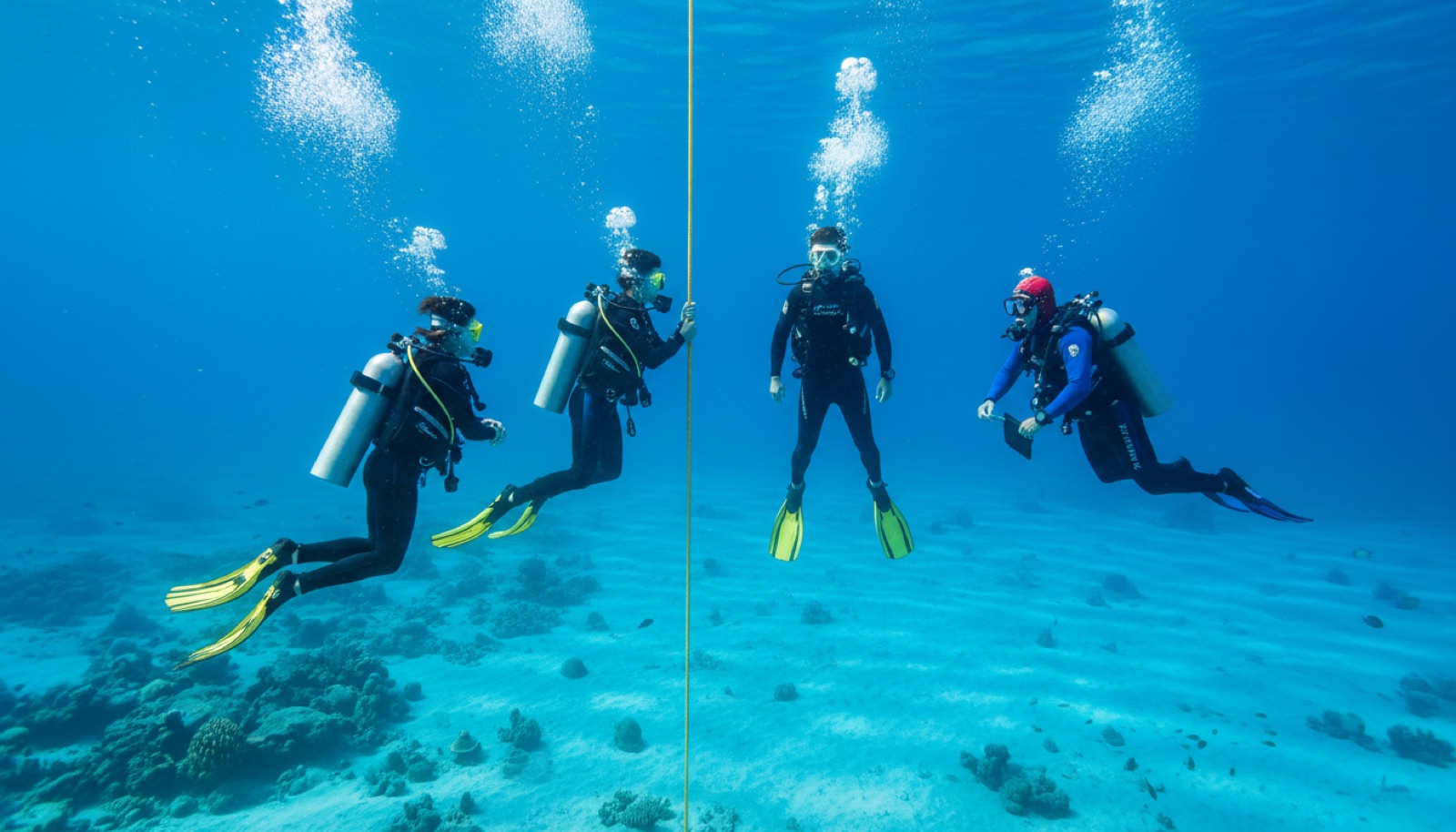
Illustrazione generata dall'AI per The Scuba Atlas — a scopo illustrativo, non fotografia documentaria.
Questo è materiale informativo, non istruzionale Redatto in linea con gli standard delle principali agenzie e dell'insegnamento DAN. Non può sostituire un corso, un briefing o un medico specializzato in medicina subacquea — in caso di dubbio, rivolgiti a loro, non a un sito web.

No body part ends more dives than the ear. Middle-ear barotrauma — squeeze, in diver slang — is the sport's most common injury, and the frustrating part is that it is almost entirely preventable with technique and restraint. What follows is the mainstream teaching; anything persistent or painful belongs with a physician, ideally one trained in dive medicine, not with a forum.

Why ears complain underwater

The middle ear is an air pocket behind the eardrum, connected to your throat by the narrow Eustachian tube. Descend, and rising water pressure compresses that pocket, bowing the eardrum painfully inward — unless you add air through the tube, which is all equalization is. Wait too long and the tube's soft walls get squeezed shut, at which point no technique works and the only move is up.

Equalizing properly

Start before it hurts: equalize gently at the surface, then every meter or so for the first several meters, more often than feels necessary. Descend feet-first when you can — the tubes work better head-up — and use a line for control on the first dives of a trip. The standard techniques: a gentle pinch-and-blow (Valsalva), pinching and swallowing (Toynbee), or the tongue-and-throat compression freedivers favor (Frenzel). The word doing the work in all three is gentle. Forcing a hard Valsalva against locked tubes can injure the inner ear, which is a far worse outcome than a skipped dive. If an ear will not clear: stop, ascend a meter, try again. If it still will not clear, end the dive. That is not failure; that is the procedure.

Reverse blocks and sinuses

On ascent the problem inverts: expanding air must vent back out, and a blocked tube traps it painfully. The response is the opposite of instinct — stop the ascent, descend slightly until the pressure eases, give it time, and come up slowly. This is one reason diving with congestion is a bad bargain, and why mainstream teaching discourages diving on decongestants: medication that opens passages at the surface can wear off at depth and lock the door behind you. Sinuses obey the same physics through their own small openings; pain across the forehead or cheekbones on descent, sometimes with a little blood in the mask afterward, is a sinus squeeze, and recurring episodes deserve a physician's attention.

Red flags and aftercare

  • Muffled hearing, fullness, or ringing that persists after a dive day — see a physician; do not dive on it.
  • Vertigo, especially with hearing changes — potentially an inner-ear injury or inner-ear decompression sickness, which need prompt professional evaluation to tell apart.
  • Sharp pain, discharge, or any suspicion of a perforated eardrum — out of the water until formally cleared.
  • Itchy, sore outer ears on multi-day trips — the swimmer's-ear pattern; rinsing with fresh water and drying ears helps prevent it, and persistent cases are physician territory.

Do not dive with standard earplugs, which create their own trapped air space, and be skeptical of any gadget promising to abolish equalizing. Healthy ears reward technique, patience, and the occasional humility of a canceled descent — a small price for the organ your whole sport depends on.

Ben documentato

Guarda

Dai canali ufficiali

Tutti i video →

The Art of Marine Life

PADI · YouTube ↗ · Aug 31

Best Places to Dive with Whale Sharks

PADI · YouTube ↗ · Aug 30

I video sono link incorporati ai canali dei rispettivi autori — non ospitiamo nulla e diamo sempre credito a tutti.

Australia, Nuova Zelanda e Asia Orientale

Cairns & the Ribbon ReefsNingaloo ReefCoral Sea & Osprey ReefOkinawa & the Kerama IslandsPoor Knights IslandsTownsville & the YongalaGreen IslandIzu Peninsula

Caraibi e Atlantico occidentale

BonaireCozumelRiviera Maya & the CenotesBelize Barrier ReefGrand CaymanIsla Mujeres & CancúnRoatánTiger Beach & Grand Bahama

Europa, Atlantico e Mediterraneo

Malta & GozoSilfra & IcelandThe AzoresCanary IslandsLarnaca & the ZenobiaScapa FlowArctic NorwayMadeira

Oceano Indiano e Africa Orientale

North & South Malé AtollsAri AtollBaa Atoll & Hanifaru BayAliwal Shoal & UmkomaasMafia IslandMauritiusSeychellesSodwana Bay

Isole del Pacifico & Micronesia

PalauChuuk (Truk) LagoonFakaravaKona, HawaiʻiRangiroaTaveuni & Rainbow ReefBeqa Lagoon & Pacific HarbourEspiritu Santo

Mar Rosso & Medio Oriente

Sharm El Sheikh & Ras MohammedBrothers, Daedalus & St John'sDahabHurghada & El GounaMarsa Alam & the Deep SouthAqabaDaymaniyat IslandsMusandam Peninsula

Asia meridionale e Triangolo dei Coralli

Bali & Nusa PenidaKomodoRaja AmpatSipadan & MabulAnilaoCoronKoh TaoLembeh Strait

Le Americhe e il Pacifico orientale

Galápagos IslandsCocos IslandFlorida KeysSea of Cortez & Cabo PulmoSocorro & the RevillagigedosBritish ColumbiaCalifornia Channel IslandsCosta Rica Pacific Coast