Beceriler · 4 dk okuma
Equalizing Your Ears
Why your ears hurt on descent, the techniques that relieve pressure safely, and the habits that separate easy equalizers from divers who struggle every trip.
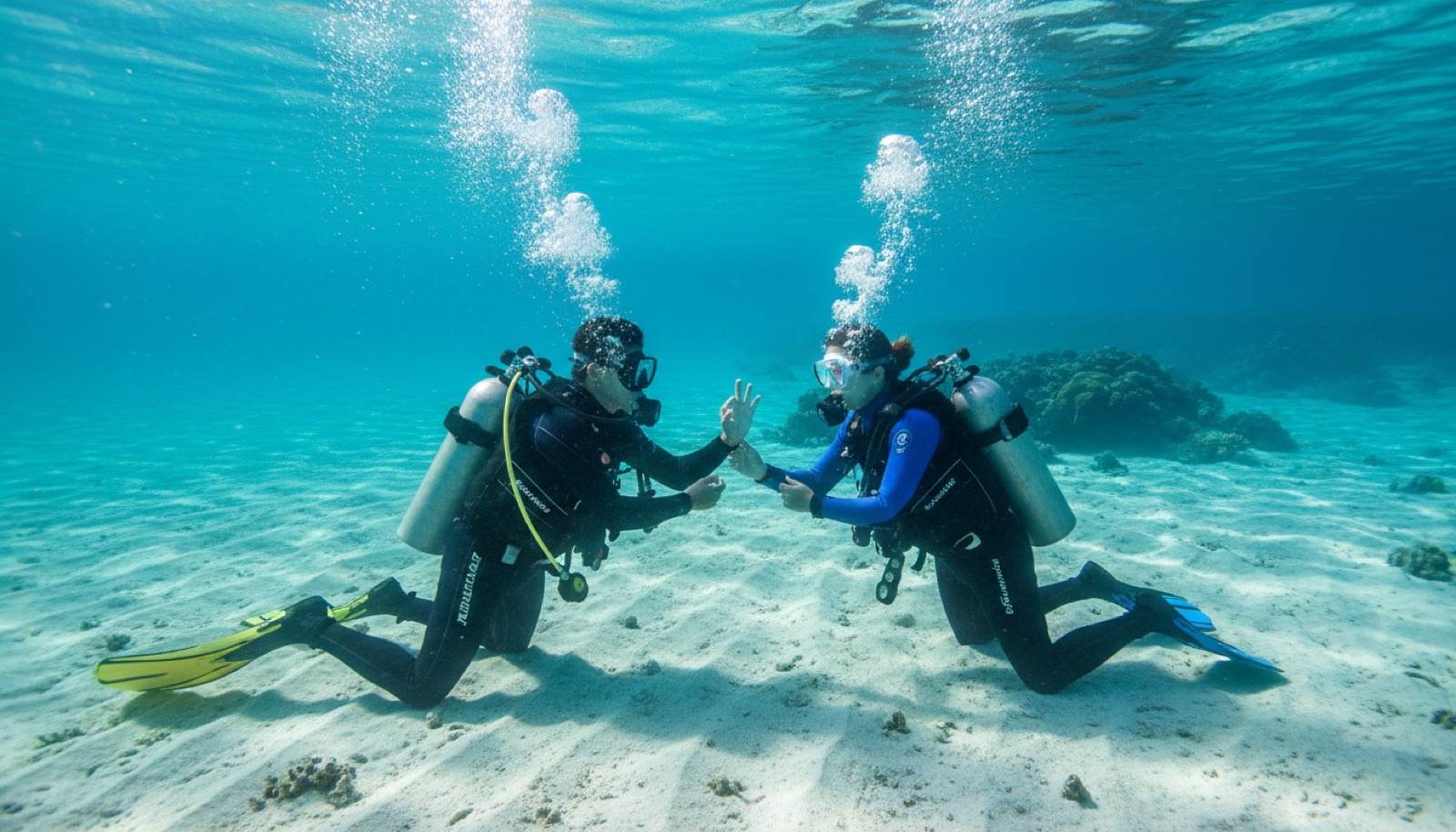
The first meter of every descent contains the sport's most common physical problem. Water pressure squeezes the air space behind your eardrums, the drums bow inward, and unless you actively push air up the Eustachian tubes to balance the pressure, discomfort becomes pain within a couple of meters. Equalization is the fix, it is taught in every entry-level course, and doing it well is mostly about timing and gentleness rather than force.
The techniques divers actually use
- Valsalva, the default: pinch your nostrils shut and blow gently against them, as if inflating the pinched nose. The keyword is gently: a soft, short puff, never a strain. This is the technique taught first because it works for most people immediately.
- Swallowing or jaw movement: swallowing, wiggling the jaw, or tensing the throat while tilting the head can open the tubes with no hands at all. Many experienced divers equalize this way almost continuously without thinking.
- Combined methods: pinching the nose and swallowing simultaneously, or gently blowing while moving the jaw, often succeeds where a single technique stalls. Freedivers favor a technique called Frenzel (using the tongue as a piston with the throat closed), which is more efficient than Valsalva and worth learning from a good instructor if you dive a lot.
Timing beats technique
Almost every hard-to-equalize story is really a too-late story. Pressure change per meter is greatest near the surface, so begin before you feel anything: equalize at the surface, again a meter down, and every meter or so through the first 10 meters. Descend feet first when you can (head-down descents make the tubes work against buoyant air), and use a line or a slow, controlled sink rather than a plummet. If an ear will not clear, the rule is absolute: stop, ascend half a meter or a meter until pressure eases, equalize again, and only then continue. Forcing a descent on an unequalized ear is how divers convert a stuck morning into barotrauma: fluid, pain, hearing dullness and a canceled trip.
Habits and hazards around the dive
Never dive congested. A cold or heavy allergies block the tubes, and masking the problem with decongestants carries a known catch: medication can wear off at depth, trapping expanding air on ascent, a reverse block, which hurts in the opposite direction and cannot be muscled through. If a reverse block happens, slow or pause the ascent, wiggle the jaw and swallow, and give the air time to work its way out; ascending in stages usually resolves it. Persistent trouble across multiple trips, pain after diving, or any hearing change deserves a physician, ideally an ENT or a doctor trained in dive medicine, since technique coaching and medical evaluation both live on the far side of that door.
Small additions that help real divers: stay well hydrated, equalize a few times on the boat ride out as a warm-up, avoid milk-heavy breakfasts if you personally find they thicken mucus, and log which technique and descent style worked so the next trip starts from knowledge. Ears end more dive days than any other body part, and almost all of it is preventable with the two-word summary of this entire guide: early and gently.

