O básico · 4 min de leitura
How to Get Scuba Certified
The entry-level certification path from first theory session to your fourth open-water dive, and the practical decisions worth making before you sign up.
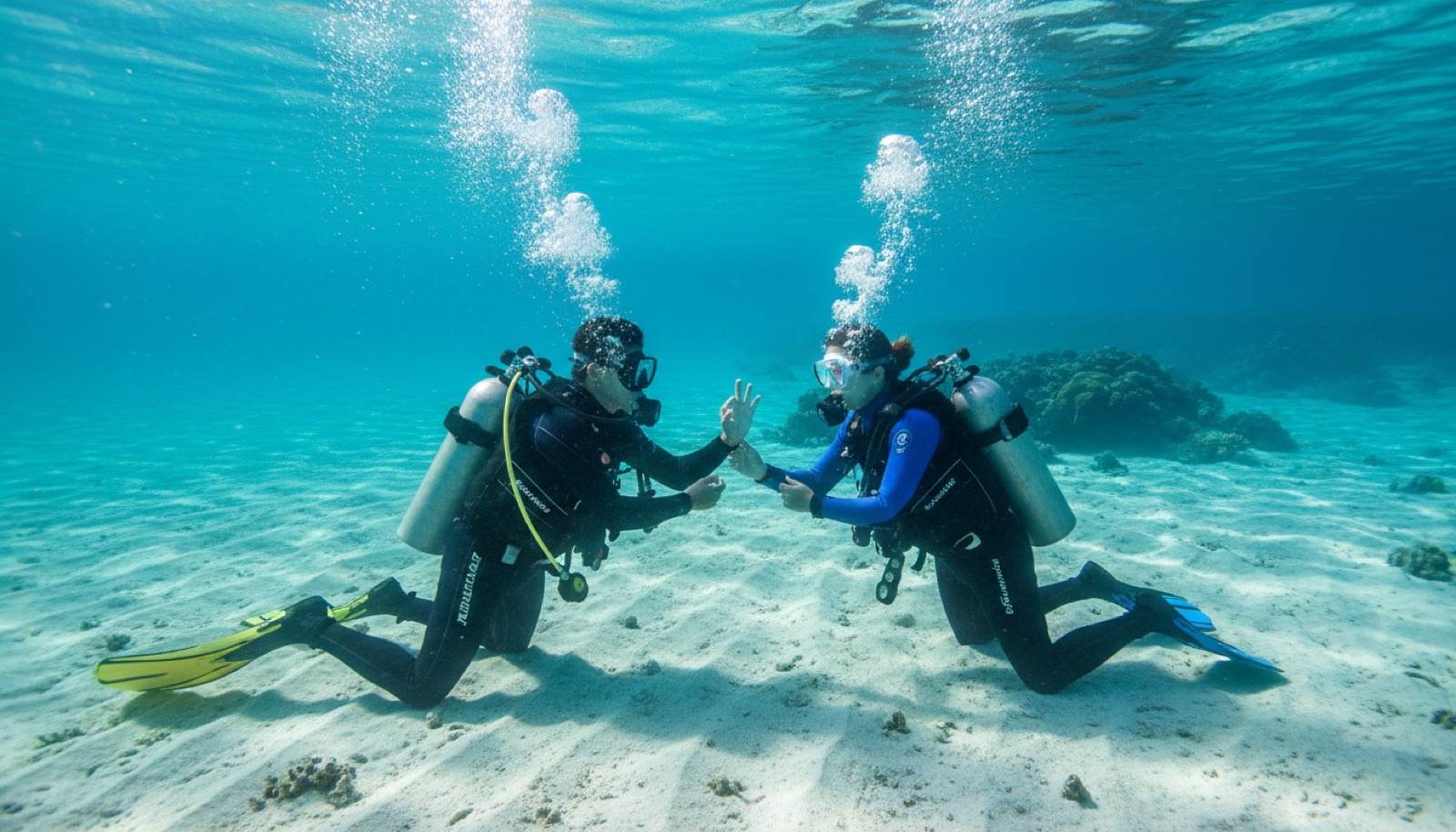
Entry-level scuba certification (Open Water Diver at PADI, SSI, NAUI, RAID and most other agencies) qualifies you to dive with a buddy, without a professional, to 18 meters. The course is standardized to an international norm (ISO 24801-2), which is why a card earned in Mexico works in Malaysia. Most people finish in three to four days of actual training, and the structure is the same everywhere.
The three stages
First comes knowledge development. Nearly every shop now runs this as eLearning you complete at home: five to eight hours of video, reading and quizzes covering pressure, buoyancy, equipment and dive planning, capped by a final exam. Doing theory before you travel is the single best way to protect vacation time: you arrive with only water work left.
Second is confined water: a pool or pool-like shallow site where an instructor teaches the core skills (regulator clearing and recovery, mask flooding and clearing, buoyancy control, alternate-air-source use, controlled ascents). You repeat each skill until it feels routine rather than performed. This stage typically takes one to two days.
Third are four open-water training dives over at least two days, usually to a maximum of 18 meters, where you demonstrate the same skills in the real environment and start to actually dive: swim, navigate, watch fish, manage your air. Your instructor signs off, the agency issues a digital card, and the certification does not expire, though skills fade without use.
Where to do it
You have three sensible options. Certify entirely at home, which suits cold-water locals and spreads the cost over weekends. Certify entirely on vacation, which puts your first dives on a warm reef but spends two to four days of the trip. Or split it with a referral: theory and pool at home, then the four open-water dives with a shop at your destination. Most agencies support referrals across their own networks, and some accept another agency's referral paperwork. The split is popular for good reason; it trades the least vacation time for the best training conditions.
Before you commit
- Complete the diver medical questionnaire honestly. Some answers route you to a physician for sign-off before any in-water training. Handle that at home, not at the dive shop counter.
- Confirm you meet the water-skills requirement: a 200 meter swim (or 300 meters with mask, snorkel and fins) plus 10 minutes of floating or treading.
- Ask the shop about group size, language of instruction, and whether pool and boat fees are included in the quoted price.
- Minimum age is 10 with most agencies, as a junior certification with depth and supervision limits.
Pick the instructor, not the brochure. A patient professional with small groups matters far more than which agency logo ends up on your card, and a good shop will happily let you meet your instructor or watch a pool session before you pay. Budget hubs such as Koh Tao and Utila built their reputations on exactly that combination of low prices and high volume. Read recent reviews and choose deliberately.

