Навыки · 4 мин. чтения
Improving Your Air Consumption
Why some divers surface with double your gas, the real levers behind lower consumption, and how to measure your own rate instead of guessing.
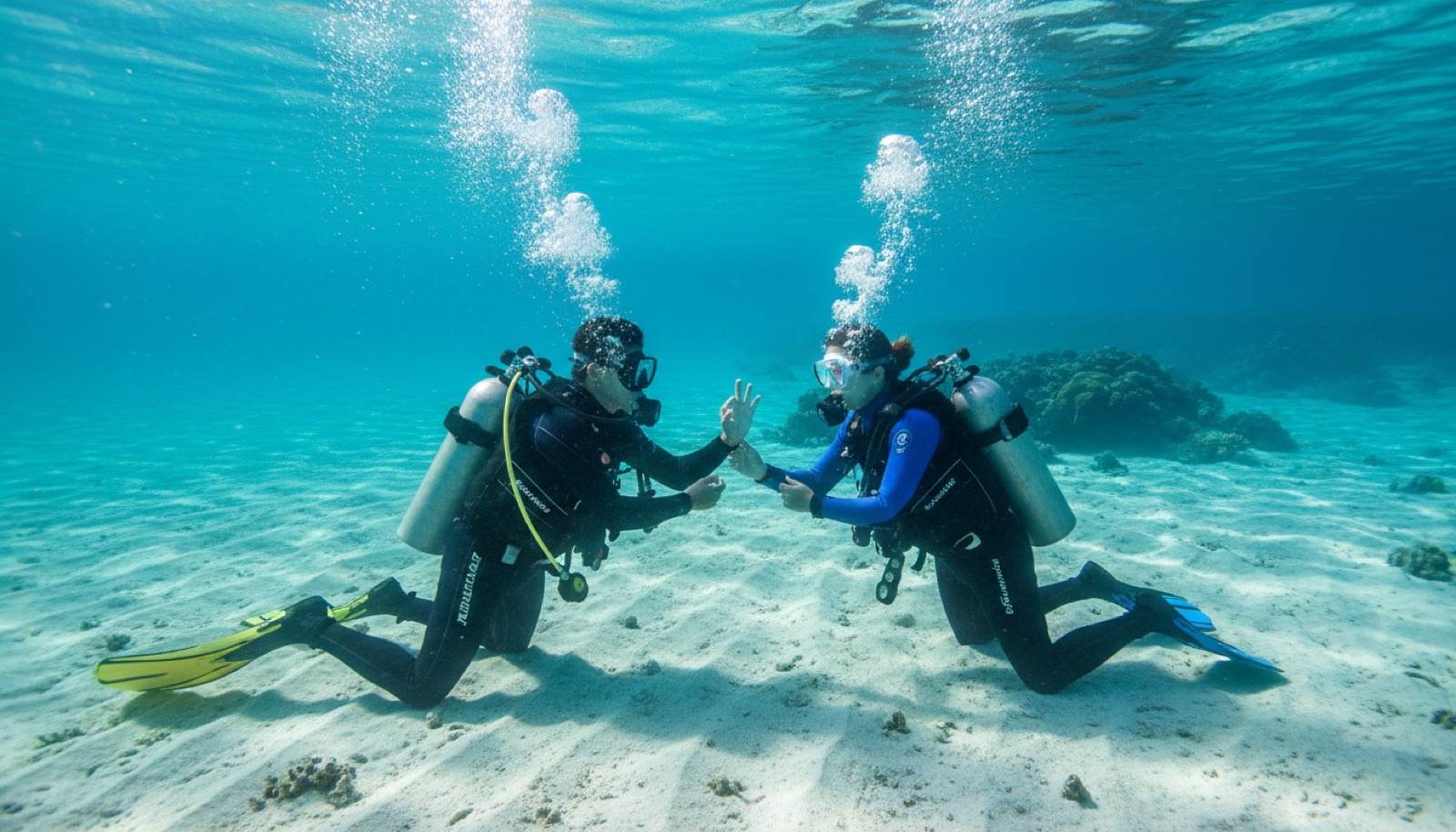
Every dive boat has one: the diver who surfaces after an hour with 90 bar while others hit reserve at forty minutes. New divers assume lung size or magic; the actual explanation is a stack of small efficiencies, every one of them learnable. Air consumption is the most honest scorecard in diving, because it quietly integrates buoyancy, trim, relaxation and fitness into a single number.
The levers, in order of payoff
- Relaxed, full breathing. Slow, deep inhales and long, complete exhales use the lungs efficiently; rapid shallow breathing wastes gas ventilating dead space, and deliberate breath-skipping to save air backfires by building carbon dioxide, the classic cause of dive headaches and air hunger. Breathe like someone falling asleep, never like someone rationing.
- Buoyancy and weighting. An overweighted diver drags an inflated BCD through the water and corrects constantly; every correction is gas, and every unnecessary kilogram makes it worse. Dial in weighting first: it is the largest single improvement most divers can make.
- Trim and streamlining. Horizontal posture presents the smallest profile to the water. Clip and tuck dangling gauges and octopus, keep arms folded or trailing, and let a wetsuit that fits replace one that scoops water.
- Slowing down. Drag rises steeply with speed, so swimming twice as fast costs far more than twice the gas. The best divers move like they are on rails: unhurried, gliding between kicks, letting current do the work where there is one.
- Warmth, fitness and calm. Cold bodies burn gas, so exposure protection matched to the water pays for itself. Basic cardiovascular fitness lowers your resting demand, and experience itself steadily strips out the background anxiety that inflates consumption for every beginner.
Measure it: your SAC rate
Guessing improves nothing, so compute a surface air consumption rate occasionally. Swim at a steady depth for ten minutes and note bar used. Multiply your tank's volume in liters by bar consumed to get liters used, divide by minutes, then divide by the ambient pressure in atmospheres: roughly depth in meters divided by ten, plus one. A worked example: 30 bar used in ten minutes on an 11 liter tank at 15 meters is 330 liters over ten minutes, or 33 liters per minute at 2.5 atmospheres, about 13 liters per minute at the surface. Recreational divers commonly fall between roughly 12 and 20; the number itself matters less than watching your own trend fall as skills improve. Many dive computers with tank-pressure transmitters log this automatically.
What not to do
Never treat gas-saving as a competition or an excuse to cut margins. Reserves exist for problems, ascents and safety stops, not for stretching bottom time, and the agreed turn or ascent pressure stands no matter how smug your consumption is that day. Skip-breathing, as above, trades a headache and elevated CO2 for trivial savings. And a larger tank is a legitimate tool, not an embarrassment: plenty of tall, big-lunged divers simply rent a 15 liter cylinder and enjoy the same runtime as everyone else. The goal is a calmer diver, not a martyred one; consumption falls as a side effect of diving well, which is the pleasant way around.