Compétences · 4 min de lecture
Mask Clearing with Confidence
Water in the mask rattles more new divers than any other nuisance. The mechanics of a clean clear, why the panic response happens, and drills that make flooding boring.
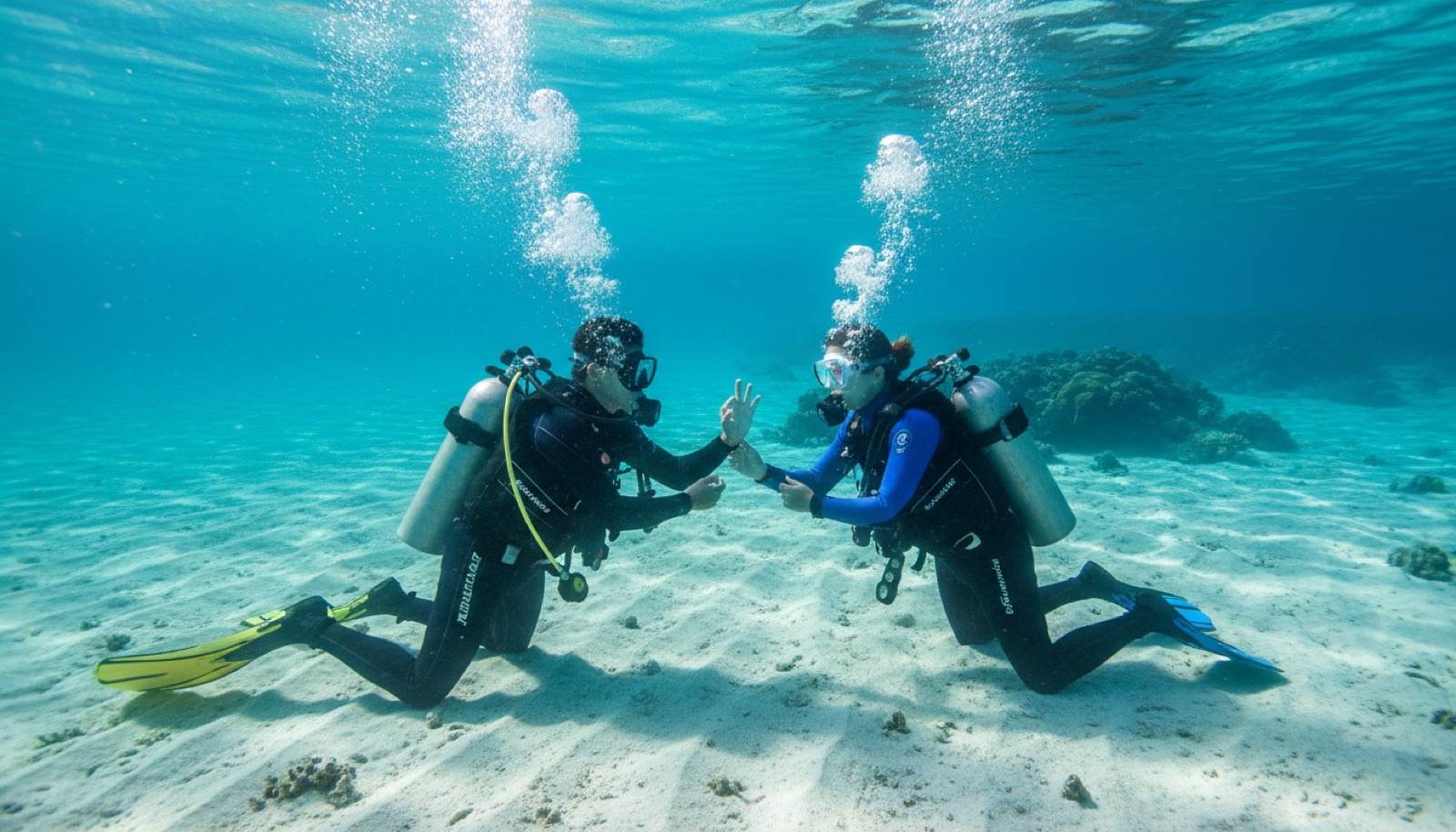
Ask instructors which confined-water skill produces the most wide eyes and the answer is nearly unanimous: flooding and clearing the mask. Water against the nose triggers an involuntary alarm in many people (a reflex to inhale through the nose exactly when they should not), and because masks do leak, fog and get kicked in real diving, the skill cannot stay a course-day memory. The good news is that mask confidence responds to practice faster than almost anything else in diving.
The mechanics, stripped down
Clearing works on one principle: air rises. Press the top frame of the mask lightly against your forehead, look slightly upward, and exhale steadily through your nose. Air fills the mask from the top and pushes water out under the loosened lower skirt. A full flood usually takes one long exhale or two calm ones; a puddle takes a sniff-sized puff. Common failure points are all fixable: blowing out through the mouth from habit (nothing happens), pressing the bottom of the frame instead of the top (air escapes, water stays), tilting the head down (the air pocket sits over your eyes, not your nose), and rushing (a frantic half-exhale clears half a mask and doubles the stress).
Why the panic response happens, and what defuses it
Breathing with a wet face while your nose is exposed to water is a genuinely novel demand; some divers also associate it with childhood pool memories. The defusing sequence is gradual exposure, and you can run it yourself in any pool or calm shallows:
- Stand in chest-deep water, put your face in with no mask, regulator in, and breathe through your mouth for a full minute. This is the core adaptation: proving the nose can be wet and idle while the mouth does the work.
- Kneel and crack the mask seal to let in a small, deliberate puddle. Breathe normally for several breaths, then clear it. Repeat until it produces no heart-rate change.
- Progress to full floods, then to removing the mask entirely, breathing for a minute, and refitting and clearing it. Refit carefully: strap position and cleared hair matter more than tightness.
- Finally, practice mid-water rather than kneeling, since real leaks happen while swimming and buoyancy must keep running in the background.
Making real dives easier
Most in-dive mask trouble is prevention. Defog every dive (a proper defog product or the time-honored spit rubbed on a rinsed lens) because a fogging mask invites repeated flooding to rinse it, and each flood tests your composure. Check that no hood edge or hair crosses the skirt. Buy a mask that actually fits your face rather than the shop's bestseller: press it on gently without the strap, inhale slightly through the nose, and a fitting mask stays put. A low-volume design clears with less air, which cold water and deeper dives will make you appreciate.
Set a small standing practice: flood and clear once on the safety stop of an easy dive, every few trips. Divers who do this stop having a relationship with mask water at all: it becomes weather, noticed and handled. And if the anxiety runs deeper than drills can reach, say so to an instructor; a private pool session dedicated to mask work is a routine booking, and turning that particular corner has kept a lot of people in the sport.