Seguridad · 4 min de lectura
No-Fly Times After Diving
Why a flight after diving can bend a diver who surfaced feeling fine, the minimum surface intervals DAN and the agencies teach, and how to plan the last days of a trip.
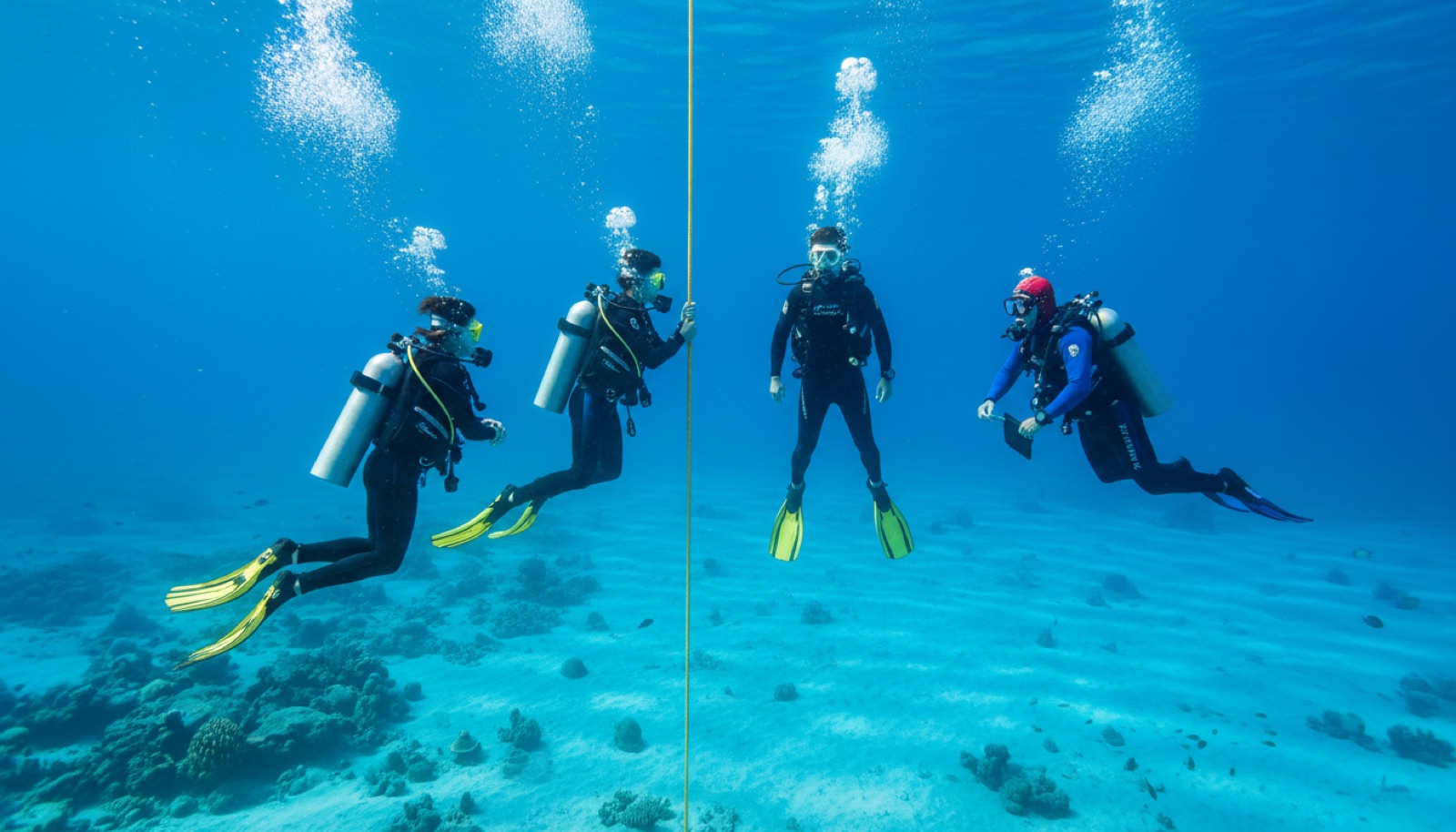
The last dive of a trip has a hidden second half: the ride home. A jet cabin is pressurized not to sea level but to the equivalent of roughly 1,800–2,400 meters of altitude, and a diver who boards still carrying excess nitrogen experiences that cabin as a further ascent. Tissue gas that was leaving quietly at sea level can form bubbles at cabin pressure, which is why divers occasionally develop decompression sickness in seat 23F after surfacing symptom-free. The waiting rules exist to let the slow tissues finish off-gassing before you add altitude.
The intervals taught today
Mainstream guidance (from the Divers Alert Network, reflected in agency teaching and most dive-computer logic) sets these minimums for flying in pressurized aircraft:
- After a single no-decompression dive: at least 12 hours.
- After multiple dives per day or multiple consecutive days of diving: at least 18 hours.
- After dives requiring decompression stops: substantially longer than 18 hours; many divers and operators treat 24 hours or more as the working figure.
These are minimums, not guarantees (no interval reduces risk to zero), and longer is always the conservative direction. Most divers on a typical multi-day trip simply plan a full 24 hours, which conveniently converts the wait into a topside day rather than a countdown. Your dive computer displays its own no-fly timer after each dive; when the computer is more conservative than the guideline, follow the computer.
Details that catch people out
- Altitude without an airplane counts. Driving a mountain pass over a resort island, a cable car, even high-altitude roads en route to an airport all impose the same physics. General guidance treats significant ascents (on the order of a few hundred meters and above) as altitude exposure worth applying the same waiting logic to.
- Liveaboards schedule around this for you: the final morning is usually diving-free precisely so guests hit 18–24 hours before common flight times. Do not undo that planning with a last-minute shore dive.
- Freediving after scuba does not reset anything, and deep repetitive freedives add their own considerations; keep the final day genuinely low and slow.
- Helicopter transfers and small unpressurized aircraft, common on remote itineraries, fly low but still fly; ask the operator how they schedule diving around them rather than improvising.
- The waiting period starts at surfacing from the last dive. Recompute if you sneak in a farewell dive.
Planning the end of a trip
Build the interval into the booking, not the final morning. If the flight leaves at 09:00 Saturday, the last dive belongs to Friday at dawn at the very latest under the 18-hour teaching, and Thursday afternoon buys real margin. Many divers deliberately end trips with the best shallow sites: a long, easy reef at 10 meters loads far less nitrogen than a deep finale, though it still counts as diving for the clock. Spend the buffer day on the things dive schedules squeezed out: the town, the topside island, sorting photos, rinsing gear properly. And if anything feels wrong during the wait (unusual fatigue, aches, tingling), treat it as a medical question for DAN and local EMS before boarding, because the one thing worse than delaying a flight is diagnosing yourself at 11,000 meters.