السلامة · 4 دقيقة قراءة
Out-of-Air Drills
The trained responses to the emergency that should never happen: alternate-air-source use, controlled emergency ascents, and the practice habits that keep both sharp.
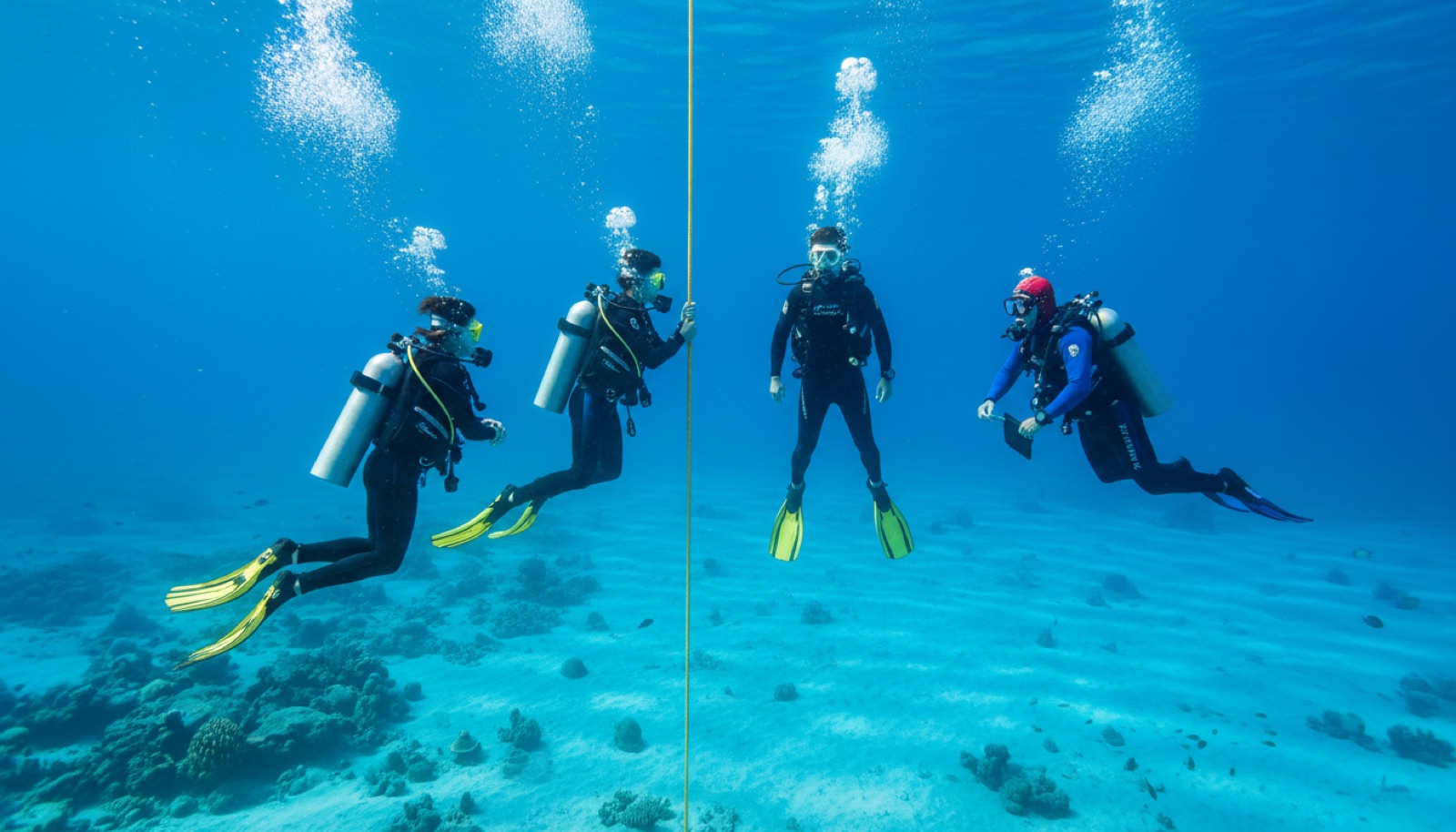
Running out of breathing gas underwater is almost always the end of a chain (an unwatched gauge, an unplanned depth, a free-flow ignored), and prevention gets the attention it deserves elsewhere. This guide is about the last links: what agencies train you to do when gas stops arriving, and why those responses need occasional rehearsal to remain real options rather than certification memories.
The hierarchy you were taught
Every entry-level course teaches an ordered set of responses, best-first:
- Normal ascent: if you notice low (not zero) gas with depth and calm to spare, you simply end the dive with a controlled ascent and safety stop as gas allows. Most low-gas events should die here, boring and unreported.
- Alternate air source from your buddy: the primary out-of-air response. Signal (a hand slashing across the throat, then pointing to the mouth), receive or take the alternate second stage, establish breathing, grip forearms, and ascend together at normal rates. This is why the buddy check locates the octopus every dive.
- Controlled emergency swimming ascent (CESA), for a diver alone with no gas at modest depth: swim up at a safe rate with the regulator kept in, exhaling continuously with an audible aaah so expanding lung gas escapes. Trained in confined water and practiced horizontally, it exists for roughly the depths of typical training dives, not as a plan from 30 meters.
- Buoyant emergency ascent: ditching weights to guarantee reaching the surface, accepting the risks of a fast ascent because drowning is the alternative. Last resort, by definition.
Older training also included buddy breathing: sharing a single second stage in turns. Modern octopus-equipped kit has made it a historical footnote in most curricula, and it is not worth improvising without training.
Why drills decay, and how to refresh them
The awkward truth instructors repeat: divers who have not rehearsed since certification fumble. They forget where a buddy's alternate lives, donate a regulator upside down, or begin a CESA holding their breath, the one absolute error, since breath-holding on ascent risks lung overexpansion injury. The remedies are small and fit inside normal diving:
- On an easy dive's safety stop, occasionally run a calm air-share with your regular buddy: signal, donate, breathe for a minute, switch back. Agree on it in the briefing, keep buoyancy neutral throughout, and it costs ninety seconds.
- Physically touch and identify each other's alternates in every buddy check, especially with unfamiliar rental setups or hose configurations you have not seen: some divers donate their primary and switch to a necklaced backup, and finding that out mid-emergency is too late.
- Rehearse the signals so they are reflexes; an out-of-air diver does not compose sentences.
- Book a refresher or rescue course if it has been years. Rescue Diver training in particular reframes all of this from victim skills to team skills, and most divers call it the most valuable course they ever took.
The prevention footnote that is really the headline
Gauges make this emergency nearly voluntary. Check pressure every few minutes and whenever anything changes; report it honestly to your buddy; plan a turn pressure and a surfacing reserve (50 bar back on the boat is a common working rule) and treat reserves as untouchable rather than bonus time. Divers with disciplined gas habits go entire careers never using the hierarchy above for real. That is the goal; the drills are for the day the goal misses.

