Kỹ năng · 4 phút đọc
Reef Hooks and Strong Currents
The Palau-born tool that lets divers hold station in ripping current without touching coral: when hooks are appropriate, how to use one cleanly, and the rules that vary by marine park.
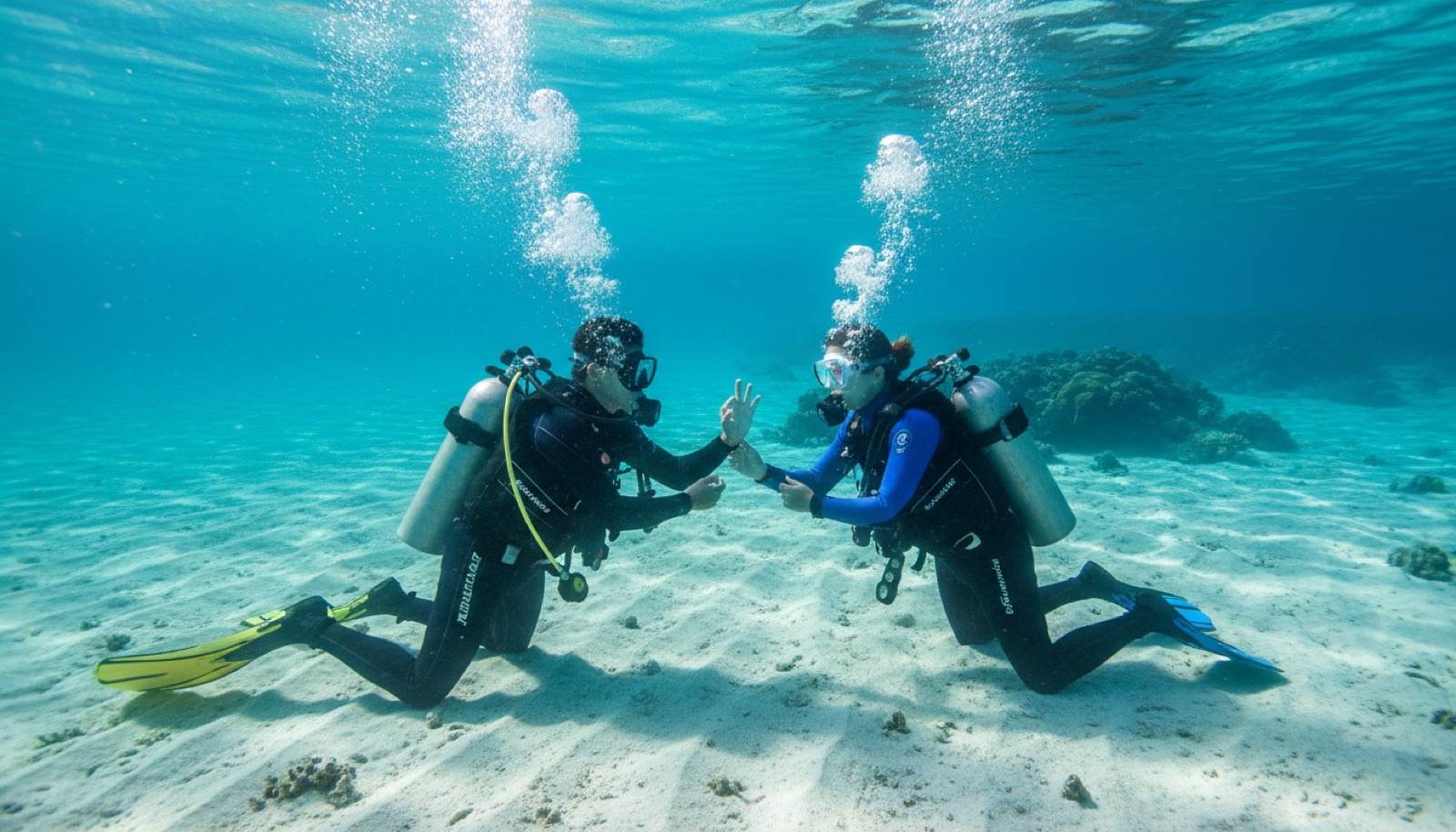
At Blue Corner in Palau, the main event happens exactly where the current is worst: grey reef sharks stacked into the up-current flow, jacks and barracuda wheeling above, a Napoleon wrasse patrolling the shelf edge. Finning in place there is impossible for more than a minute or two, and grabbing the reef is vandalism. The local solution became famous enough to name a technique: the reef hook, a blunt stainless hook on a meter or two of line with a clip, lets a diver attach to bare, dead rock at the reef crest and hang in the flow like a kite, hands free, coral untouched, watching the show for as long as gas allows.
Using one properly
- Placement is the ethics and the technique in one motion: the hook goes onto bare rock, dead coral substrate or a solid crevice edge, never living coral, sponges or anything that moves. Scout your spot before committing; the guide will often indicate a hooking zone.
- Set the hook, let the line take tension gradually, then add a small puff of gas to the BCD so you lift off the reef and fly a meter or two above it, angled into the current. You should hover clear of the bottom, not drag across it.
- Keep the rig simple and your hands on nothing: line clipped to a sturdy BCD D-ring (never to anything you cannot release), no wraps around fingers or wrists, streamlined until the moment of use.
- Unhooking is the moment that goes wrong most: dump the lift you added first, get slightly down-current of the hook, release it by hand, stow it, and leave, in that order. Forgetting the vent step launches you upward the instant tension releases.
- Always be ready to abandon the hook entirely; no piece of kit is worth a struggle in heavy water.
When a hook is the wrong answer
Reef hooks are a station-keeping tool for specific, briefed situations (channel edges and current viewpoints), not a general substitute for skill in moving water. Most drift diving needs no hook at all; you travel with the current rather than opposing it. Down-current spots, walls with vertical water movement, and anywhere without solid dead substrate are all non-starters. And rules genuinely differ by destination: hooks are standard practice in Palau's channels, common in strong-current passes elsewhere, and prohibited or discouraged in some marine parks that judge any reef contact unacceptable. Komodo's rangers and operators, for instance, brief precisely on where holding is tolerated. The universal rule is to ask: the operator's briefing, not habit, decides whether the hook comes on the dive.
The bigger current toolkit
A hook rides on top of the fundamentals rather than replacing them. Streamlining and flat trim reduce the load the current puts on you; ducking close to the bottom or behind structure finds the slow layer; a DSMB and the discipline to deploy it drifting mean a blown hook-point costs you a viewpoint, not a boat pickup. Gloves are worth a thought where permitted (hooking zones are often barnacled rock), but glove rules, like hook rules, belong to the local park. And self-assessment stays honest: hooked dives in ripping passes are advanced dives, usually with minimum-dive-count requirements from the operators who run them, because everything happens faster there. Done right, the payoff is unique in diving: parked in mid-air at the edge of a highway of sharks, breathing slowly, going nowhere on purpose.

