Sites de plongée, saisons et vie marine — recherchés, cartographiés, planifiés.
Menu
Destinations Sites de plongée Vie marine Épaves Actualités
Planifier un voyage Planificateur de séjour Quand plonger Calculateur de coût Comparaisons Calendrier de la faune marine Température de l'eau Liveaboards Opérateurs & resorts Parcs marins Caissons hyperbares Carte du monde
Régions Australie, Nouvelle-Zélande & Asie de l'EstCaraïbes & Atlantique occidentalEurope, Atlantique & MéditerranéeOcéan Indien & Afrique de l'EstÎles du Pacifique & MicronésieMer Rouge & Moyen-OrientAsie du Sud-Est et Triangle de CorailLes Amériques et Pacifique Est Pays
Apprendre & Outils Tous les guides Certifications Guides d'équipement Vidéos Interroger les données Agents IA API
À propos À propos de nous Méthodologie Avertissement Contact
Votre vue
★ Enregistré

Vos destinations, sites et espèces favoris — enregistrés dans ce navigateur.

API GATEWAY

Accès JSON gratuit en lecture seule aux données en cache de l'atlas.

Mode sombre

🧭 Vue Guidée
Nouveau dans la plongée — profondeurs, courants, niveaux de certification ? Nous expliquons chaque terme au fil de votre navigation, en langage clair. Les mêmes données, avec l'aide intégrée.

⚡ Vue Expert
Vous connaissez déjà la différence entre un tombant et un drift. Juste les données — claires, rapides et compactes. C'est la vue par défaut.

Langue de l'interface

Santé · 4 min de lecture

Sun, Heat, and Hydration on Dive Days

A tropical dive day is a quiet dehydration machine: sun, sweat, dry breathing gas, and immersion itself all drain you. Why that matters in dive medicine and the habits that counter it.
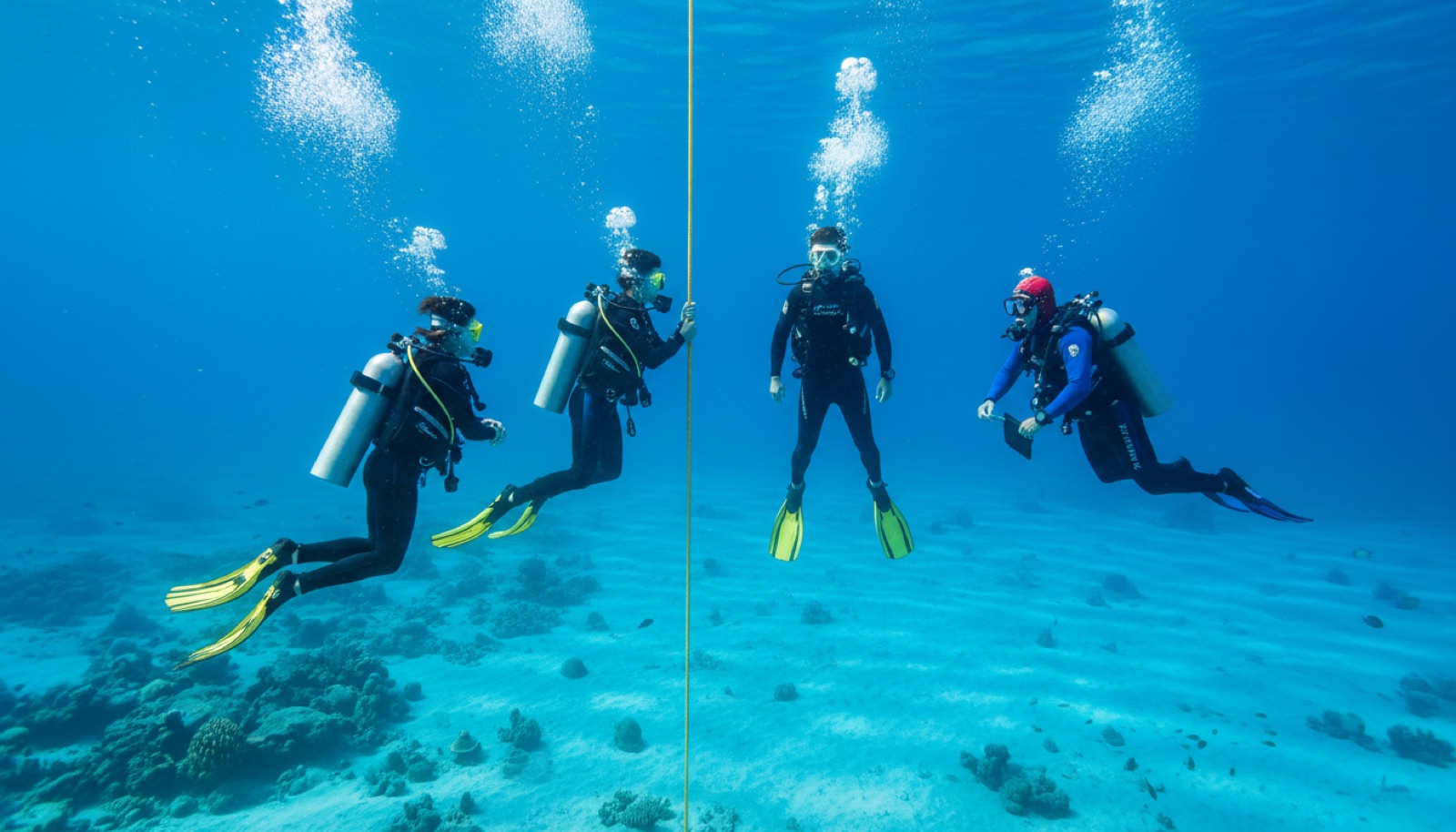
Illustration générée par IA pour The Scuba Atlas — illustrative, et non une photographie documentaire.
Ceci est de l'information, pas de la formation Rédigé selon les enseignements des agences grand public et du DAN. Il ne remplace pas une formation, un briefing, ni un médecin spécialisé en médecine de plongée — en cas de doute, consultez l'un d'eux, pas un site web.

A tropical dive day is a dehydration machine with a pleasant user interface. You sweat inside black neoprene under an equatorial sun, breathe compressed gas with almost no moisture in it, lose fluid simply by being immersed, and quite possibly started the day short from last night's dinner wine. None of it feels dramatic, which is exactly the problem — and hydration is not just comfort, because dehydration is regarded in mainstream dive-medicine teaching as a contributing risk factor for decompression sickness.

Where the water goes

Four drains run at once on a dive day. Cylinder gas is extremely dry, so every breath exports moisture. Immersion shifts blood toward your core and signals the kidneys to shed fluid — the well-documented reason a dive so reliably ends with a full bladder, known as immersion diuresis. Sweat runs freely in a suit on deck before you ever splash. And seasickness, sunburn, and alcohol each pile on their own losses. A diver can end a routine two-tank morning meaningfully down on fluids without one moment of feeling thirsty.

Drinking like it matters

  • Sip steadily across the day rather than downing a liter at the dock; urine that runs pale is the rough gauge working in your favor.
  • Water does the job for most days; on sweat-heavy trips, occasional electrolyte drinks earn their place. Go easy on strong caffeine and skip alcohol entirely between dives.
  • Treat the evening honestly: drinking at dinner is part of dive travel for many people, and moderation plus water is the difference between a normal morning and diving with a hangover — which is impairment and dehydration wearing the same hat.
  • Rehydrate deliberately after the last dive, not just before the first.

Managing the heat

Heat problems on dive boats are mostly self-inflicted by scheduling: suiting up too early, then standing in the sun. Stage the suit — legs on, torso hanging — until the last sensible minute, claim shade during surface intervals, and use the ocean itself: a dunk of the hood or a wet rash guard is fast, free cooling. Learn the pattern of heat exhaustion — weakness, dizziness, nausea, clammy skin — and treat it seriously: shade, cooling, fluids, and no diving until fully recovered, with medical attention if symptoms are severe or not improving. That is general first-aid teaching, not a substitute for it; a heat-stressed diver's afternoon belongs on the bench.

Sun, skin, and the long game

Divers accumulate ferocious ultraviolet exposure — direct sun plus reflection off water and white decks — and the burn map is distinctive: ears, nose, the back of the neck, hands, and the strip of lower back a shorty leaves bare. Fabric beats lotion: rash guards, hats, and a loose long-sleeved layer cover most of it, with mineral sunscreen on what remains, applied before boarding and renewed per the label. Sunglasses with polarization spare your eyes and improve every surface interval. Sunburn is not just cosmetic on a dive trip — burned skin impairs cooling and adds to fluid loss, feeding the same cycle everything above was built to break. Arrive hydrated, stay covered, and the tropics become what the brochure promised.


Bien documenté

Regarder

Depuis les canaux officiels

Toutes les vidéos →

The Art of Marine Life

PADI · YouTube ↗ · Aug 31

Best Places to Dive with Whale Sharks

PADI · YouTube ↗ · Aug 30

Les vidéos sont des liens intégrés vers les chaînes de leurs créateurs — nous n'hébergeons rien et créditons tout.

Australie, Nouvelle-Zélande & Asie de l'Est

Cairns & the Ribbon ReefsNingaloo ReefCoral Sea & Osprey ReefOkinawa & the Kerama IslandsPoor Knights IslandsTownsville & the YongalaGreen IslandIzu Peninsula

Caraïbes & Atlantique occidental

BonaireCozumelRiviera Maya & the CenotesBelize Barrier ReefGrand CaymanIsla Mujeres & CancúnRoatánTiger Beach & Grand Bahama

Europe, Atlantique & Méditerranée

Malta & GozoSilfra & IcelandThe AzoresCanary IslandsLarnaca & the ZenobiaScapa FlowArctic NorwayMadeira

Océan Indien & Afrique de l'Est

North & South Malé AtollsAri AtollBaa Atoll & Hanifaru BayAliwal Shoal & UmkomaasMafia IslandMauritiusSeychellesSodwana Bay

Îles du Pacifique & Micronésie

PalauChuuk (Truk) LagoonFakaravaKona, HawaiʻiRangiroaTaveuni & Rainbow ReefBeqa Lagoon & Pacific HarbourEspiritu Santo

Mer Rouge & Moyen-Orient

Sharm El Sheikh & Ras MohammedBrothers, Daedalus & St John'sDahabHurghada & El GounaMarsa Alam & the Deep SouthAqabaDaymaniyat IslandsMusandam Peninsula

Asie du Sud-Est et Triangle de Corail

Bali & Nusa PenidaKomodoRaja AmpatSipadan & MabulAnilaoCoronKoh TaoLembeh Strait

Les Amériques et Pacifique Est

Galápagos IslandsCocos IslandFlorida KeysSea of Cortez & Cabo PulmoSocorro & the RevillagigedosBritish ColumbiaCalifornia Channel IslandsCosta Rica Pacific Coast