Безопасность · 4 мин. чтения
The Buddy System
Why recreational diving is built around pairs, what a functioning buddy team actually does before and during a dive, and how to be worth diving with.
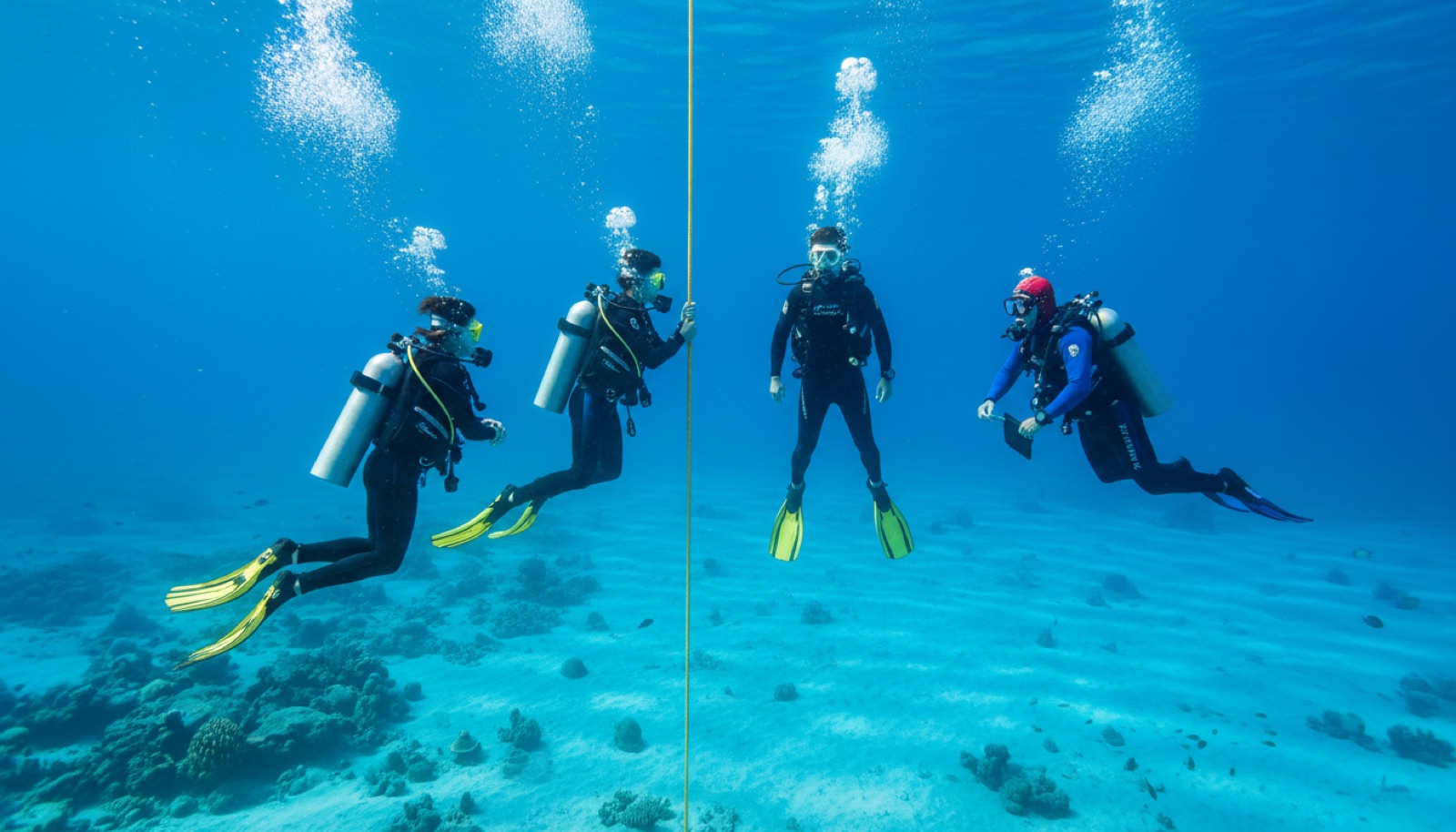
Strip away the culture and the buddy system is redundancy engineering: two divers, each carrying the other's backup gas supply, spare eyes, spare hands and spare judgment. Nearly every recreational-diving emergency has a cheaper solution at arm's length than at the surface (an alternate regulator, a freed fin, a calming signal), which is why every major agency builds training around pairs and why the system survives every generation of equipment improvement.
Before the water: the check
Functioning teams are made on the boat, not at 20 meters. A pre-dive buddy check (PADI students learn it as BWRAF) walks both divers through each other's kit in about two minutes:
- BCD: inflate, deflate, find each other's dump valves.
- Weights: locate the releases and confirm how they open, since systems differ.
- Releases: know the buckles and clips you would need to open to get your buddy out of their gear.
- Air: both tanks fully on, breathe both second stages, check gauge readings, and physically locate the alternate. A yellow octopus stuffed loose in a pocket is a plan that fails at the worst moment.
- Final check: fins, mask, computer on, nothing dangling.
The check matters most with a stranger, and same-boat pairings of solo travelers are routine. Two minutes of questions turn a stranger into a teammate: experience level, air-consumption honesty, hand-signal review, who navigates, turn pressure, and what happens if separated.
During the dive: position and communication
The working standard is simple: close enough to help within seconds, which in practice means a couple of meters, side by side rather than single file, with a glance exchanged every half minute or so. Leaders and photographers are the classic offenders: one absorbed in the reef ahead, the other in a viewfinder, drifting apart until neither could find the other in a minute of searching. Agree beforehand how photography dives will work; the non-shooting buddy holds position and patience, the shooter surfaces from the camera regularly.
Communication is a vocabulary of a dozen signals plus attentiveness: air checks asked and answered honestly, problems signaled early rather than managed silently, the dive turned by whoever hits the agreed pressure first, without resentment, because the turn rule is the team's, not the individual's. Separation has a trained procedure: search for about one minute, then ascend safely and reunite at the surface. It only works when both divers actually do it instead of continuing the dive hoping.
Being worth diving with
The system's reputation problems (the air-hog complaint, the trust-a-stranger complaint) are mostly culture problems, and the fix starts with being a good buddy yourself: honest about experience, disciplined about position, cheerful about turning the dive, practiced enough that donating an alternate is a procedure rather than a scramble. Rehearse out-of-air sharing occasionally on an easy dive; skills unpracticed since certification are skills you half-have. Guided-group diving does not dissolve the pairing either: a divemaster leading six divers is not six people's buddy, and agencies teach that pairs within the group remain responsible for each other.
Trained, equipped solo diving exists as a separate discipline with its own certification and redundant gear, and its existence proves the point rather than undermining it: remove the buddy and you must replace everything the buddy provided. For everyone else, the system costs two minutes of checks and a habit of glancing sideways, and the entire history of the sport says that is one of the best trades diving offers.