Gezondheid · 4 min leestijd
The Diver Medical Questionnaire
How the standardized medical screening form works, what a yes answer actually triggers, and why honesty on it protects you rather than blocking you.
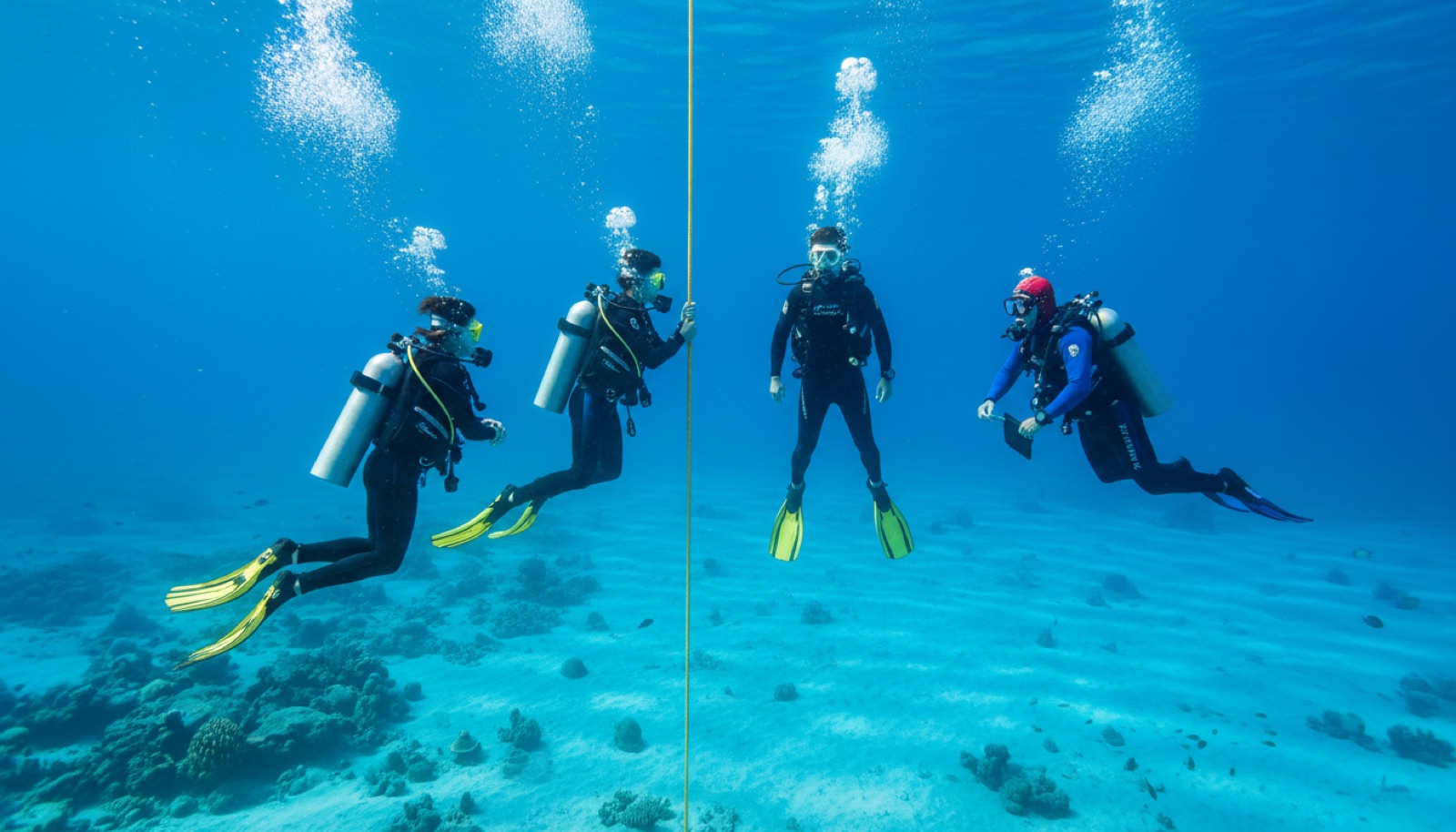
Before any course, and at many operators before any diving at all, you will be handed the same document worldwide: the Diver Medical Participant Questionnaire, a standardized screening form maintained by the Recreational Scuba Training Council and developed with input from dive-medicine bodies including the Undersea and Hyperbaric Medical Society, substantially revised in 2020. It is not a test you pass or fail. It is a sorting mechanism, and understanding what it sorts takes the anxiety out of it.
How the form works
The questionnaire asks a series of yes/no questions about conditions relevant to pressure, exertion and immersion: heart and lung disease, asthma, seizures, diabetes, blackouts, ear and sinus surgery, psychological conditions, certain medications, pregnancy, recent surgeries and more, with age-related follow-ups. All no answers mean no medical review is needed: you sign and train. Any yes routes you to the follow-up pages, which narrow things down, and from there possibly to the form's physician evaluation section: a doctor reviews you against published guidance for divers and signs either approval or disapproval. Instructors are not making medical judgments (the system exists precisely so they never have to), and a shop that shrugs at a yes answer instead of requesting the evaluation is telling you something about its other standards too.
What a yes actually means
Mostly, paperwork rather than exclusion. Large numbers of people dive with well-managed asthma, diabetes, hypertension, anxiety or a cardiac history, cleared by physicians using the current guidance; conditions that once meant automatic refusal are now assessed individually, which was the point of the 2020 revision. Some conditions do result in a no, permanently or temporarily, because immersion physiology is genuinely unforgiving of certain problems: uncontrolled seizure disorders and spontaneous pneumothorax are classic examples taught to every instructor. A disapproval is a physician protecting you from a specific, mechanistic risk, not a bureaucratic verdict; asking the evaluating doctor to explain the mechanism usually makes the answer feel like sense.
Doing it right, practically
- Complete the form before travel, at home, where your own physician and your records live. Sorting a yes answer from a resort town costs vacation days and sometimes ends trips.
- Seek a physician with dive-medicine familiarity where possible: DAN maintains referral resources, and hyperbaric units often run fitness-to-dive clinics. A doctor unfamiliar with diving can consult the guidance attached to the form, which exists for exactly that purpose.
- Answer what is true now, and refresh honestly: courses require current forms, many operators re-ask annually, and a new diagnosis, surgery or medication between trips deserves a re-check even when nobody demands the paper.
- Medication questions belong to the physician conversation, not the forum thread: interactions with depth, sedation and exertion are individual, and this site does not advise on drugs.
- Pregnancy is a specific case with a clear mainstream answer: agencies and dive-medicine bodies advise against diving while pregnant, full stop, and the form reflects it.
The lying problem
Every instructor has met the diver who ticks all no because a yes felt inconvenient. It defeats screening designed around conditions that behave differently underwater (a blackout at the surface is an incident, at 20 meters it is a fatality mechanism), and it can void insurance and shift liability onto the diver who misrepresented. The blunt framing that helps: the questionnaire is not an obstacle between you and diving; it is the process that lets people with medical histories dive with confidence instead of superstition. Filled in honestly, it is one of the quietest safety systems in the sport.

