Kenntnisse · 4 Min. Lesezeit
Trim and Propulsion
Why body position is the multiplier on every kick, how to diagnose and fix your own trim, and the propulsion choices that follow once you are flat in the water.
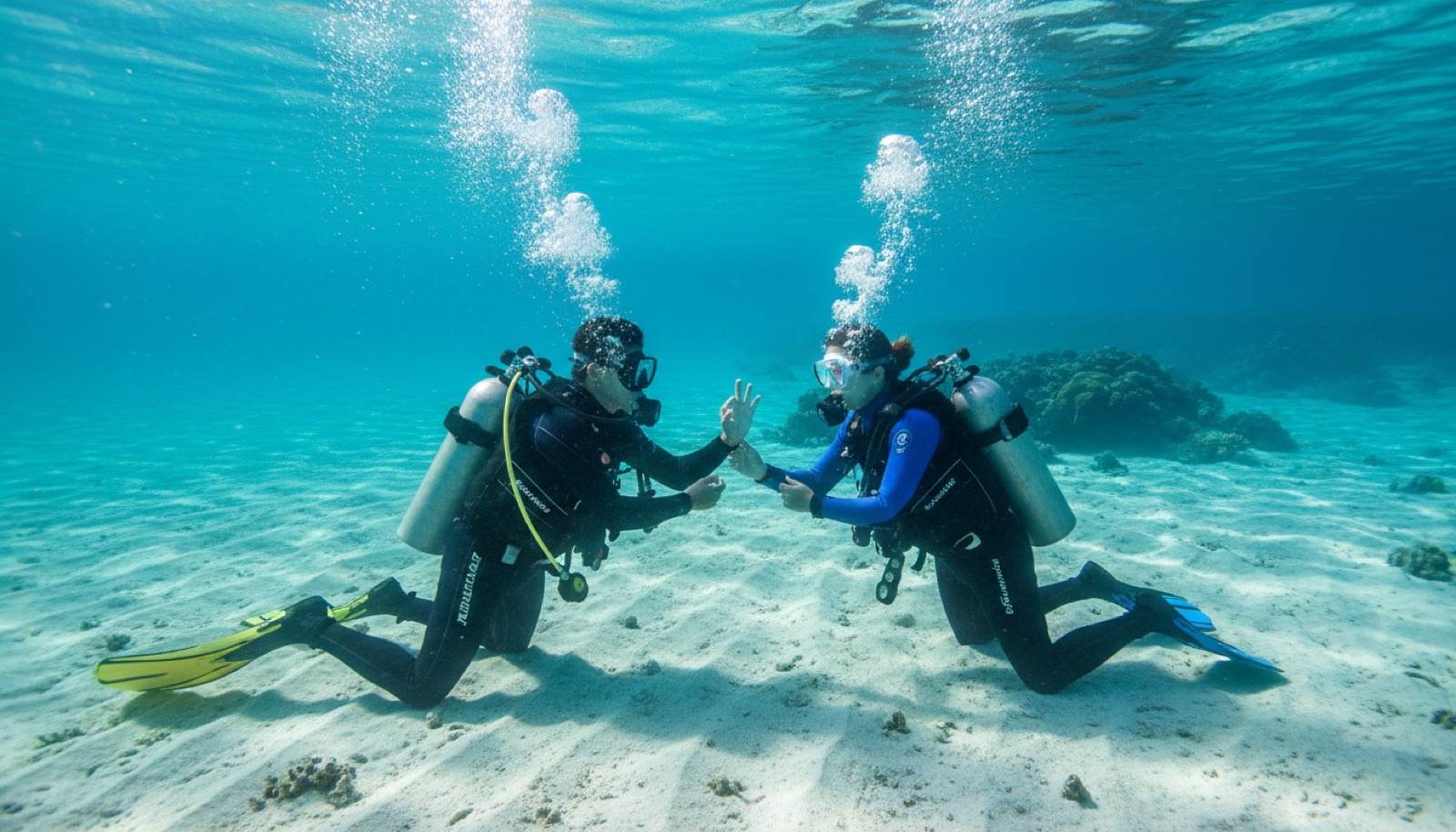
Two divers with identical buoyancy control can still look completely different underwater, and the difference is trim: the attitude of the body in the water. One swims flat, fins behind and slightly above, sliding through the water like a shadow; the other angles head-up at twenty degrees, fins pointed at the reef, plowing forward and upward at once. Trim is the multiplier on everything: propulsion efficiency, gas consumption, silt discipline, photography, and the simple aesthetic pleasure of moving well.
What good trim is, and why it pays
The reference posture is horizontal: spine neutral, head in line and eyes forward, knees bent about ninety degrees, fins up level with the body or slightly above, arms relaxed ahead or folded. From this platform, every kick drives you purely forward (no wasted vertical component to fight with buoyancy), and your slipstream is as small as your shoulders. The same posture keeps fin wash pointed behind you rather than down, which is the difference between visiting a silty wreck and redecorating it, and it holds your gauges, camera and eyes all at reef level instead of alternating between sky and sand.
Diagnosing yourself
Trim problems are weight-distribution problems far more often than skill problems. Run the classic test on a calm dive: get neutral in mid-water, stop finning entirely, hold still for ten seconds and notice what your body does. Feet sink (the commonest result) points to weight worn too low, heavy fins, or air hiding high in the BCD. Feet rise suggests buoyant fins, a drysuit with gas in the boots, or ballast concentrated high. Rolling to one side usually means asymmetric weighting or a tank askew. Fixes are mechanical before they are muscular:
- Move ballast, do not just remove it: trim pockets on the tank band or cam straps shift weight up and back for sinky feet; moving weight to a belt shifts it down and forward for floaty ones.
- Reconsider the big items: fin buoyancy varies widely, steel versus aluminum cylinders change the whole equation, and a well-fitted backplate-and-wing arrangement makes flat trim nearly automatic for many divers.
- Then finish the job with body: arch or tuck slightly, extend or draw in arms, and let the head lead. Bodies follow eyes underwater to a surprising degree.
Propulsion from a flat platform
Once trim is solid, kick choice becomes a toolkit rather than a habit. The flutter kick, the default from swim training, delivers power and speed, at the cost of a downdraft when your trim sags; keep it for open water and current. The frog kick becomes the everyday gait of well-trimmed divers: a wide, deliberate sweep-and-glide that directs wash straight back, ideal near bottoms and inside anything. A modified flutter from bent knees, ankles doing the work, covers tight spaces. The helicopter turn, sculling with one ankle while pivoting, rotates you in place without hand-waving, and the back kick, hardest of the set, buys the ability to retreat from a subject or a wall without turning around. Hands, in all of this, are instrumentation and camera platforms, not paddles; persistent sculling is a trim deficit announcing itself.
Video accelerates progress more than anything else here: one clip of yourself from a buddy's camera is worth a hundred self-assessments, which is why buoyancy and trim workshops (and, at the demanding end, courses like GUE Fundamentals) lean on it. Expect the flat, quiet version of yourself to feel unfamiliar for a dozen dives, then permanent. Reef, gas gauge and dive guides will all register the upgrade before you do.