스킬 · 4 분 분량
Underwater Navigation
Compass work, natural references and the habits that keep you found: a practical framework for always knowing roughly where you are and exactly how to get back.
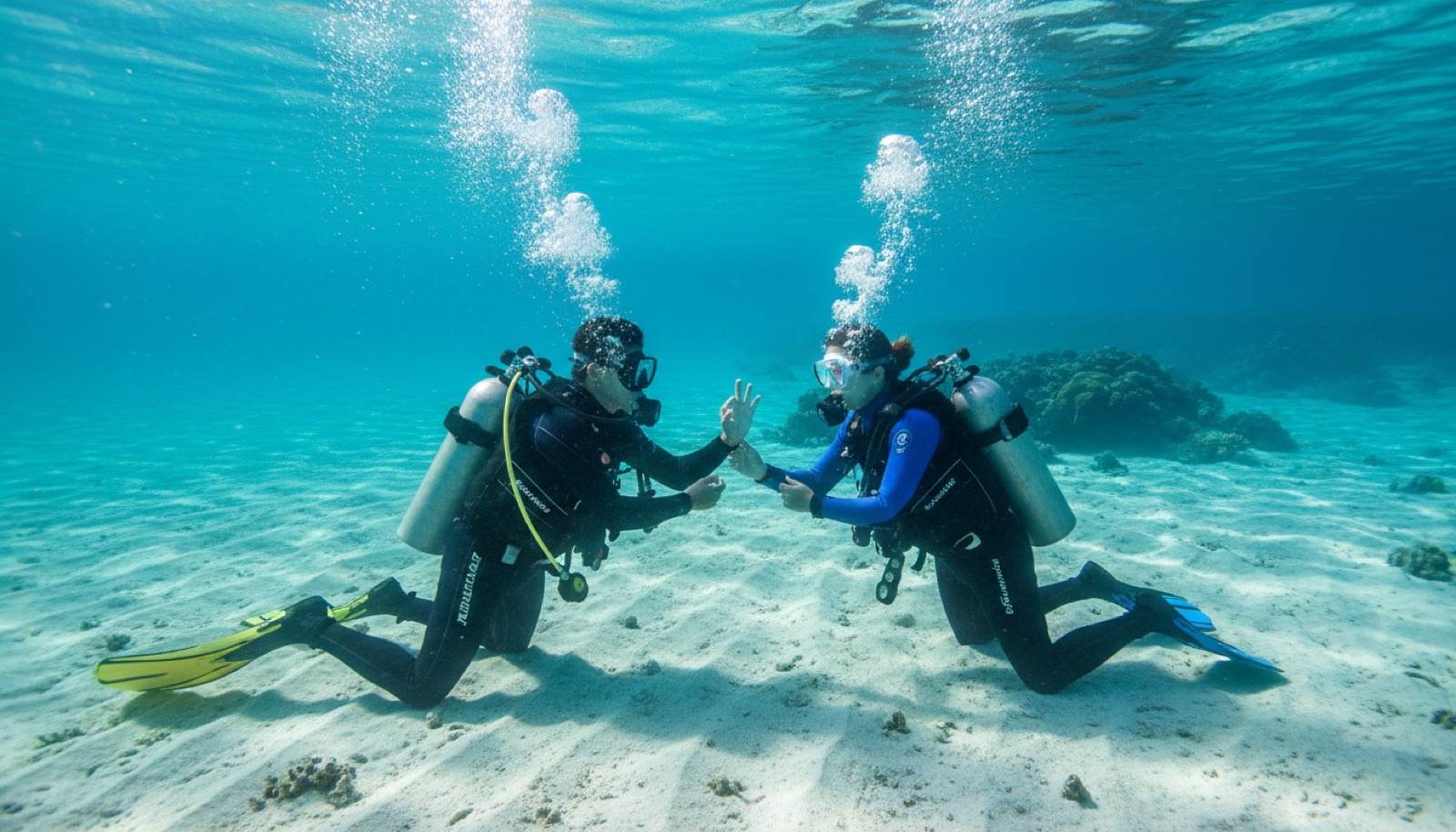
Navigation is the skill that quietly separates passengers from divers. A diver who can find the way back surfaces at the boat with gas to spare; one who cannot surfaces wherever the gas ran out, then swims. The good news is that underwater navigation is not a gift; it is a small stack of techniques, each individually easy, that compound into a reliable sense of position.
The compass, demystified
A dive compass gives you two things: a course to swim and a course home. Hold it flat and level (tilted compasses stick), squarely in front of your body so the lubber line (the fixed arrow) points where your spine points, not where your wrist wanders. To run a heading, rotate the bezel until its marks bracket the north needle, then swim keeping the needle inside the marks. To return, the classic reciprocal trick: turn until the needle sits exactly opposite the marks, or pre-set the bezel 180 degrees around. Practice the basic patterns from training on land and in the pool until they are boring: out-and-back on a single heading, and the square (four legs of equal kick counts with 90-degree bezel turns between). Electronic compasses in dive computers remove the tilt problem and remember headings, but the discipline is identical, and a needle compass on the wrist or console never runs out of battery.
Measuring distance without a tape
Headings without distance are half an answer. Divers measure travel three rough ways: kick cycles (count each full cycle of one leg; most divers cover a fairly consistent distance per cycle, learnable once over a measured 30 meters of pool lane rope or line), elapsed time at a steady pace, and gas consumed as a coarse cross-check. None is precise; together they are plenty for the honest goal, which is knowing you are about 200 kick cycles out on heading 060, so home is roughly 240 at a similar count.
Natural navigation: reading the site
- Depth is a map line. On sloping topography, deeper on the way out, shallower on the way back is often the only rule you need; a reef wall followed out on the left shoulder is followed home on the right.
- Sand ripples generally run parallel to shore, giving an orientation check anywhere there is sand.
- Light and shadow encode direction from the sun early and late in the day; current direction, noted at descent, is another axis, and remember it can change during the dive.
- Collect waypoints deliberately: the anchor line's look from below, a distinctive coral head, a rope on the sand, the boat's shadow and engine noise. Glance backward regularly: the return view is a different picture, and you will be navigating through it later.
Habits that make it stick
Start every dive with thirty seconds of orientation: note the heading from the boat or entry point to the reef, the depth plan, and the current. Give one buddy the navigation job explicitly rather than assuming someone is tracking. On guided dives, resist the temptation to switch your own sense of position off: shadow-navigate, predict the guide's turns, and check yourself at the end; it converts every easy dive into free training. When you do surface uncertain, do it properly: ascend with your buddy and marker, take a bearing to the boat from the surface, then decide between a surface swim and a shallow compass run back. And log what worked: sites repeat their lessons for divers who write them down. A dozen dives of deliberate practice, and lost stops being one of the things the ocean can do to you.

