Segurança · 4 min de leitura
Using a Surface Marker Buoy
Why a DSMB and spool have become standard kit, how to deploy one from depth without drama, and the etiquette of markers in drift diving and boat traffic.
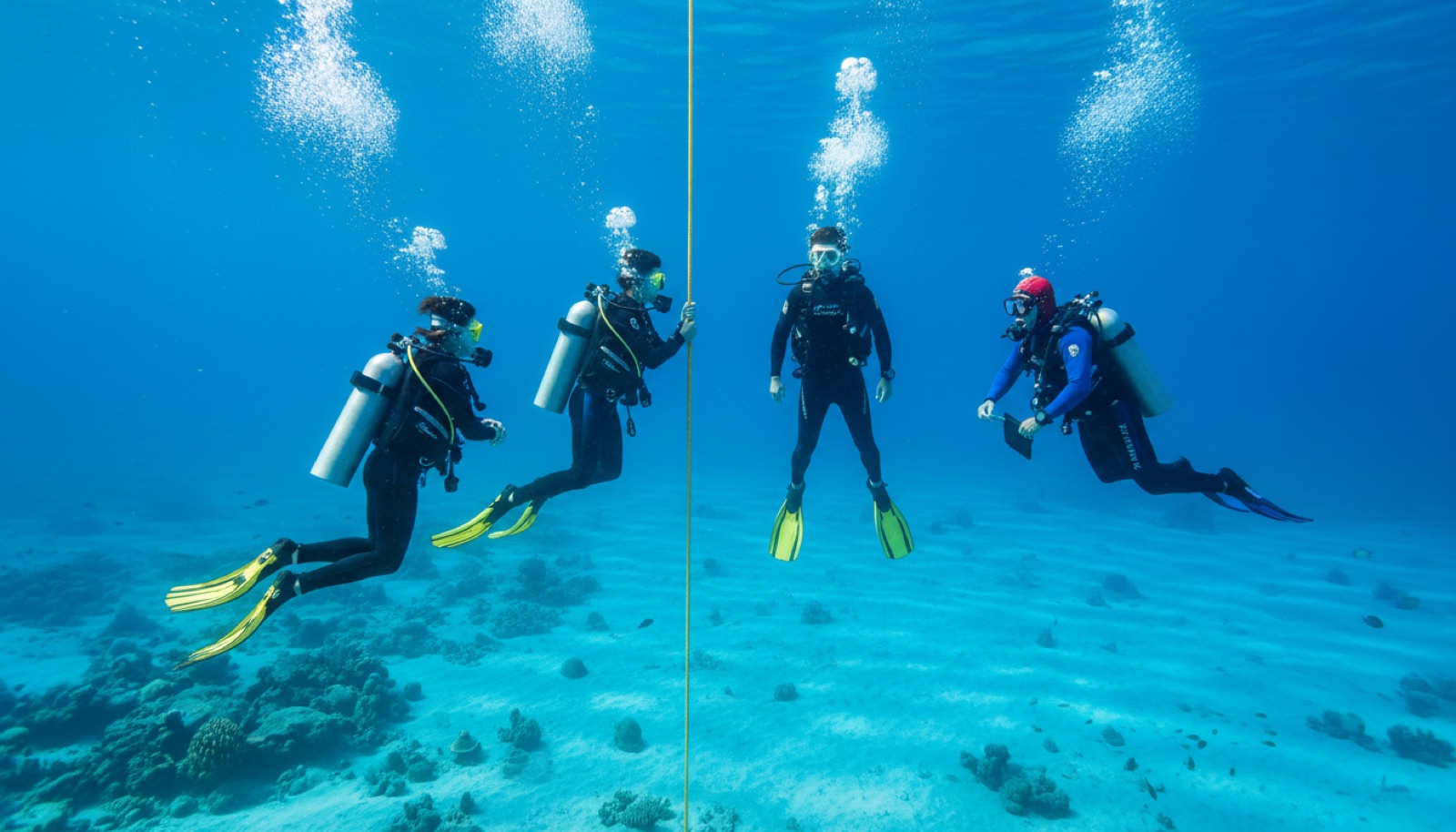
From a boat, a surfacing diver without a marker is a head-sized dot in a textured sea, genuinely hard to spot at a few hundred meters. The same diver under a two-meter orange tube is visible from much further away. That difference is the whole argument for the delayed surface marker buoy, and it is why a DSMB and spool have migrated from technical kit to standard recreational equipment, required by many operators in current-swept destinations and simply sensible everywhere boats and divers share water.
The kit and the vocabulary
A surface marker buoy (SMB) towed for an entire dive tells a boat where a group is continuously (common in drift diving, where the guide often tows one). A delayed SMB is stowed until needed and sent up during the dive, classically at the start of ascent or from the safety stop, announcing here we are, coming up. Buoys attach to a spool or reel of line; six-meter-plus line lets you deploy from stop depth, and more is better for deploying deeper. Color conventions vary by region (in some communities a yellow marker signals a problem while orange or red is routine), so never assume: agree meanings in the briefing, and carry the color your operator expects. Many buoys take writing; some divers add name or initials, useful when several groups drift the same reef.
Deploying without the classic mistakes
Every experienced diver has seen a deployment go sideways: a diver dragged upward by their own buoy, a bird's nest of line, a limp marker flopping flat. Technique fixes all of it:
- Prepare while neutral and stable, away from the reef and from other divers' space. Unclip buoy and spool, check the line runs free, and make sure nothing, especially you, is clipped to the assembly.
- Add gas with the buoy held low and the line already unwinding hand-off-the-spool: a burst from your alternate second stage into the buoy's opening, or an oral puff for small ones; many buoys also accept direct low-pressure inflation. Only partly fill it at depth: the gas expands on the way up and arrives full.
- Let go of everything except the spool's edges the moment the buoy lifts. Line should pay out freely; a gripped spool or a wrapped finger turns you into the buoy's passenger.
- Keep gentle tension once it surfaces, wind up slack as you ascend, and hold the line: a tensioned marker stands upright, which is what boats can actually see, and marks your position through the stop.
Practice this on easy dives before you need it in current, ideally after a demonstration from an instructor or guide; a pool or sandy 10-meter site is the right classroom, not a ripping channel.
When the marker earns its keep
Drift dives, where the pickup boat follows buoys, not bubbles. Blue-water safety stops away from any line. Busy traffic areas, where an ascending group without a marker is trusting every skipper's attention at once. Separations and emergencies, where a distinctively agreed signal (that regional yellow convention, or a written slate clipped on) summons help. And ordinary dives with a lazy current, where surfacing 200 meters from an anchored boat becomes a wave and a short pickup rather than a long surface swim. Small, cheap, foldable: the DSMB asks for one pocket and a little practice, and repays it the first time weather, current or traffic turns an ascent serious.