Sức khỏe · 5 phút đọc
Women and Diving: What the Research Says, and Where It Is Thin
Straight answers to the genuinely sex-specific questions in dive medicine: pregnancy (mainstream bodies advise against diving), menstruation myths, contraception, breastfeeding, and gear that actually fits.
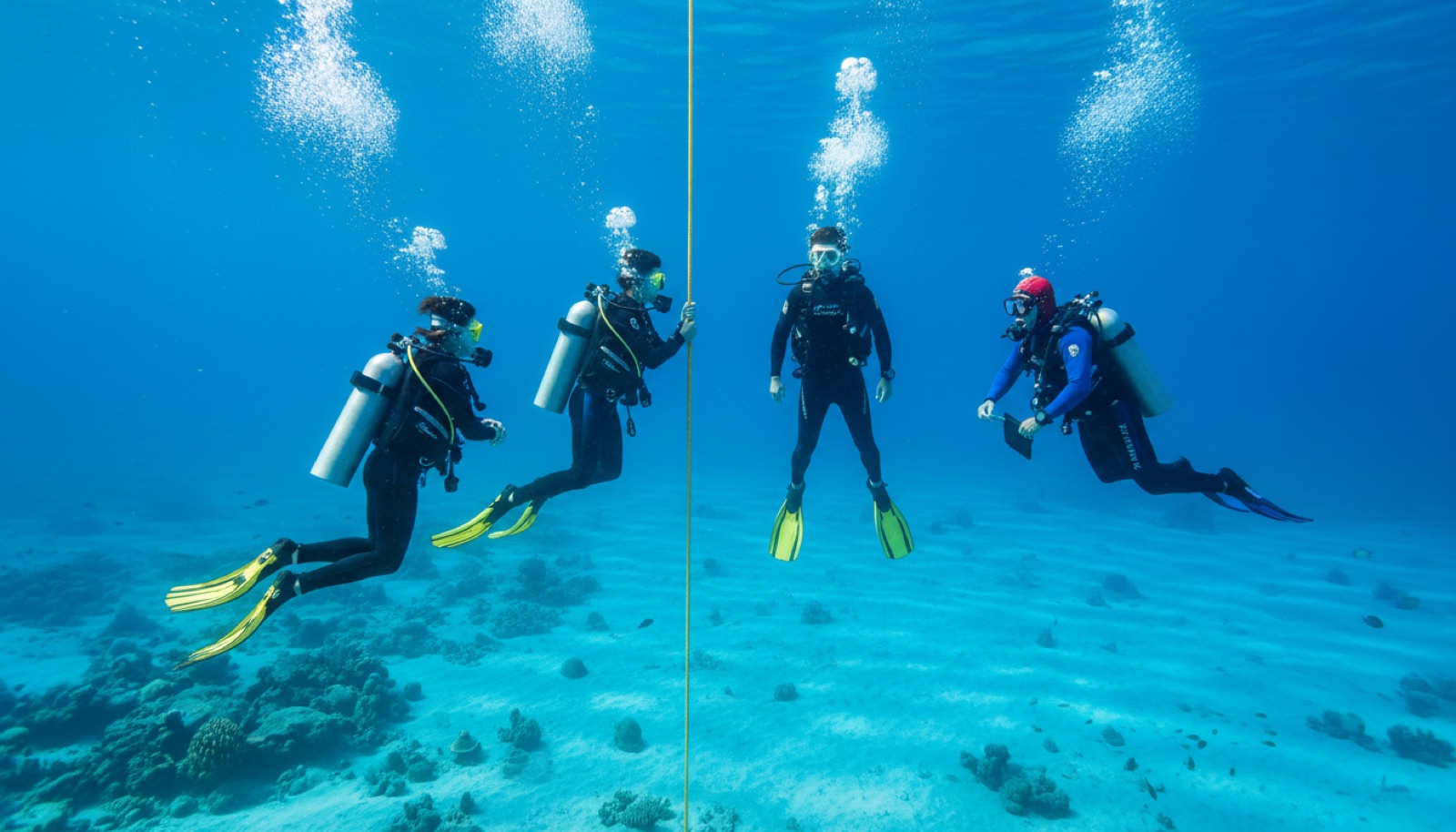
Most of dive medicine applies to everyone with lungs, but a handful of questions are genuinely specific to women, and they deserve straight answers rather than folklore. The honest theme running through this topic: some answers are clear, some rest on thin research, and the difference is worth stating plainly. As throughout this site, individual decisions belong with a physician, ideally one trained in dive medicine.
Pregnancy: the clear answer
Mainstream dive-medicine bodies and the training agencies advise against scuba diving while pregnant, at any stage. The reasoning is honest about its limits: the effects of pressure and potential bubble formation on a fetus cannot be studied ethically in any rigorous prospective way, and the limited retrospective reports and animal research that exist are concerning enough to close the question. This is why medical forms ask. The standard guidance continues: a diver who did dives before discovering a pregnancy should not panic (reported outcomes in that common scenario are generally reassuring) but should stop diving and discuss it with her physician. Snorkeling at the surface is considered fine, and the reef will still be there afterward.
Menstruation: two myths, two answers
The shark question first, because it refuses to die: there is no evidence that menstruation attracts sharks or raises the risk of a shark incident, and dive-medicine sources address this directly. Dive normally. On decompression sickness, the research is thinner: some studies have suggested susceptibility may be somewhat elevated during the early days of the cycle, but the evidence is limited and not conclusive. The practical mainstream takeaway is unremarkable: dive normally, hydrate well, and lean conservative on days you feel run down, which is sound advice for every diver on every day. Use whatever period products work for you; there is no diving-specific barrier.
Contraception, breastfeeding, and DCS risk
- Oral contraceptives: research has not demonstrated a meaningful effect on decompression risk, and there is no mainstream prohibition; individual questions, particularly around clotting risk factors, belong with a physician.
- Breastfeeding: diving is considered compatible. Inert gas does not accumulate in milk in any meaningful way, so there is no need to discard milk after diving; the practical considerations are hydration, comfort, and scheduling.
- Overall DCS risk: older data hinted women might be more susceptible; better-controlled comparisons suggest little to no practical difference once other factors are accounted for. No mainstream body recommends women dive differently.
Gear fit is a safety issue
For decades, standard dive gear was cut for a default male body, and women diving in it paid in flush-prone wetsuits, ill-placed harnesses, and weight systems fighting their trim. Fit is not vanity: a wetsuit that seals determines whether you end dives warm, and a BCD that fits determines how well you control the dive. Women-specific suits, BCDs, and undergarments are now widespread. Insist on them when renting, and make fit the first criterion when buying. The industry's demographics are shifting too, with women a fast-growing share of new certifications and initiatives like the annual women's dive day events making the community easier to find. The physiology chapter of this topic is mostly reassuring; the gear chapter is fully solvable at the shop counter.

