Dasar-Dasar · 4 menit baca
Your First Dive: What to Expect
What the first breath underwater actually feels like, the skills your instructor will ask for, and small preparations that make the day calmer.
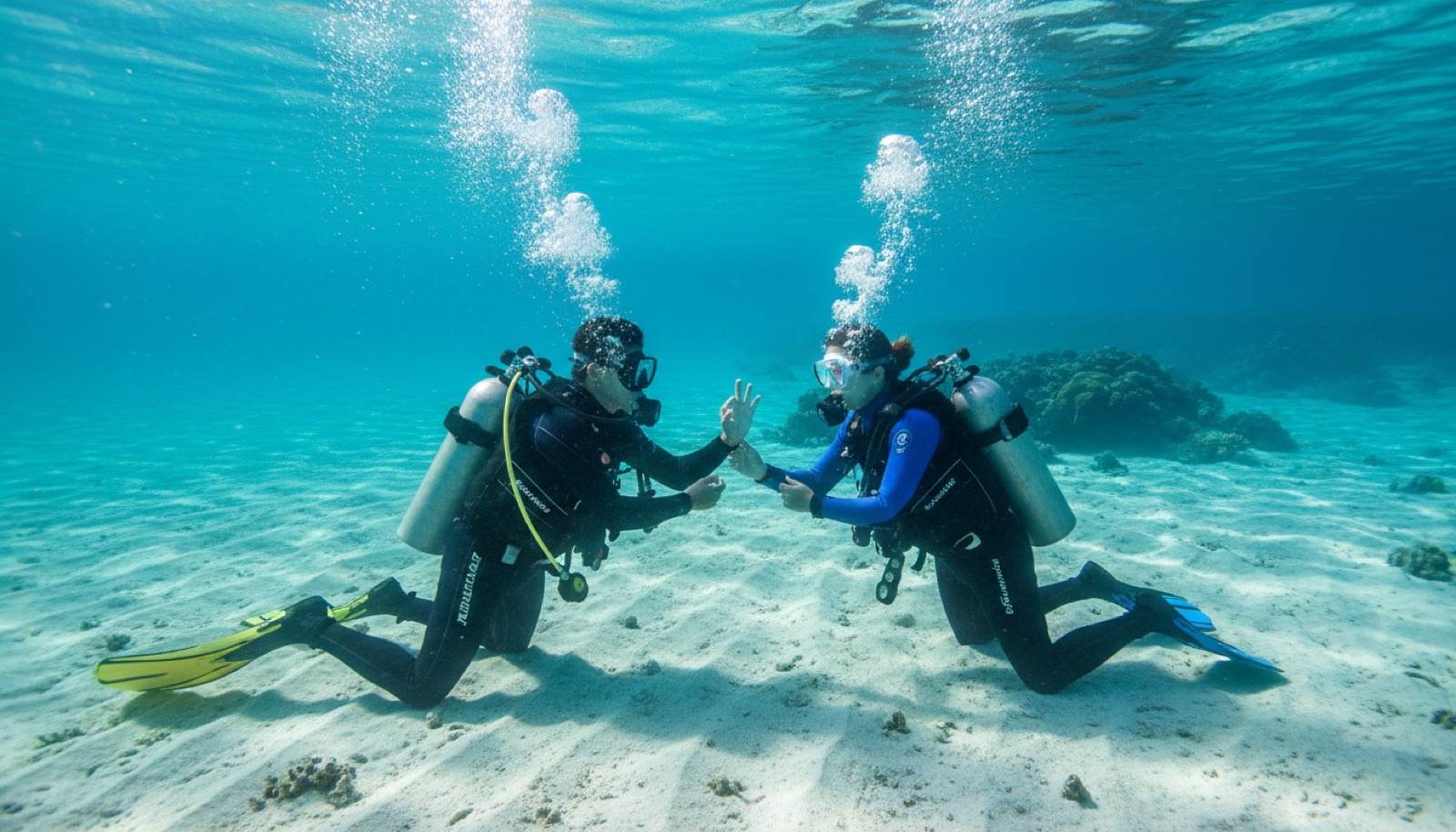
The strangest moment of learning to dive lasts about ten seconds. You put your face in the water, breathe in through the regulator, and some ancient part of your brain objects loudly to inhaling below the surface. Then you exhale, hear the bubbles roar past your ears, breathe again, and the objection fades. By the third breath most people are grinning around their mouthpiece. Knowing that moment is coming, and that it passes, is half the preparation.
Before the water
Expect paperwork first: a liability form and a medical questionnaire, which you should answer honestly rather than optimistically. Your instructor then fits you with gear, and the honest news is that scuba equipment is heavy and awkward on land. A tank, weights and a buoyancy jacket can add 20 kilograms or more; everyone waddles to the water, and all of that weight disappears the moment you submerge. The briefing that follows matters: hand signals, the plan, what skills you will practice. Ask questions there, because you cannot easily ask them at 5 meters.
In the water
First sessions happen in a pool or calm, shallow water, standing depth at the start. Sensations arrive in a rush: your own breathing sounds enormous, exhaled bubbles rattle past your face, and you will feel gentle pressure in your ears within the first couple of meters. Your instructor will teach you to equalize by pinching your nose and blowing gently before it ever hurts. Vision through a mask is narrowed and slightly magnified; objects look closer and larger than they are.
The skills themselves are simple and taught in sequence: clearing a little water from your mask by pressing the top and exhaling through your nose, retrieving a regulator that has been swept out of your mouth, breathing from your buddy's spare regulator, and hovering, the first taste of buoyancy control, which is the skill divers spend years refining. Nothing is sprung on you; every skill is demonstrated before you try it, repeated until comfortable, and done in water shallow enough to stand up in at first.
Stacking the day in your favor
- Sleep properly and skip alcohol the night before; a foggy head makes everything harder.
- Eat a normal breakfast and drink water all morning. Dehydration is the most common avoidable misery on dive days.
- Do not force it if your ears will not equalize: signal, ascend slightly, try again. Pain means stop, never push through.
- Tell your instructor about nerves. Managing anxious students is a core professional skill, and pacing can be adjusted.
- Skip the pre-dive coffee overload and seasickness will be kinder if a boat is involved.
By the end of a first session most students can breathe calmly, clear a mask, and hover wobbling a meter off the bottom, and the pattern of every dive that follows is set: the gear stops feeling foreign, the breathing becomes rhythm, and the underwater world starts being the point rather than the challenge. If the first attempt feels overwhelming, that is common and fixable: a second pool session solves what worrying cannot.