Dive sites, seasons and marine life — researched, mapped, planned.
Menu
Destinations Dive Sites Marine Life Wrecks News
Plan a trip Trip planner When to dive Cost calculator Comparisons Marine-life calendar Water temperature Liveaboards Operators & resorts Marine parks Hyperbaric chambers World map
Regions Australia, New Zealand & East AsiaCaribbean & Western AtlanticEurope, Atlantic & MediterraneanIndian Ocean & East AfricaPacific Islands & MicronesiaRed Sea & Middle EastSoutheast Asia & Coral TriangleThe Americas & Eastern Pacific Countries
Learn & Tools All guides Certifications Gear guides Videos Ask the Data AI Agents API
About About us Methodology Disclaimer Contact
Your view
★ Saved

Your starred destinations, sites and species — stored in this browser.

API GATEWAY

Free read-only JSON access to the atlas's cached data.

Dark mode

🧭 Guided View
New to diving — depths, currents, certification levels? We explain every term as you browse, in plain English. Same data, with the help built in.

⚡ Expert View
You already know the difference between a wall and a drift. Just the data — clean, fast and compact. This is the default view.

Interface language

Marine protected area · United States

Florida Keys National Marine Sanctuary

Established 1990 9,900 km² Well documented

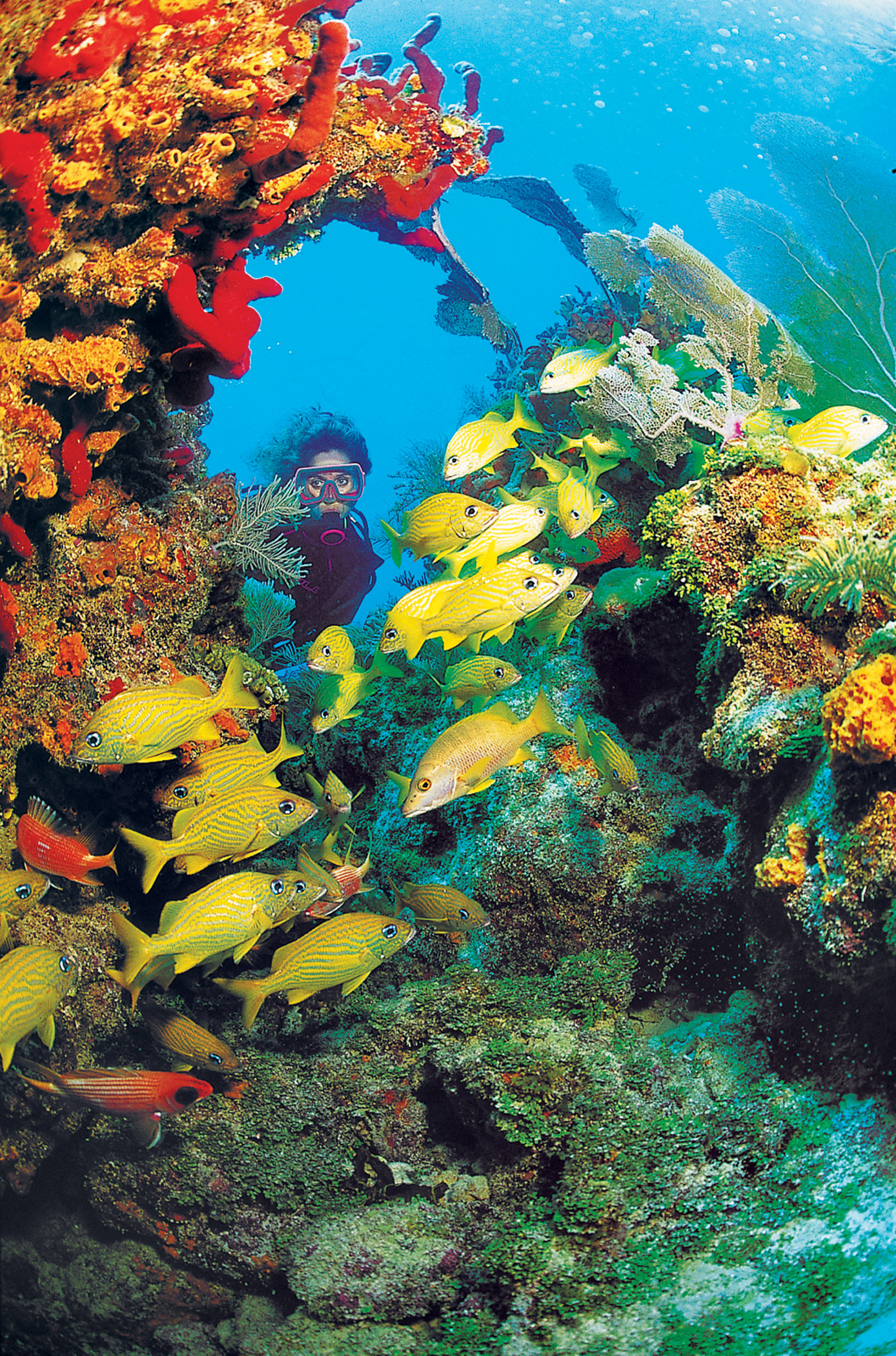
Designated in 1990, the Florida Keys National Marine Sanctuary wraps roughly 9,900 km² of water around the entire island chain, protecting the only living barrier coral reef in the continental United States along with seagrass meadows, mangrove shorelines, and hundreds of years of shipwrecks. It governs essentially all diving in the Keys — the spur-and-groove reefs of Key Largo and Looe Key, the Christ of the Abyss statue, and the big artificial wrecks Spiegel Grove, Vandenberg, and Duane all lie within sanctuary waters. NOAA manages the sanctuary jointly with the State of Florida, balancing one of the world's heaviest recreational dive loads against decades of coral decline and restoration work.

The rules that bind divers

Sanctuary Preservation Areas and Ecological Reserves at the most popular reefs are no-take zones — no fishing, lobstering, or collecting — marked by yellow buoys. Anchoring on living coral is prohibited everywhere; hundreds of public mooring buoys serve the reefs and wrecks, and boats must use them where available or anchor in sand. Divers must display the dive flag, may not touch or stand on coral, and may not disturb historical artifacts, which are federally protected. Spearfishing is barred in the SPAs and parts of the upper Keys. No general entry fee applies.

Fees & permits: No sanctuary entry fee; standard Florida fishing/lobster license rules apply outside no-take zones.
Dive it via

Sources: NOAA ↗ · Facts verified against the sources above; fields without support are labeled not yet verified.

Australia, New Zealand & East Asia

Cairns & the Ribbon ReefsNingaloo ReefCoral Sea & Osprey ReefOkinawa & the Kerama IslandsPoor Knights IslandsTownsville & the YongalaGreen IslandIzu Peninsula

Caribbean & Western Atlantic

BonaireCozumelRiviera Maya & the CenotesBelize Barrier ReefGrand CaymanIsla Mujeres & CancúnRoatánTiger Beach & Grand Bahama

Europe, Atlantic & Mediterranean

Malta & GozoSilfra & IcelandThe AzoresCanary IslandsLarnaca & the ZenobiaScapa FlowArctic NorwayMadeira

Indian Ocean & East Africa

North & South Malé AtollsAri AtollBaa Atoll & Hanifaru BayAliwal Shoal & UmkomaasMafia IslandMauritiusSeychellesSodwana Bay

Pacific Islands & Micronesia

PalauChuuk (Truk) LagoonFakaravaKona, HawaiʻiRangiroaTaveuni & Rainbow ReefBeqa Lagoon & Pacific HarbourEspiritu Santo

Red Sea & Middle East

Sharm El Sheikh & Ras MohammedBrothers, Daedalus & St John'sDahabHurghada & El GounaMarsa Alam & the Deep SouthAqabaDaymaniyat IslandsMusandam Peninsula

Southeast Asia & Coral Triangle

Bali & Nusa PenidaKomodoRaja AmpatSipadan & MabulAnilaoCoronKoh TaoLembeh Strait

The Americas & Eastern Pacific

Galápagos IslandsCocos IslandFlorida KeysSea of Cortez & Cabo PulmoSocorro & the RevillagigedosBritish ColumbiaCalifornia Channel IslandsCosta Rica Pacific Coast