Sharks
Blue Shark
Prionace glauca · Cartilaginous fish, family Carcharhinidae
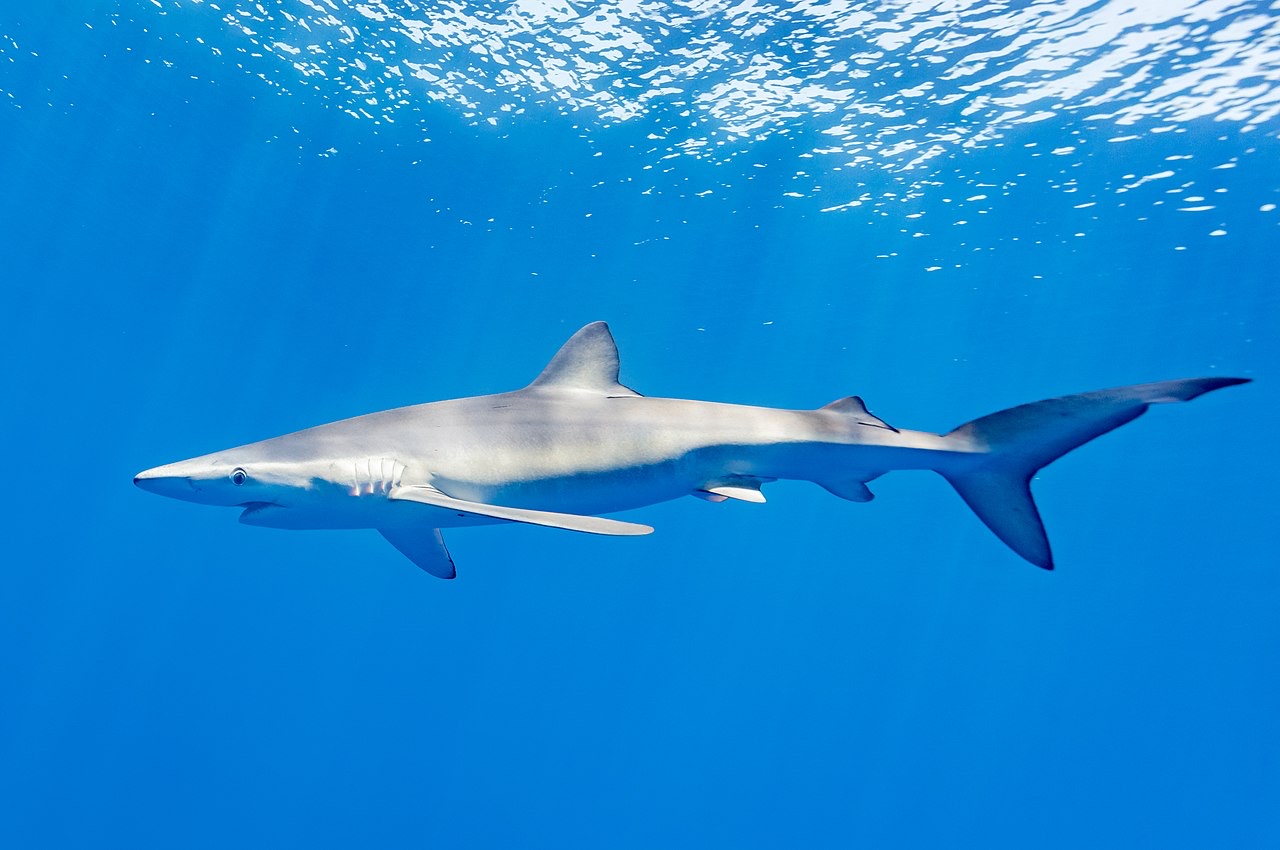
In good light no shark is more beautiful. Blues arrive from the down-current haze like animated brushstrokes: impossibly slim, fluid to the point of boneless, their backs a saturated ultramarine that gives the open Atlantic its most vivid wildlife encounter. Off the Azores in summer, snorkelers drift on the chum line while two or five blues loop among them for an hour at a time, close enough to study the huge dark eye and the crescent smile. The species pays brutally for its abundance: tens of millions die on longlines yearly, making the relaxed, curious animals at Condor Bank feel like ambassadors from a shrinking constituency.
Where and when to see one
"Resident" means most dives at that destination encounter them; "seasonal" means reliably present in the listed months; anything else is a bonus, not a plan.
| Destination | Reliability | Months | Notes |
|---|---|---|---|
| The AzoresPortugal | Seasonal: reliable in season | Jun–Oct | |
| Sea of Cortez & Cabo PulmoMexico | Occasional | Nov–Apr | |
| California Channel IslandsUnited States | Occasional | Jun–Sep |
Best month, at a glance
| Month | Reliable destinations |
|---|---|
| January | Sea of Cortez & Cabo Pulmo |
| February | Sea of Cortez & Cabo Pulmo |
| March | Sea of Cortez & Cabo Pulmo |
| April | Sea of Cortez & Cabo Pulmo |
| June | The Azores · California Channel Islands |
| July | The Azores · California Channel Islands |
| August | The Azores · California Channel Islands |
| September | The Azores · California Channel Islands |
| October | The Azores |
| November | Sea of Cortez & Cabo Pulmo |
| December | Sea of Cortez & Cabo Pulmo |
Understanding them
Habitat: The open ocean's upper layers worldwide; comes within reach of divers where deep water presses close to islands and banks
Range: The widest range of any shark: temperate and tropical oceans globally, undertaking trans-Atlantic and trans-Pacific migrations
Behavior: Built like a glider, with long scythe pectorals and an indigo back that flashes cobalt in sunlight. Blues investigate anything floating, approaching snorkelers on baited trips with slow, elastic passes and gentle test-mouthing of fins and domes, insistent but rarely agitated.
Diet: Squid above all, plus small schooling fish and carrion
Size: typically around 2.5 m; documented up to 3.8 m (total length).
How to behave around one
Wear full exposure suits on baited snorkels, keep shiny jewelry dry-side, move deliberately, and let crew manage the chum. The sharks track scent lanes and appreciate predictable people.
Conservation
Near Threatened globally and the single most heavily fished shark on Earth, dominating pelagic longline catches; management remains patchy across the high seas.
Charted sites known for them
Highlighted sites were charted for this species by our editors; numbers are GBIF occurrence records logged within about 5 km of a site since 1990.
Watch
From the official channels

Wildlife of Monterey | New film in our auditorium

Live Aviary Cam | Monterey Bay Aquarium

Live Aviary Cam | Monterey Bay Aquarium
Videos are embedded links to their creators' own channels. We host nothing and credit everything.