Sharks
Blue Shark
Prionace glauca · Cartilaginous fish, family Carcharhinidae
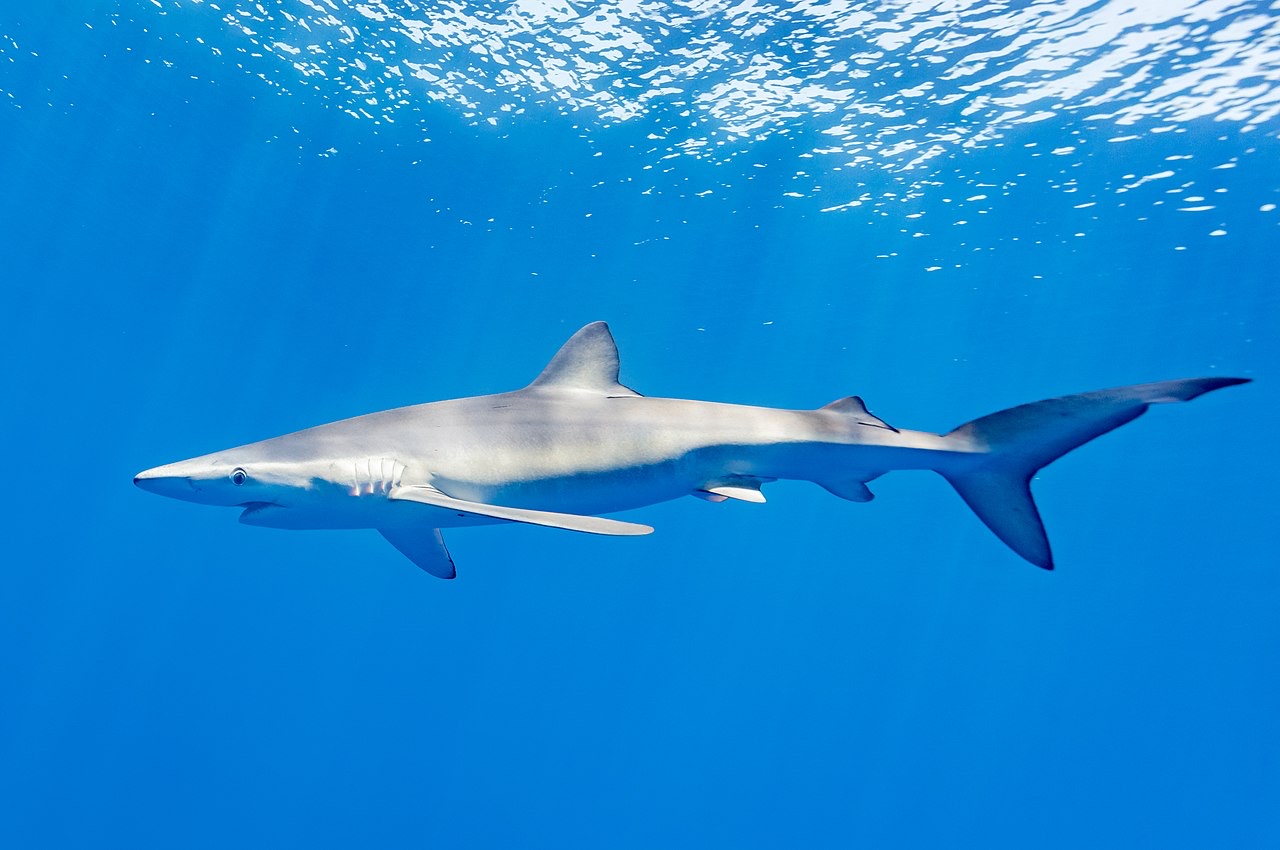
In good light no shark is more beautiful. Blues arrive from the down-current haze like animated brushstrokes: impossibly slim, fluid to the point of boneless, their backs a saturated ultramarine that gives the open Atlantic its most vivid wildlife encounter. Off the Azores in summer, snorkelers drift on the chum line while two or five blues loop among them for an hour at a time, close enough to study the huge dark eye and the crescent smile. The species pays brutally for its abundance: tens of millions die on longlines yearly, making the relaxed, curious animals at Condor Bank feel like ambassadors from a shrinking constituency.
Dónde y cuándo ver uno
"Residente" significa que la mayoría de las inmersiones en ese destino tienen encuentros con ellos; "estacional" significa que su presencia es fiable en los meses indicados; cualquier otra cosa es un extra, no algo con lo que contar.
| Destino | Fiabilidad | Meses | Notas |
|---|---|---|---|
| The AzoresPortugal | Seasonal: reliable in season | Jun–Oct | |
| Sea of Cortez & Cabo PulmoMexico | Occasional | Nov–Apr | |
| California Channel IslandsUnited States | Occasional | Jun–Sep |
El mejor mes, de un vistazo
| Mes | Destinos fiables |
|---|---|
| January | Sea of Cortez & Cabo Pulmo |
| February | Sea of Cortez & Cabo Pulmo |
| March | Sea of Cortez & Cabo Pulmo |
| April | Sea of Cortez & Cabo Pulmo |
| June | The Azores · California Channel Islands |
| July | The Azores · California Channel Islands |
| August | The Azores · California Channel Islands |
| September | The Azores · California Channel Islands |
| October | The Azores |
| November | Sea of Cortez & Cabo Pulmo |
| December | Sea of Cortez & Cabo Pulmo |
Comprendiéndolos
Hábitat: The open ocean's upper layers worldwide; comes within reach of divers where deep water presses close to islands and banks
Rango: The widest range of any shark: temperate and tropical oceans globally, undertaking trans-Atlantic and trans-Pacific migrations
Comportamiento: Built like a glider, with long scythe pectorals and an indigo back that flashes cobalt in sunlight. Blues investigate anything floating, approaching snorkelers on baited trips with slow, elastic passes and gentle test-mouthing of fins and domes, insistent but rarely agitated.
Dieta: Squid above all, plus small schooling fish and carrion
Tamaño: normalmente alrededor de 2.5 m; documentado hasta 3.8 m (total length).
Cómo comportarse cerca de uno
Wear full exposure suits on baited snorkels, keep shiny jewelry dry-side, move deliberately, and let crew manage the chum. The sharks track scent lanes and appreciate predictable people.
Conservación
Near Threatened globally and the single most heavily fished shark on Earth, dominating pelagic longline catches; management remains patchy across the high seas.
Puntos conocidos por avistamientos
Los puntos destacados fueron registrados para esta especie por nuestros editores; los números son registros de ocurrencia de GBIF anotados en un radio de unos 5 km de un punto desde 1990.
Ver
Desde los canales oficiales

Wildlife of Monterey | New film in our auditorium

Live Aviary Cam | Monterey Bay Aquarium

Live Aviary Cam | Monterey Bay Aquarium
Los vídeos son enlaces insertados a los canales de sus propios creadores. No alojamos nada y acreditamos todo.