Sharks
Galápagos Shark
Carcharhinus galapagensis · Cartilaginous fish, family Carcharhinidae
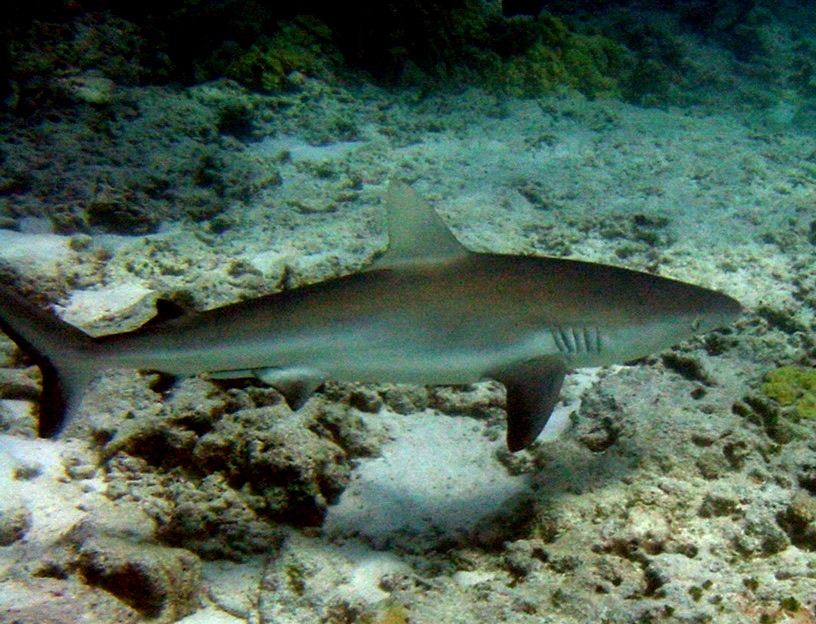
The Galápagos shark is what most people picture when they hear the word shark: three meters of gunmetal muscle, tall dorsal, blunt round snout, cruising a boulder slope in gin-clear island water. It belongs to the remote places: the same species patrols Wolf and Darwin, Bermuda's outer banks, and the Revillagigedo seamounts, one of the odd distributions in the shark world, stitched between far-flung islands with deep ocean in between. Encounters are steady rather than dramatic; the shark holds its line, takes your measure on a slow pass, and resumes its rounds as though you were furniture.
Dónde y cuándo ver uno
"Residente" significa que la mayoría de las inmersiones en ese destino tienen encuentros con ellos; "estacional" significa que su presencia es fiable en los meses indicados; cualquier otra cosa es un extra, no algo con lo que contar.
| Destino | Fiabilidad | Meses | Notas |
|---|---|---|---|
| Galápagos IslandsEcuador | Resident: seen on most dives | Todo el año | |
| Socorro & the RevillagigedosMexico | Resident: seen on most dives | Todo el año | |
| BermudaBermuda | Occasional | Todo el año |
El mejor mes, de un vistazo
| Mes | Destinos fiables |
|---|---|
| January | Galápagos Islands · Socorro & the Revillagigedos · Bermuda |
| February | Galápagos Islands · Socorro & the Revillagigedos · Bermuda |
| March | Galápagos Islands · Socorro & the Revillagigedos · Bermuda |
| April | Galápagos Islands · Socorro & the Revillagigedos · Bermuda |
| May | Galápagos Islands · Socorro & the Revillagigedos · Bermuda |
| June | Galápagos Islands · Socorro & the Revillagigedos · Bermuda |
| July | Galápagos Islands · Socorro & the Revillagigedos · Bermuda |
| August | Galápagos Islands · Socorro & the Revillagigedos · Bermuda |
| September | Galápagos Islands · Socorro & the Revillagigedos · Bermuda |
| October | Galápagos Islands · Socorro & the Revillagigedos · Bermuda |
| November | Galápagos Islands · Socorro & the Revillagigedos · Bermuda |
| December | Galápagos Islands · Socorro & the Revillagigedos · Bermuda |
Comprendiéndolos
Hábitat: Clear water around remote oceanic islands and seamounts: rocky drop-offs, boulder slopes, and adjacent blue water
Rango: Scattered across the world's oceanic islands: the Galápagos and Revillagigedos, Hawaii, Bermuda, Lord Howe and the Kermadecs, Ascension, and similar isolated outposts
Comportamiento: A big, classically shark-shaped carcharhinid that patrols island walls in twos and threes, often shadowing divers with steady, wide circuits. Around bait or in packs it grows bold and pushy; on an ordinary wall dive it reads as confident but unhurried company.
Dieta: Bottom fish, octopus, and squid, with larger animals taking rays and small sharks
Tamaño: normalmente alrededor de 2.5 m; documentado hasta 3.7 m (total length).
Cómo comportarse cerca de uno
Stay off bait lines, keep the group together on blue-water exposures, and meet close passes with steady eye contact rather than retreat.
Conservación
Assessed Least Concern in aggregate, but individual island populations are small, isolated, and quick to deplete. Several of its strongholds are large marine reserves for good reason.
Puntos conocidos por avistamientos
Los puntos destacados fueron registrados para esta especie por nuestros editores; los números son registros de ocurrencia de GBIF anotados en un radio de unos 5 km de un punto desde 1990.
Ver
Desde los canales oficiales

Wildlife of Monterey | New film in our auditorium

Live Aviary Cam | Monterey Bay Aquarium

Live Aviary Cam | Monterey Bay Aquarium
Los vídeos son enlaces insertados a los canales de sus propios creadores. No alojamos nada y acreditamos todo.