Sharks
Galápagos Shark
Carcharhinus galapagensis · Cartilaginous fish, family Carcharhinidae
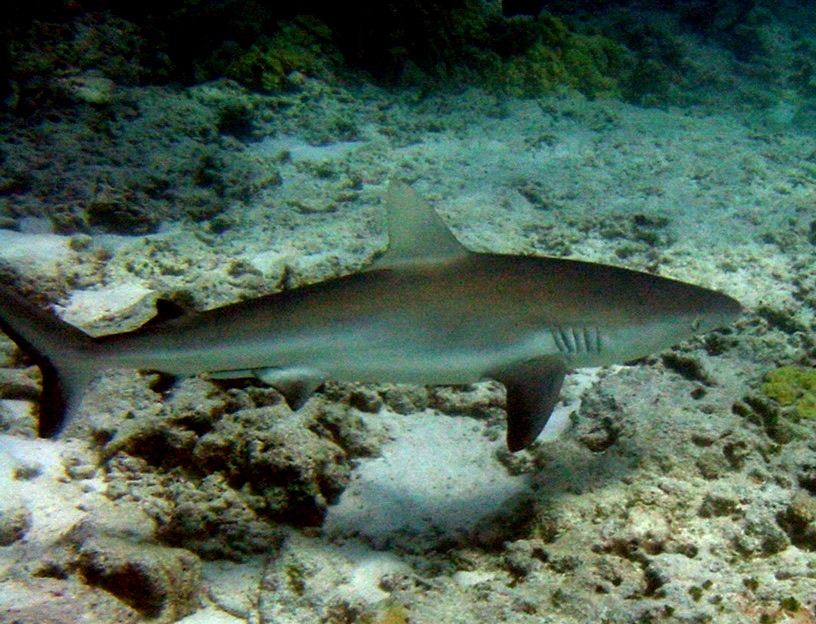
The Galápagos shark is what most people picture when they hear the word shark: three meters of gunmetal muscle, tall dorsal, blunt round snout, cruising a boulder slope in gin-clear island water. It belongs to the remote places: the same species patrols Wolf and Darwin, Bermuda's outer banks, and the Revillagigedo seamounts, one of the odd distributions in the shark world, stitched between far-flung islands with deep ocean in between. Encounters are steady rather than dramatic; the shark holds its line, takes your measure on a slow pass, and resumes its rounds as though you were furniture.
Waar en wanneer je er een kunt zien
"Resident" betekent dat je ze bij de meeste duiken op die bestemming tegenkomt; "seizoensgebonden" betekent betrouwbaar aanwezig in de vermelde maanden; al het andere is een bonus, geen garantie.
| Bestemming | Betrouwbaarheid | Maanden | Notities |
|---|---|---|---|
| Galápagos IslandsEcuador | Resident: seen on most dives | Het hele jaar door | |
| Socorro & the RevillagigedosMexico | Resident: seen on most dives | Het hele jaar door | |
| BermudaBermuda | Occasional | Het hele jaar door |
Beste maand, in één oogopslag
| Maand | Betrouwbare bestemmingen |
|---|---|
| January | Galápagos Islands · Socorro & the Revillagigedos · Bermuda |
| February | Galápagos Islands · Socorro & the Revillagigedos · Bermuda |
| March | Galápagos Islands · Socorro & the Revillagigedos · Bermuda |
| April | Galápagos Islands · Socorro & the Revillagigedos · Bermuda |
| May | Galápagos Islands · Socorro & the Revillagigedos · Bermuda |
| June | Galápagos Islands · Socorro & the Revillagigedos · Bermuda |
| July | Galápagos Islands · Socorro & the Revillagigedos · Bermuda |
| August | Galápagos Islands · Socorro & the Revillagigedos · Bermuda |
| September | Galápagos Islands · Socorro & the Revillagigedos · Bermuda |
| October | Galápagos Islands · Socorro & the Revillagigedos · Bermuda |
| November | Galápagos Islands · Socorro & the Revillagigedos · Bermuda |
| December | Galápagos Islands · Socorro & the Revillagigedos · Bermuda |
Ze begrijpen
Habitat: Clear water around remote oceanic islands and seamounts: rocky drop-offs, boulder slopes, and adjacent blue water
Verspreidingsgebied: Scattered across the world's oceanic islands: the Galápagos and Revillagigedos, Hawaii, Bermuda, Lord Howe and the Kermadecs, Ascension, and similar isolated outposts
Gedrag: A big, classically shark-shaped carcharhinid that patrols island walls in twos and threes, often shadowing divers with steady, wide circuits. Around bait or in packs it grows bold and pushy; on an ordinary wall dive it reads as confident but unhurried company.
Dieet: Bottom fish, octopus, and squid, with larger animals taking rays and small sharks
Grootte: doorgaans rond 2.5 m; gedocumenteerd tot 3.7 m (total length).
Hoe je je ertegenover gedraagt
Stay off bait lines, keep the group together on blue-water exposures, and meet close passes with steady eye contact rather than retreat.
Behoud
Assessed Least Concern in aggregate, but individual island populations are small, isolated, and quick to deplete. Several of its strongholds are large marine reserves for good reason.
Gekende duiksites waar je ze tegenkomt
Gemarkeerde locaties zijn voor deze soort in kaart gebracht door onze redacteurs; de getallen zijn GBIF-waarnemingsrecords vastgelegd binnen ongeveer 5 km van een locatie sinds 1990.
Bekijk
Via de officiële kanalen

Wildlife of Monterey | New film in our auditorium

Live Aviary Cam | Monterey Bay Aquarium

Live Aviary Cam | Monterey Bay Aquarium
Video's zijn ingesloten links naar de eigen kanalen van de makers. We hosten niets en vermelden altijd de bron.