Reef Fish
Garden Eel
Heterocongrinae · Bony fish, subfamily Heterocongrinae, family Congridae (conger eels); family-level overview of the garden and spaghetti eels, roughly 35 species in two genera
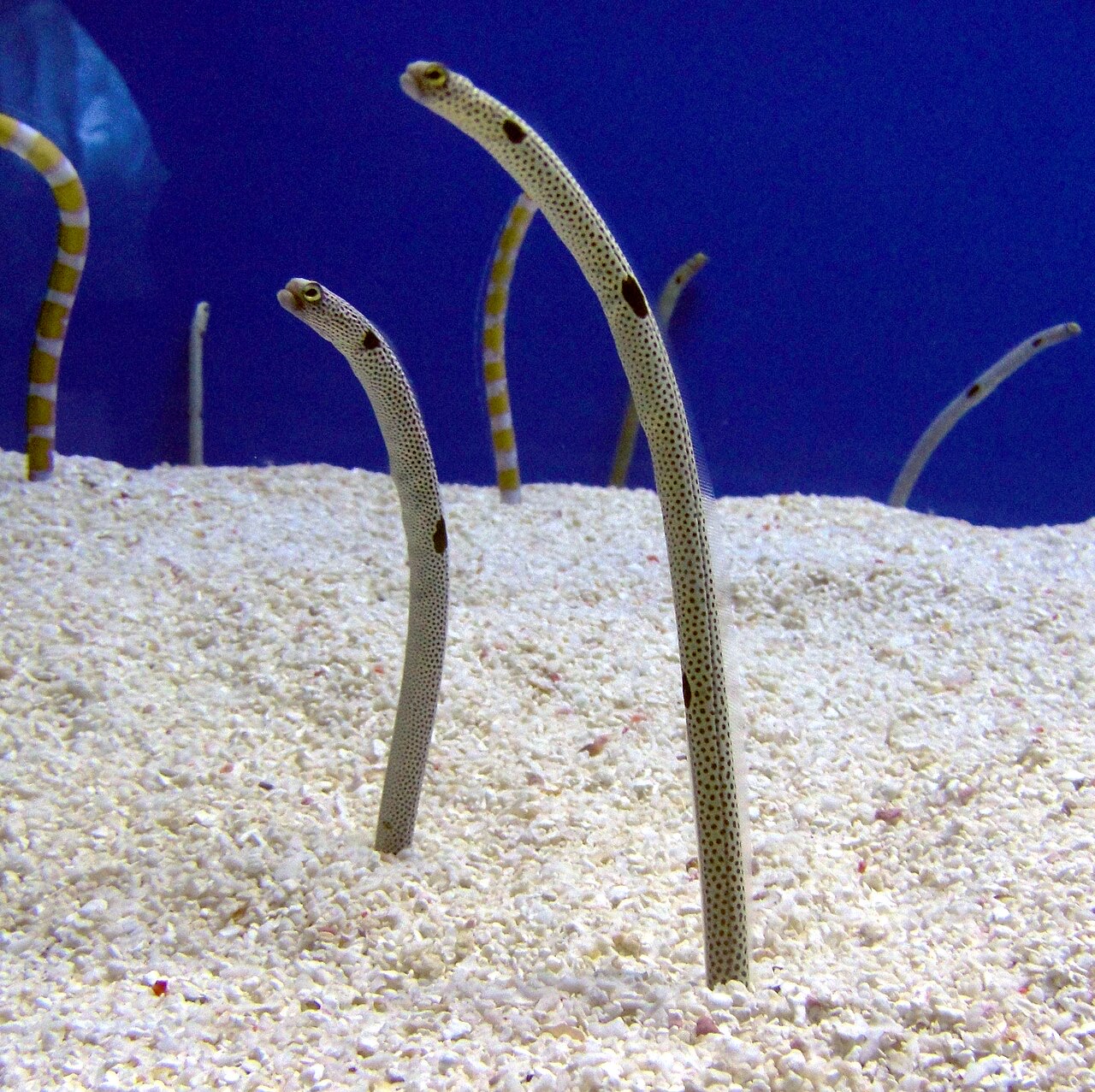
From a distance a garden eel colony looks like seagrass planted in ranks: hundreds or thousands of slender bodies rising from individual sand burrows, all curved the same way into the current to pick off drifting plankton. Get closer and the meadow shrinks: each eel sinks by degrees, and a careless approach mows the whole slope down into bare sand. The trick is to move like the tide, low and slow with controlled breathing, then settle and let the colony grow back around you. Species vary by ocean (spotted garden eels across the Indo-Pacific, brown garden eels on Caribbean sand flats), but the choreography is identical everywhere. They never fully leave home; tail anchored in a mucus-lined burrow, an eel stretches out two-thirds of its body at most.
Dónde y cuándo ver uno
"Residente" significa que la mayoría de las inmersiones en ese destino tienen encuentros con ellos; "estacional" significa que su presencia es fiable en los meses indicados; cualquier otra cosa es un extra, no algo con lo que contar.
| Destino | Fiabilidad | Meses | Notas |
|---|---|---|---|
| North & South Malé AtollsMaldives | Resident: seen on most dives | Todo el año | |
| CozumelMexico | Resident: seen on most dives | Todo el año | |
| BonaireBonaire | Resident: seen on most dives | Todo el año | |
| Bali & Nusa PenidaIndonesia | Resident: seen on most dives | Todo el año | |
| DahabEgypt | Resident: seen on most dives | Todo el año | |
| Ari AtollMaldives | Resident: seen on most dives | Todo el año |
El mejor mes, de un vistazo
Comprendiéndolos
Hábitat: Current-swept sand slopes and flats near reefs, in colonies from dozens to many thousands of burrows.
Rango: Warm seas worldwide: spotted and splendid garden eels across the Indo-Pacific, brown garden eels in the tropical Atlantic and Caribbean.
Comportamiento: Colonies face into the current and sway while feeding, sinking underground in a wave ahead of any diver who approaches high or fast.
Dieta: Zooplankton picked from the current while anchored tail-first in the burrow.
Cómo comportarse cerca de uno
Stay low, move at drift pace, then settle on bare sand and wait; the colony re-emerges around a motionless diver within minutes.
Conservación
No species is considered broadly threatened; colonies are vulnerable to anchor damage and repeated diver disturbance.
Puntos conocidos por avistamientos
Los puntos destacados fueron registrados para esta especie por nuestros editores; los números son registros de ocurrencia de GBIF anotados en un radio de unos 5 km de un punto desde 1990.
Ver
Desde los canales oficiales

Wildlife of Monterey | New film in our auditorium

Live Aviary Cam | Monterey Bay Aquarium

Live Aviary Cam | Monterey Bay Aquarium
Los vídeos son enlaces insertados a los canales de sus propios creadores. No alojamos nada y acreditamos todo.