Invertebrates
Giant Clam
Tridacna gigas · Bivalve mollusk, family Cardiidae, subfamily Tridacninae; the largest living bivalve
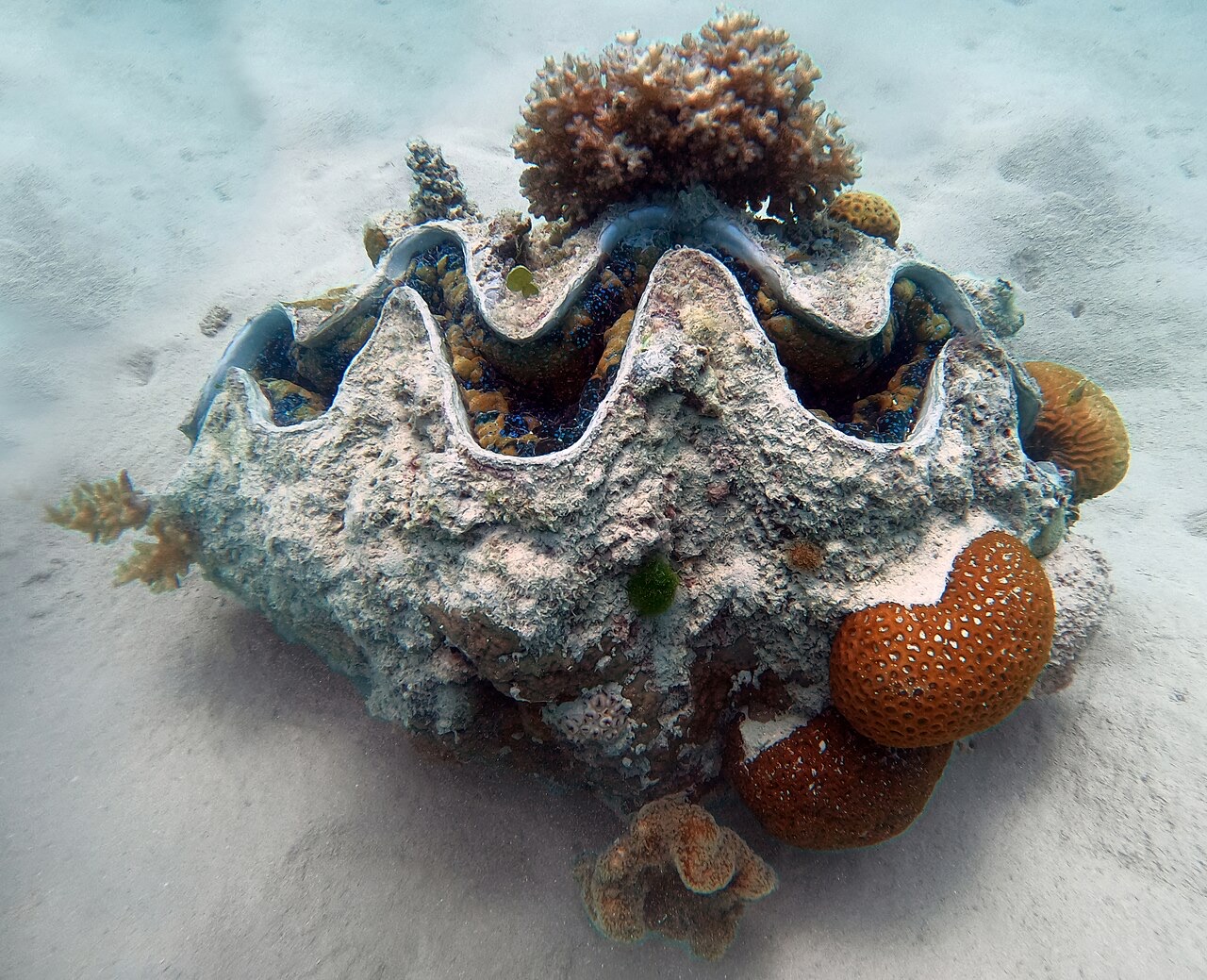
A mature giant clam is a reef landmark: a meter-plus of fluted shell holding a mantle patterned in electric blues, greens, and golds, no two animals alike. The colors come partly from iridescent cells managing light for the clam's real engine (symbiotic algae farmed in its tissues), which is why giants sit in the sunlit shallows gaping wide by day. Old stories about man-trap clams are folklore; a disturbed animal vents and closes slowly, and the largest cannot seal at all. The genuine drama is reproductive, broadcast spawning that fogs whole lagoon patches with gametes. Tridacna gigas has been fished out of much of its former range for meat and shell, and many animals divers meet today, notably in Palau, descend from hatchery restocking. Find the paired siphons, note the sunburst mantle pattern, and keep fins well clear.
Dónde y cuándo ver uno
"Residente" significa que la mayoría de las inmersiones en ese destino tienen encuentros con ellos; "estacional" significa que su presencia es fiable en los meses indicados; cualquier otra cosa es un extra, no algo con lo que contar.
| Destino | Fiabilidad | Meses | Notas |
|---|---|---|---|
| Cairns & the Ribbon ReefsAustralia | Resident: seen on most dives | Todo el año | |
| PalauPalau | Resident: seen on most dives | Todo el año | |
| Raja AmpatIndonesia | Resident: seen on most dives | Todo el año | |
| Sipadan & MabulMalaysia | Resident: seen on most dives | Todo el año | |
| YapFederated States of Micronesia | Resident: seen on most dives | Todo el año |
El mejor mes, de un vistazo
| Mes | Destinos fiables |
|---|---|
| January | Cairns & the Ribbon Reefs · Palau · Raja Ampat · Sipadan & Mabul · Yap |
| February | Cairns & the Ribbon Reefs · Palau · Raja Ampat · Sipadan & Mabul · Yap |
| March | Cairns & the Ribbon Reefs · Palau · Raja Ampat · Sipadan & Mabul · Yap |
| April | Cairns & the Ribbon Reefs · Palau · Raja Ampat · Sipadan & Mabul · Yap |
| May | Cairns & the Ribbon Reefs · Palau · Raja Ampat · Sipadan & Mabul · Yap |
| June | Cairns & the Ribbon Reefs · Palau · Raja Ampat · Sipadan & Mabul · Yap |
| July | Cairns & the Ribbon Reefs · Palau · Raja Ampat · Sipadan & Mabul · Yap |
| August | Cairns & the Ribbon Reefs · Palau · Raja Ampat · Sipadan & Mabul · Yap |
| September | Cairns & the Ribbon Reefs · Palau · Raja Ampat · Sipadan & Mabul · Yap |
| October | Cairns & the Ribbon Reefs · Palau · Raja Ampat · Sipadan & Mabul · Yap |
| November | Cairns & the Ribbon Reefs · Palau · Raja Ampat · Sipadan & Mabul · Yap |
| December | Cairns & the Ribbon Reefs · Palau · Raja Ampat · Sipadan & Mabul · Yap |
Comprendiéndolos
Hábitat: Sunlit reef flats, lagoon floors, and upper slopes, shallow because its symbiotic algae need strong light.
Rango: Coral Triangle, Micronesia, and the Great Barrier Reef; fished out of much of its former Indo-Pacific range, with reintroductions in several countries.
Comportamiento: Sessile after settlement; gapes its patterned mantle to the sun by day, contracting and slowly closing when shadowed. Spawns by broadcast, fogging the water with gametes.
Dieta: Mostly sugars from symbiotic algae farmed in the mantle, topped up by filter feeding.
Tamaño: normalmente alrededor de 1.0 m; documentado hasta 1.3 m (shell length; the largest reliably weighed animals exceed 200 kg).
Cómo comportarse cerca de uno
Keep fins, gauges, and hands clear of the mantle and siphons; shadow the animal as little as possible and never test the closing reflex.
Conservación
Listed Vulnerable under a 1996 assessment widely considered out of date (recent studies argue it is far more threatened), locally extinct in parts of its range, and traded under CITES Appendix II; hatchery programs restock several countries.
Puntos conocidos por avistamientos
Los puntos destacados fueron registrados para esta especie por nuestros editores; los números son registros de ocurrencia de GBIF anotados en un radio de unos 5 km de un punto desde 1990.
Ver
Desde los canales oficiales

Wildlife of Monterey | New film in our auditorium

Live Aviary Cam | Monterey Bay Aquarium

Live Aviary Cam | Monterey Bay Aquarium
Los vídeos son enlaces insertados a los canales de sus propios creadores. No alojamos nada y acreditamos todo.