Invertebrates
Giant Clam
Tridacna gigas · Bivalve mollusk, family Cardiidae, subfamily Tridacninae; the largest living bivalve
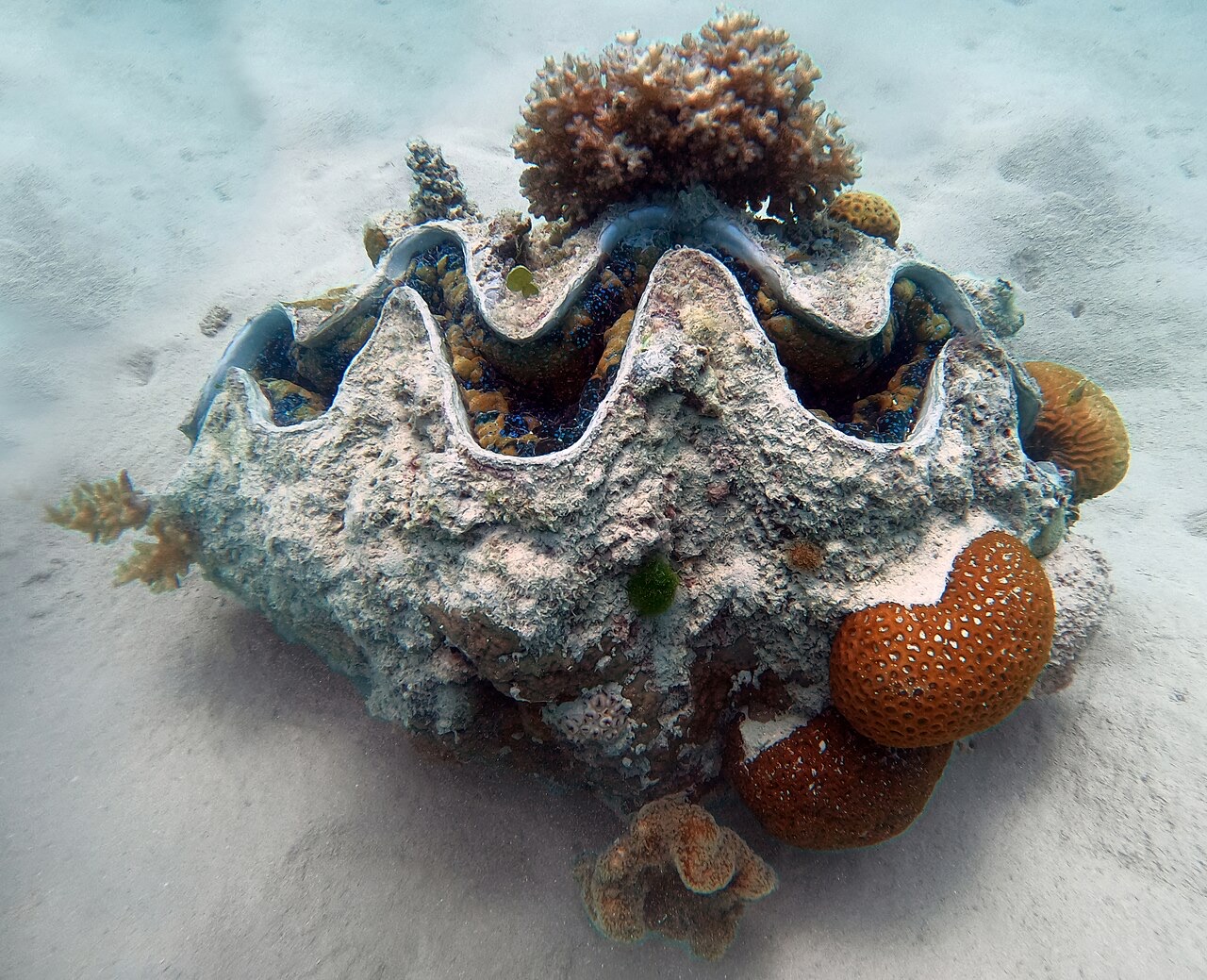
A mature giant clam is a reef landmark: a meter-plus of fluted shell holding a mantle patterned in electric blues, greens, and golds, no two animals alike. The colors come partly from iridescent cells managing light for the clam's real engine (symbiotic algae farmed in its tissues), which is why giants sit in the sunlit shallows gaping wide by day. Old stories about man-trap clams are folklore; a disturbed animal vents and closes slowly, and the largest cannot seal at all. The genuine drama is reproductive, broadcast spawning that fogs whole lagoon patches with gametes. Tridacna gigas has been fished out of much of its former range for meat and shell, and many animals divers meet today, notably in Palau, descend from hatchery restocking. Find the paired siphons, note the sunburst mantle pattern, and keep fins well clear.
Dove e quando avvistarne uno
"Residente" significa che la maggior parte delle immersioni in quella destinazione li incontra; "stagionale" significa che sono presenti in modo affidabile nei mesi indicati; qualsiasi altra cosa è un bonus, non un piano.
| Destinazione | Affidabilità | Mesi | Note |
|---|---|---|---|
| Cairns & the Ribbon ReefsAustralia | Resident: seen on most dives | Tutto l'anno | |
| PalauPalau | Resident: seen on most dives | Tutto l'anno | |
| Raja AmpatIndonesia | Resident: seen on most dives | Tutto l'anno | |
| Sipadan & MabulMalaysia | Resident: seen on most dives | Tutto l'anno | |
| YapFederated States of Micronesia | Resident: seen on most dives | Tutto l'anno |
Il mese migliore, a colpo d'occhio
| Mese | Destinazioni affidabili |
|---|---|
| January | Cairns & the Ribbon Reefs · Palau · Raja Ampat · Sipadan & Mabul · Yap |
| February | Cairns & the Ribbon Reefs · Palau · Raja Ampat · Sipadan & Mabul · Yap |
| March | Cairns & the Ribbon Reefs · Palau · Raja Ampat · Sipadan & Mabul · Yap |
| April | Cairns & the Ribbon Reefs · Palau · Raja Ampat · Sipadan & Mabul · Yap |
| May | Cairns & the Ribbon Reefs · Palau · Raja Ampat · Sipadan & Mabul · Yap |
| June | Cairns & the Ribbon Reefs · Palau · Raja Ampat · Sipadan & Mabul · Yap |
| July | Cairns & the Ribbon Reefs · Palau · Raja Ampat · Sipadan & Mabul · Yap |
| August | Cairns & the Ribbon Reefs · Palau · Raja Ampat · Sipadan & Mabul · Yap |
| September | Cairns & the Ribbon Reefs · Palau · Raja Ampat · Sipadan & Mabul · Yap |
| October | Cairns & the Ribbon Reefs · Palau · Raja Ampat · Sipadan & Mabul · Yap |
| November | Cairns & the Ribbon Reefs · Palau · Raja Ampat · Sipadan & Mabul · Yap |
| December | Cairns & the Ribbon Reefs · Palau · Raja Ampat · Sipadan & Mabul · Yap |
Capirle
Habitat: Sunlit reef flats, lagoon floors, and upper slopes, shallow because its symbiotic algae need strong light.
Distribuzione: Coral Triangle, Micronesia, and the Great Barrier Reef; fished out of much of its former Indo-Pacific range, with reintroductions in several countries.
Comportamento: Sessile after settlement; gapes its patterned mantle to the sun by day, contracting and slowly closing when shadowed. Spawns by broadcast, fogging the water with gametes.
Dieta: Mostly sugars from symbiotic algae farmed in the mantle, topped up by filter feeding.
Dimensioni: tipicamente intorno a 1.0 m; documentato fino a 1.3 m (shell length; the largest reliably weighed animals exceed 200 kg).
Come comportarsi in sua presenza
Keep fins, gauges, and hands clear of the mantle and siphons; shadow the animal as little as possible and never test the closing reflex.
Conservazione
Listed Vulnerable under a 1996 assessment widely considered out of date (recent studies argue it is far more threatened), locally extinct in parts of its range, and traded under CITES Appendix II; hatchery programs restock several countries.
Siti mappati noti per avvistamenti
I siti evidenziati sono stati schedati per questa specie dai nostri redattori; i numeri sono record di occorrenza GBIF registrati entro circa 5 km dal sito a partire dal 1990.
Guarda
Dai canali ufficiali

Wildlife of Monterey | New film in our auditorium

Live Aviary Cam | Monterey Bay Aquarium

Live Aviary Cam | Monterey Bay Aquarium
I video sono link incorporati ai canali dei rispettivi autori. Non ospitiamo nulla e accreditiamo tutto.