Sharks
Great White Shark
Carcharodon carcharias · Cartilaginous fish, family Lamnidae
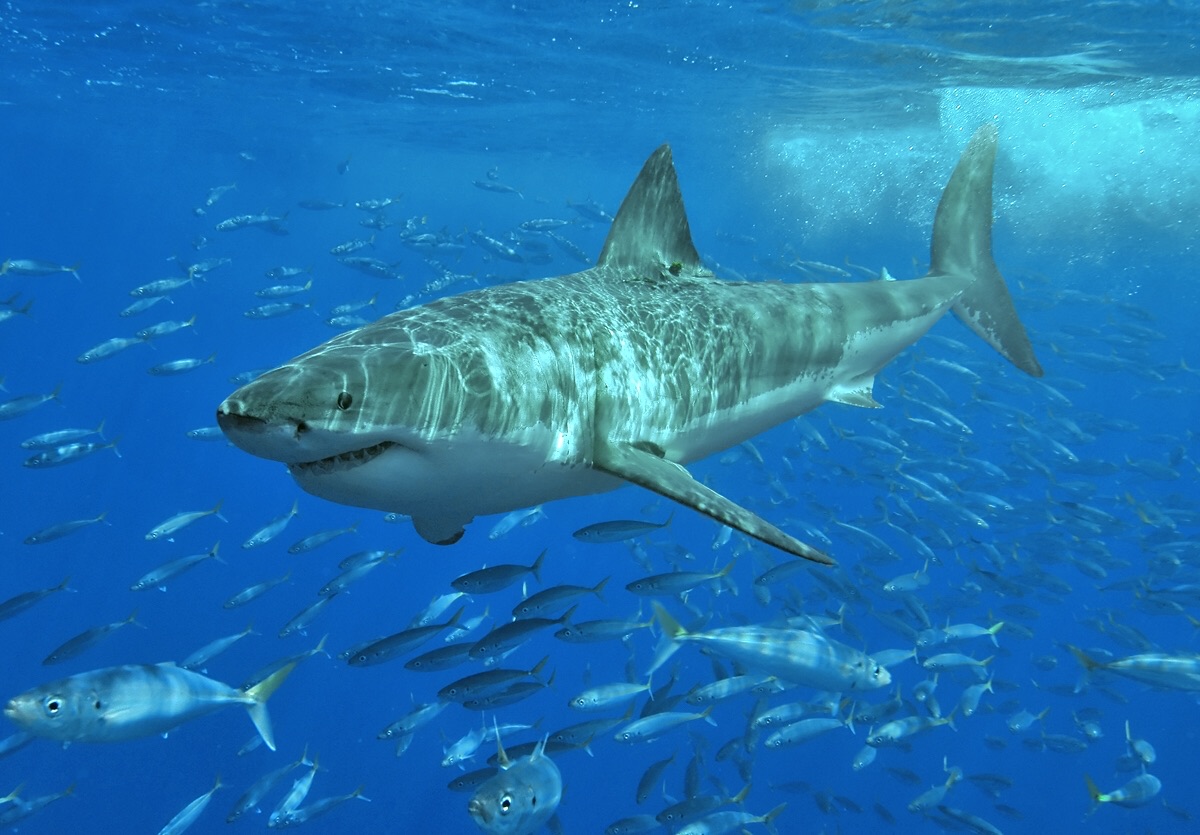
The great white is diving's apex celebrity, and the reality outdoes the film footage: a torpedo of muscle the size of a small boat, moving with the economy of something that has nothing to prove. From a cage the details register: the black eye rolling to track you, scars mapping decades of seal hunts and courtship, the absurd girth of a mature female. South Australia's Neptune Islands now carry the sport's flag for reliable, regulated encounters, since Mexico closed Guadalupe Island. Whites remain slow-breeding and heavily protected across much of their range, a recovery story still being written.
Where and when to see one
"Resident" means most dives at that destination encounter them; "seasonal" means reliably present in the listed months; anything else is a bonus, not a plan.
| Destination | Reliability | Months | Notes |
|---|---|---|---|
| South AustraliaAustralia | Resident: seen on most dives | Year-round | |
| Guadalupe IslandMexico | Seasonal: reliable in season | Year-round | |
| The Sardine Run (Wild Coast)South Africa | Occasional | Jun–Jul |
Best month, at a glance
| Month | Reliable destinations |
|---|---|
| January | South Australia · Guadalupe Island |
| February | South Australia · Guadalupe Island |
| March | South Australia · Guadalupe Island |
| April | South Australia · Guadalupe Island |
| May | South Australia · Guadalupe Island |
| June | South Australia · Guadalupe Island · The Sardine Run (Wild Coast) |
| July | South Australia · Guadalupe Island · The Sardine Run (Wild Coast) |
| August | South Australia · Guadalupe Island |
| September | South Australia · Guadalupe Island |
| October | South Australia · Guadalupe Island |
| November | South Australia · Guadalupe Island |
| December | South Australia · Guadalupe Island |
Understanding them
Habitat: Cool temperate coasts near seal colonies, plus long open-ocean migrations; juveniles favor shallow sandy shorelines
Range: Temperate and subtropical waters worldwide: South Australia, South Africa, California and Baja, the northwest Atlantic, New Zealand, and the Mediterranean
Behavior: An ambush predator built for vertical surprise attacks on pinnipeds, which is why surface encounters are managed from cages. Around boats it is investigative and unhurried, circling wide and mouthing objects to test them, behavior that reads as menace but is closer to curiosity without hands.
Diet: Seals and sea lions as adults, fish and rays when younger; scavenges whale carcasses opportunistically
Size: typically around 4.5 m; documented up to 6.0 m (total length; mature females typically 4.5–5 m, with reliable records to about 6 m).
How to behave around one
Cage diving only, with licensed operators under national rules: no wrangling, no touching from the cage, keep limbs inside, and choose operators who follow attractant regulations rather than those promising the closest pass.
Conservation
Vulnerable and legally protected in Australia, South Africa, the US, and elsewhere. Populations appear to be rebuilding slowly in parts of the range; cage-diving regulation aims to keep tourism from conditioning sharks to boats.
Charted sites known for them
Highlighted sites were charted for this species by our editors; numbers are GBIF occurrence records logged within about 5 km of a site since 1990.
Watch
From the official channels

Wildlife of Monterey | New film in our auditorium

Live Aviary Cam | Monterey Bay Aquarium

Live Aviary Cam | Monterey Bay Aquarium
Videos are embedded links to their creators' own channels. We host nothing and credit everything.