Tauchplätze, Saisons und Meereslebewesen – recherchiert, kartiert, geplant.
Menü
Reiseziele Tauchplätze Meeresleben Wracks News
Eine Reise planen Tauchtrip-Planer Wann tauchen Kostenrechner Vergleiche Meereslebewesen-Kalender Wassertemperatur Liveaboards Tauchbetriebe & Resorts Meeresschutzgebiete Druckkammern Weltkarte
Regionen Australien, Neuseeland & OstasienKaribik & WestatlantikEuropa, Atlantik & MittelmeerIndischer Ozean & OstafrikaPazifikinseln & MikronesienRotes Meer & Naher OstenSüdostasien & Korallen-DreieckAmerika & Östlicher Pazifik Länder
Lernen & Tools Alle Guides Zertifizierungen Ausrüstungsratgeber Videos Daten abfragen KI-Agenten API
Über uns Über uns Methodik Haftungsausschluss Kontakt
Deine Ansicht
★ Gespeichert

Deine gespeicherten Reiseziele, Tauchplätze und Tierarten — im Browser gespeichert.

API-GATEWAY

Kostenloser, schreibgeschützter JSON-Zugriff auf die gecachten Daten des Atlas.

Dunkelmodus

🧭 Geführte Ansicht
Neu beim Tauchen — Tiefen, Strömungen, Zertifizierungsstufen? Wir erklären jeden Begriff beim Stöbern in verständlicher Sprache. Dieselben Daten, mit integrierter Hilfe.

⚡ Expertenansicht
Du kennst den Unterschied zwischen einem Wall und einem Drift Dive. Nur die Daten – klar, schnell und kompakt. Das ist die Standardansicht.

Oberflächensprache
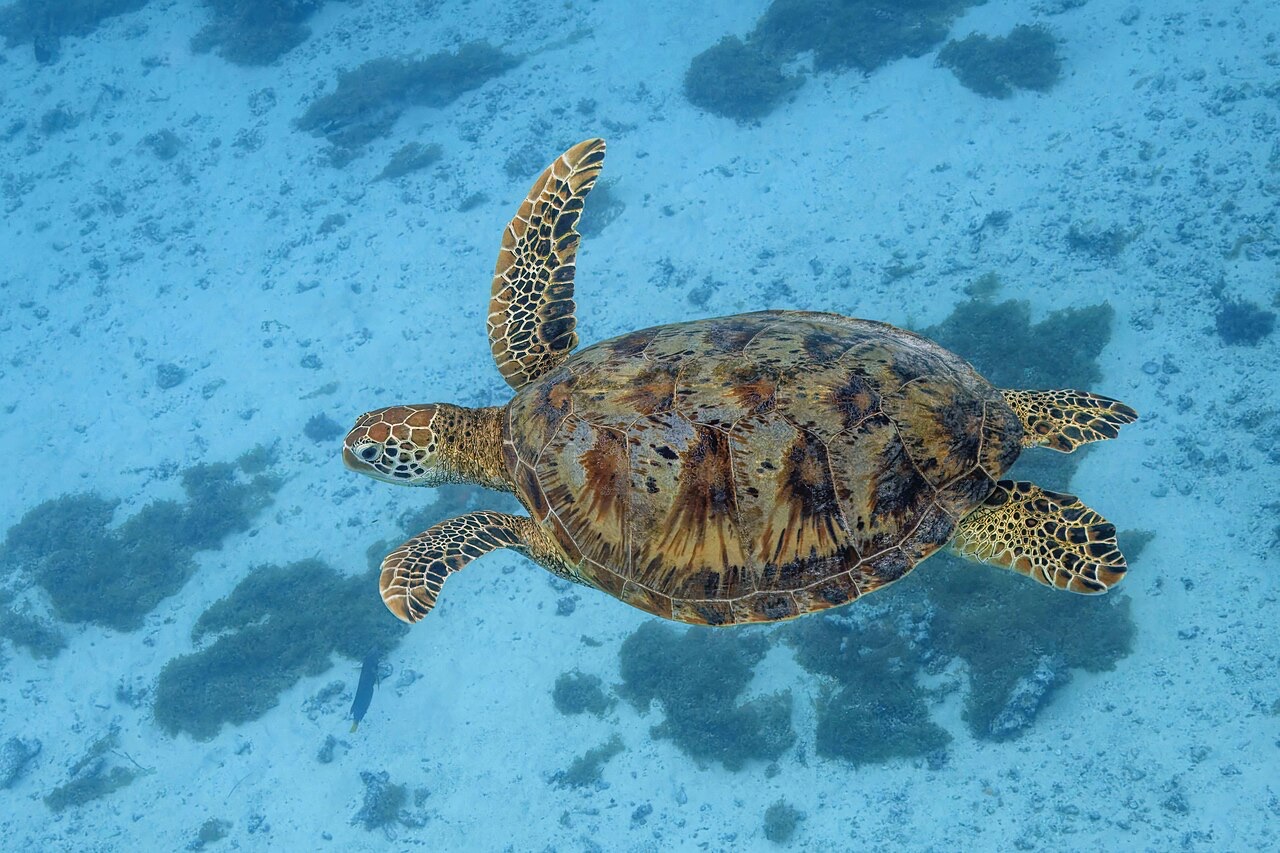
Green Sea Turtle — illustration
KI-generierte Illustration für The Scuba Atlas – illustrativ, kein Dokumentarfoto.

Turtles

Green Sea Turtle

Chelonia mydas · Marine reptile — family Cheloniidae

IUCN: EN (decreasing) ~1.0 m carapace length; large adults weigh 150–200 kg 0–40 m Tiefenbereich Gut dokumentiert

The green turtle is diving's great normalizer: on the right reef it becomes as ordinary as parrotfish, and never stops being wonderful. A big adult is a coffee-table of smooth olive shell topped by a small, gentle-jawed head built for mowing grass, trailing a wake of nibbled seagrass stubble across the lagoon floor. At Sipadan they stack along the wall like parked cars; at Marsa Alam's seagrass bays they graze beside snorkelers all day; Hawaiian greens haul out to bask on beaches, a habit almost unique to that population. Fifty years of protection have rebuilt many nesting populations — one of marine conservation's genuine success stories, still incomplete.

Wo und wann man eines sieht

„Resident" bedeutet, dass die meisten Tauchgänge am jeweiligen Tauchziel eine Begegnung erwarten lassen; „saisonal" bedeutet, dass die Art in den genannten Monaten zuverlässig anzutreffen ist; alles andere ist ein Bonus, keine Planungsgrundlage.

ZielZuverlässigkeitMonateHinweise
Riviera Maya & the CenotesMexico Resident — seen on most dives Ganzjährig
Galápagos IslandsEcuador Resident — seen on most dives Ganzjährig
Cairns & the Ribbon ReefsAustralia Resident — seen on most dives Ganzjährig
Sipadan & MabulMalaysia Resident — seen on most dives Ganzjährig
Kona, HawaiʻiUnited States Resident — seen on most dives Ganzjährig
Marsa Alam & the Deep SouthEgypt Resident — seen on most dives Ganzjährig

Bester Monat auf einen Blick

MonatZuverlässige Reiseziele
January Riviera Maya & the Cenotes · Galápagos Islands · Cairns & the Ribbon Reefs · Sipadan & Mabul · Kona, Hawaiʻi · Marsa Alam & the Deep South
February Riviera Maya & the Cenotes · Galápagos Islands · Cairns & the Ribbon Reefs · Sipadan & Mabul · Kona, Hawaiʻi · Marsa Alam & the Deep South
March Riviera Maya & the Cenotes · Galápagos Islands · Cairns & the Ribbon Reefs · Sipadan & Mabul · Kona, Hawaiʻi · Marsa Alam & the Deep South
April Riviera Maya & the Cenotes · Galápagos Islands · Cairns & the Ribbon Reefs · Sipadan & Mabul · Kona, Hawaiʻi · Marsa Alam & the Deep South
May Riviera Maya & the Cenotes · Galápagos Islands · Cairns & the Ribbon Reefs · Sipadan & Mabul · Kona, Hawaiʻi · Marsa Alam & the Deep South
June Riviera Maya & the Cenotes · Galápagos Islands · Cairns & the Ribbon Reefs · Sipadan & Mabul · Kona, Hawaiʻi · Marsa Alam & the Deep South
July Riviera Maya & the Cenotes · Galápagos Islands · Cairns & the Ribbon Reefs · Sipadan & Mabul · Kona, Hawaiʻi · Marsa Alam & the Deep South
August Riviera Maya & the Cenotes · Galápagos Islands · Cairns & the Ribbon Reefs · Sipadan & Mabul · Kona, Hawaiʻi · Marsa Alam & the Deep South
September Riviera Maya & the Cenotes · Galápagos Islands · Cairns & the Ribbon Reefs · Sipadan & Mabul · Kona, Hawaiʻi · Marsa Alam & the Deep South
October Riviera Maya & the Cenotes · Galápagos Islands · Cairns & the Ribbon Reefs · Sipadan & Mabul · Kona, Hawaiʻi · Marsa Alam & the Deep South
November Riviera Maya & the Cenotes · Galápagos Islands · Cairns & the Ribbon Reefs · Sipadan & Mabul · Kona, Hawaiʻi · Marsa Alam & the Deep South
December Riviera Maya & the Cenotes · Galápagos Islands · Cairns & the Ribbon Reefs · Sipadan & Mabul · Kona, Hawaiʻi · Marsa Alam & the Deep South

Sie verstehen

Lebensraum: Seagrass meadows, algae-covered reef flats, and lagoons; sleeps under reef ledges and migrates long distances to natal nesting beaches

Verbreitung: Circumglobal in tropical and subtropical seas, with major populations in the Caribbean, Red Sea, Indian Ocean, Coral Triangle, Pacific islands, and Australia

Verhalten: A placid grazer that crops seagrass in slow, methodical mouthfuls, surfaces in a leisurely arc to breathe, and wedges beneath the same ledges night after night. Where protected and habituated, as at Sipadan or Hawaii, it treats divers as scenery and continues feeding at arm's length.

Ernährung: Adults graze seagrass and algae — the diet that greens their fat and names the species; juveniles are more omnivorous

Größe: typischerweise rund 1.0 m; dokumentiert bis zu 1.2 m (carapace length; large adults weigh 150–200 kg).

Wie man sich in ihrer Nähe verhält

No touching or riding — illegal in most range states — keep hands off resting turtles, never block one's path to the surface to breathe, and give nesting beaches and mating pairs wide berth. Flash restrictions apply at many sites.

Naturschutz

Endangered globally, though many index nesting populations are climbing after decades of beach protection and harvest bans; boat strikes, net bycatch, and warming-skewed hatchling sex ratios are the live threats.

Bekannte Tauchplätze dafür

Ansehen

Aus den offiziellen Kanälen

Alle Videos →

Videos sind eingebettete Links zu den Kanälen der jeweiligen Ersteller – wir hosten nichts und geben für alles die Quelle an.

Quellen: NOAA Fisheries ↗IUCN Red List ↗ · Fakten wurden anhand der oben genannten Quellen verifiziert; Felder ohne Quellenbeleg sind als noch nicht verifiziert gekennzeichnet.

Australien, Neuseeland & Ostasien

Cairns & the Ribbon ReefsNingaloo ReefCoral Sea & Osprey ReefOkinawa & the Kerama IslandsPoor Knights IslandsTownsville & the YongalaGreen IslandIzu Peninsula

Karibik & Westatlantik

BonaireCozumelRiviera Maya & the CenotesBelize Barrier ReefGrand CaymanIsla Mujeres & CancúnRoatánTiger Beach & Grand Bahama

Europa, Atlantik & Mittelmeer

Malta & GozoSilfra & IcelandThe AzoresCanary IslandsLarnaca & the ZenobiaScapa FlowArctic NorwayMadeira

Indischer Ozean & Ostafrika

North & South Malé AtollsAri AtollBaa Atoll & Hanifaru BayAliwal Shoal & UmkomaasMafia IslandMauritiusSeychellesSodwana Bay

Pazifikinseln & Mikronesien

PalauChuuk (Truk) LagoonFakaravaKona, HawaiʻiRangiroaTaveuni & Rainbow ReefBeqa Lagoon & Pacific HarbourEspiritu Santo

Rotes Meer & Naher Osten

Sharm El Sheikh & Ras MohammedBrothers, Daedalus & St John'sDahabHurghada & El GounaMarsa Alam & the Deep SouthAqabaDaymaniyat IslandsMusandam Peninsula

Südostasien & Korallen-Dreieck

Bali & Nusa PenidaKomodoRaja AmpatSipadan & MabulAnilaoCoronKoh TaoLembeh Strait

Amerika & Östlicher Pazifik

Galápagos IslandsCocos IslandFlorida KeysSea of Cortez & Cabo PulmoSocorro & the RevillagigedosBritish ColumbiaCalifornia Channel IslandsCosta Rica Pacific Coast