Pontos de mergulho, épocas e vida marinha — pesquisados, mapeados, planeados.
Menu
Destinos Pontos de Mergulho Vida Marinha Naufrágios Notícias
Planejar uma viagem Planejador de viagem Quando mergulhar Calculadora de custos Comparações Calendário de vida marinha Temperatura da água Liveaboards Operadores & resorts Parques marinhos Câmaras hiperbáricas Mapa mundial
Regiões Austrália, Nova Zelândia e Ásia OrientalCaribe e Atlântico OcidentalEuropa, Atlântico & MediterrâneoOceano Índico e África OrientalIlhas do Pacífico & MicronésiaMar Vermelho & Médio OrienteSudeste Asiático e Triângulo de CoralAs Américas e o Pacífico Oriental Países
Aprender e Ferramentas Todos os guias Certificações Guias de equipamento Vídeos Consulte os Dados Agentes de IA API
Sobre Sobre nós Metodologia Aviso legal Contato
A sua vista
★ Guardado

Os seus destinos, sítios de mergulho e espécies favoritos — guardados neste browser.

API GATEWAY

Acesso JSON gratuito e só de leitura aos dados em cache do atlas.

Modo escuro

🧭 Vista Guiada
Novo no mergulho — profundidades, correntes, níveis de certificação? Explicamos cada termo enquanto navega, em linguagem simples. Os mesmos dados, com a ajuda integrada.

⚡ Vista de Especialista
Já sabe a diferença entre uma parede e um drift dive. Apenas os dados — claros, rápidos e compactos. Esta é a vista predefinida.

Idioma da interface
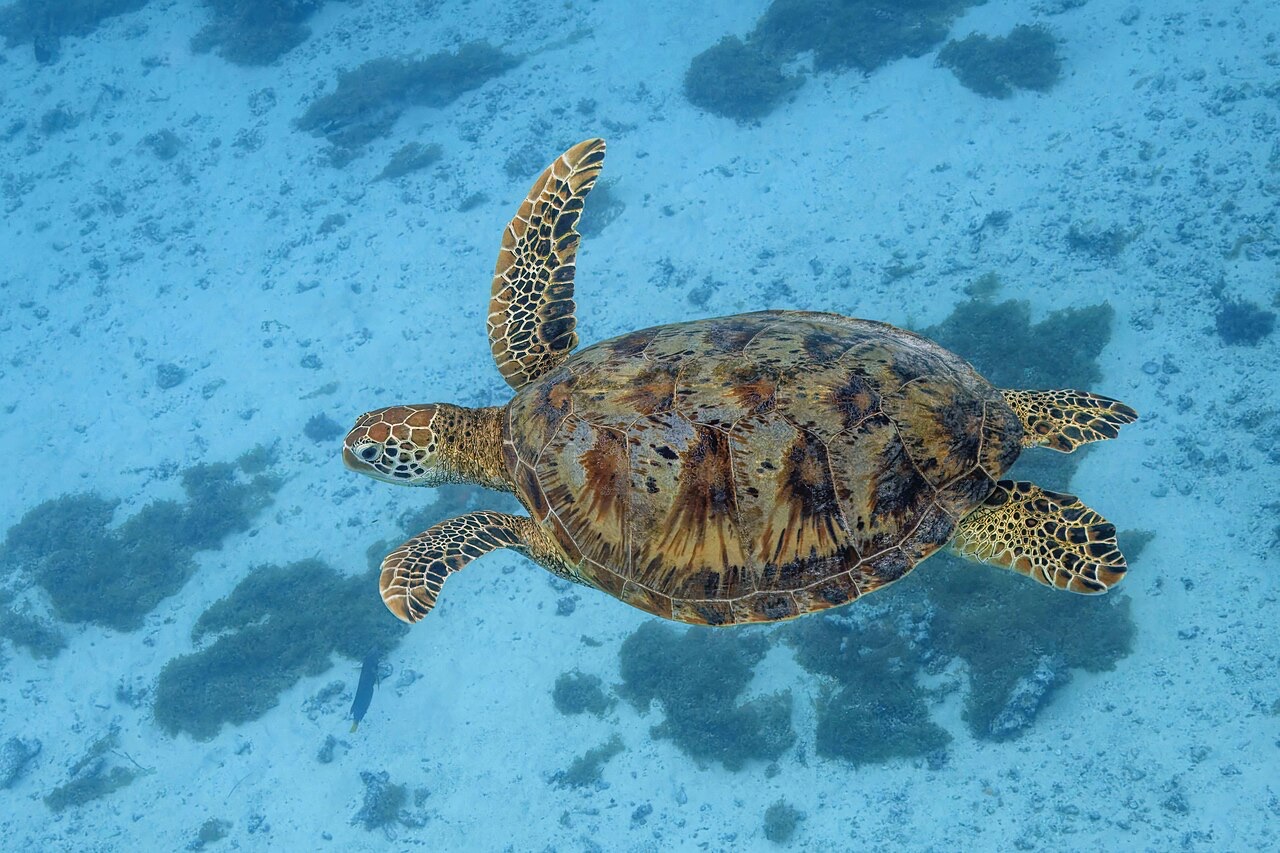
Green Sea Turtle — illustration
Ilustração gerada por IA para The Scuba Atlas — ilustrativa, não uma fotografia documental.

Turtles

Green Sea Turtle

Chelonia mydas · Marine reptile — family Cheloniidae

IUCN: EN (decreasing) ~1.0 m carapace length; large adults weigh 150–200 kg 0–40 m intervalo de profundidade Bem documentado

The green turtle is diving's great normalizer: on the right reef it becomes as ordinary as parrotfish, and never stops being wonderful. A big adult is a coffee-table of smooth olive shell topped by a small, gentle-jawed head built for mowing grass, trailing a wake of nibbled seagrass stubble across the lagoon floor. At Sipadan they stack along the wall like parked cars; at Marsa Alam's seagrass bays they graze beside snorkelers all day; Hawaiian greens haul out to bask on beaches, a habit almost unique to that population. Fifty years of protection have rebuilt many nesting populations — one of marine conservation's genuine success stories, still incomplete.

Onde e quando ver um

"Residente" significa que a maioria dos mergulhos naquele destino os encontra; "sazonal" significa presença confiável nos meses listados; qualquer outra coisa é um bônus, não um plano.

DestinoFiabilidadeMesesNotas
Riviera Maya & the CenotesMexico Resident — seen on most dives Todo o ano
Galápagos IslandsEcuador Resident — seen on most dives Todo o ano
Cairns & the Ribbon ReefsAustralia Resident — seen on most dives Todo o ano
Sipadan & MabulMalaysia Resident — seen on most dives Todo o ano
Kona, HawaiʻiUnited States Resident — seen on most dives Todo o ano
Marsa Alam & the Deep SouthEgypt Resident — seen on most dives Todo o ano

Melhor mês, em resumo

MêsDestinos fiáveis
January Riviera Maya & the Cenotes · Galápagos Islands · Cairns & the Ribbon Reefs · Sipadan & Mabul · Kona, Hawaiʻi · Marsa Alam & the Deep South
February Riviera Maya & the Cenotes · Galápagos Islands · Cairns & the Ribbon Reefs · Sipadan & Mabul · Kona, Hawaiʻi · Marsa Alam & the Deep South
March Riviera Maya & the Cenotes · Galápagos Islands · Cairns & the Ribbon Reefs · Sipadan & Mabul · Kona, Hawaiʻi · Marsa Alam & the Deep South
April Riviera Maya & the Cenotes · Galápagos Islands · Cairns & the Ribbon Reefs · Sipadan & Mabul · Kona, Hawaiʻi · Marsa Alam & the Deep South
May Riviera Maya & the Cenotes · Galápagos Islands · Cairns & the Ribbon Reefs · Sipadan & Mabul · Kona, Hawaiʻi · Marsa Alam & the Deep South
June Riviera Maya & the Cenotes · Galápagos Islands · Cairns & the Ribbon Reefs · Sipadan & Mabul · Kona, Hawaiʻi · Marsa Alam & the Deep South
July Riviera Maya & the Cenotes · Galápagos Islands · Cairns & the Ribbon Reefs · Sipadan & Mabul · Kona, Hawaiʻi · Marsa Alam & the Deep South
August Riviera Maya & the Cenotes · Galápagos Islands · Cairns & the Ribbon Reefs · Sipadan & Mabul · Kona, Hawaiʻi · Marsa Alam & the Deep South
September Riviera Maya & the Cenotes · Galápagos Islands · Cairns & the Ribbon Reefs · Sipadan & Mabul · Kona, Hawaiʻi · Marsa Alam & the Deep South
October Riviera Maya & the Cenotes · Galápagos Islands · Cairns & the Ribbon Reefs · Sipadan & Mabul · Kona, Hawaiʻi · Marsa Alam & the Deep South
November Riviera Maya & the Cenotes · Galápagos Islands · Cairns & the Ribbon Reefs · Sipadan & Mabul · Kona, Hawaiʻi · Marsa Alam & the Deep South
December Riviera Maya & the Cenotes · Galápagos Islands · Cairns & the Ribbon Reefs · Sipadan & Mabul · Kona, Hawaiʻi · Marsa Alam & the Deep South

Entendendo-os

Habitat: Seagrass meadows, algae-covered reef flats, and lagoons; sleeps under reef ledges and migrates long distances to natal nesting beaches

Distribuição: Circumglobal in tropical and subtropical seas, with major populations in the Caribbean, Red Sea, Indian Ocean, Coral Triangle, Pacific islands, and Australia

Comportamento: A placid grazer that crops seagrass in slow, methodical mouthfuls, surfaces in a leisurely arc to breathe, and wedges beneath the same ledges night after night. Where protected and habituated, as at Sipadan or Hawaii, it treats divers as scenery and continues feeding at arm's length.

Dieta: Adults graze seagrass and algae — the diet that greens their fat and names the species; juveniles are more omnivorous

Tamanho: normalmente cerca de 1.0 m; documentado até 1.2 m (carapace length; large adults weigh 150–200 kg).

Como se comportar perto de um

No touching or riding — illegal in most range states — keep hands off resting turtles, never block one's path to the surface to breathe, and give nesting beaches and mating pairs wide berth. Flash restrictions apply at many sites.

Conservação

Endangered globally, though many index nesting populations are climbing after decades of beach protection and harvest bans; boat strikes, net bycatch, and warming-skewed hatchling sex ratios are the live threats.

Pontos mapeados conhecidos por eles

Assista

Dos canais oficiais

Todos os vídeos →

Os vídeos são links incorporados dos próprios canais dos criadores — não hospedamos nada e creditamos tudo.

Fontes: NOAA Fisheries ↗IUCN Red List ↗ · Factos verificados em relação às fontes acima; os campos sem suporte estão assinalados como não verificado ainda.

Austrália, Nova Zelândia e Ásia Oriental

Cairns & the Ribbon ReefsNingaloo ReefCoral Sea & Osprey ReefOkinawa & the Kerama IslandsPoor Knights IslandsTownsville & the YongalaGreen IslandIzu Peninsula

Caribe e Atlântico Ocidental

BonaireCozumelRiviera Maya & the CenotesBelize Barrier ReefGrand CaymanIsla Mujeres & CancúnRoatánTiger Beach & Grand Bahama

Europa, Atlântico & Mediterrâneo

Malta & GozoSilfra & IcelandThe AzoresCanary IslandsLarnaca & the ZenobiaScapa FlowArctic NorwayMadeira

Oceano Índico e África Oriental

North & South Malé AtollsAri AtollBaa Atoll & Hanifaru BayAliwal Shoal & UmkomaasMafia IslandMauritiusSeychellesSodwana Bay

Ilhas do Pacífico & Micronésia

PalauChuuk (Truk) LagoonFakaravaKona, HawaiʻiRangiroaTaveuni & Rainbow ReefBeqa Lagoon & Pacific HarbourEspiritu Santo

Mar Vermelho & Médio Oriente

Sharm El Sheikh & Ras MohammedBrothers, Daedalus & St John'sDahabHurghada & El GounaMarsa Alam & the Deep SouthAqabaDaymaniyat IslandsMusandam Peninsula

Sudeste Asiático e Triângulo de Coral

Bali & Nusa PenidaKomodoRaja AmpatSipadan & MabulAnilaoCoronKoh TaoLembeh Strait

As Américas e o Pacífico Oriental

Galápagos IslandsCocos IslandFlorida KeysSea of Cortez & Cabo PulmoSocorro & the RevillagigedosBritish ColumbiaCalifornia Channel IslandsCosta Rica Pacific Coast