Puntos de buceo, temporadas y vida marina — investigados, cartografiados, planificados.
Menú
Destinos Puntos de buceo Vida marina Pecios Noticias
Planifica un viaje Planificador de viajes Cuándo bucear Calculadora de costes Comparativas Calendario de fauna marina Temperatura del agua Liveaboards Operadores y resorts Parques marinos Cámaras hiperbáricas Mapa mundial
Regiones Australia, Nueva Zelanda y Asia OrientalCaribe y Atlántico occidentalEuropa, Atlántico y MediterráneoOcéano Índico y África OrientalIslas del Pacífico y MicronesiaMar Rojo y Oriente MedioSudeste Asiático y el Triángulo del CoralLas Américas y el Pacífico Oriental Países
Aprender y herramientas Todas las guías Certificaciones Guías de equipo Vídeos Consulta los datos Agentes de IA API
Acerca de Quiénes somos Metodología Aviso legal Contacto
Tu vista
★ Guardado

Tus destinos, sitios y especies favoritos — guardados en este navegador.

API GATEWAY

Acceso JSON gratuito de solo lectura a los datos en caché del atlas.

Modo oscuro

🧭 Vista guiada
¿Nuevo en el buceo? ¿Profundidades, corrientes, niveles de certificación? Explicamos cada término mientras navegas, en un lenguaje claro. Los mismos datos, con la ayuda integrada.

⚡ Vista experta
Ya conoces la diferencia entre una pared y un drift dive. Solo los datos — claros, rápidos y concisos. Esta es la vista predeterminada.

Idioma de la interfaz
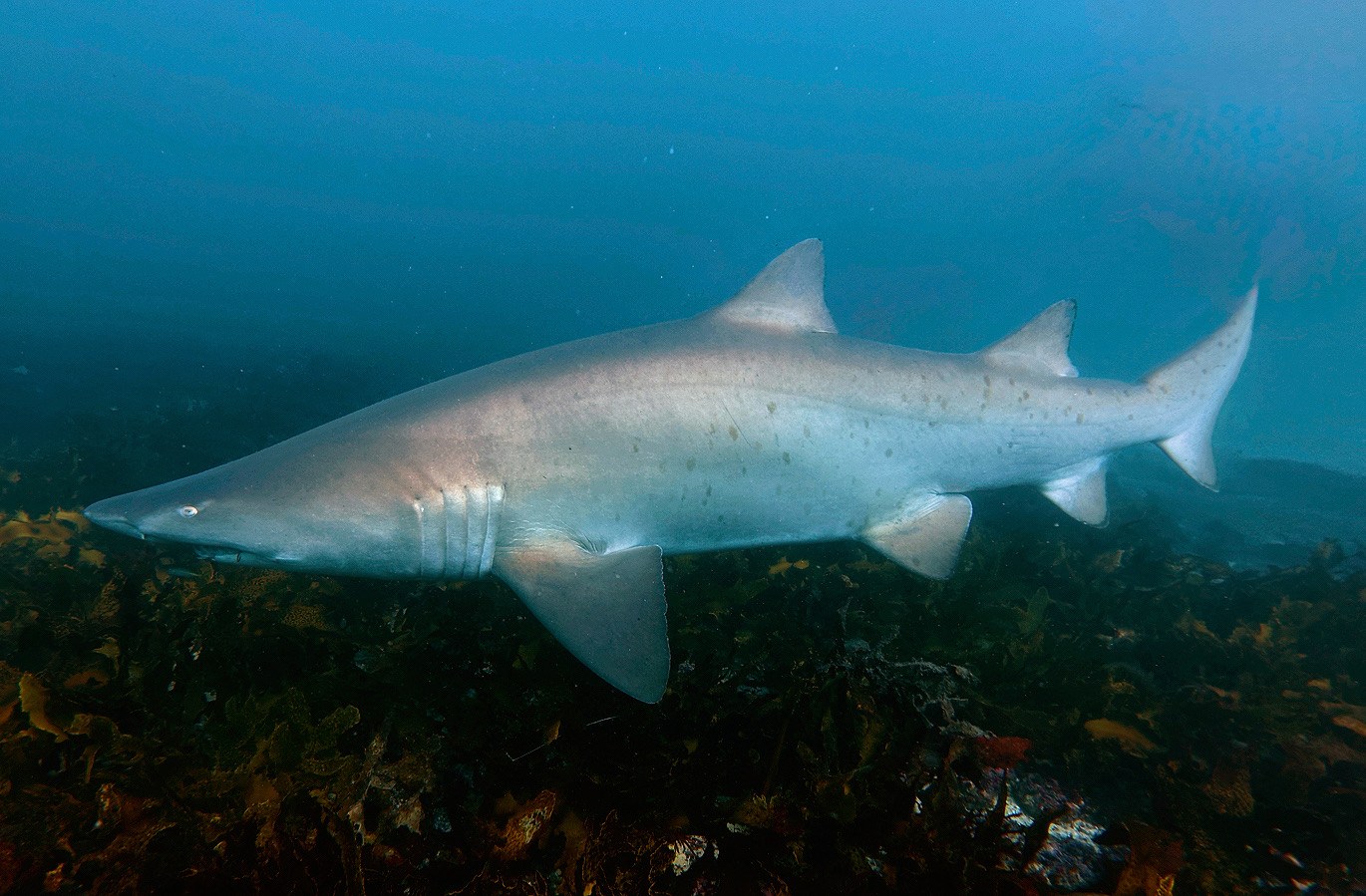
Grey Nurse Shark — illustration
Ilustración generada por IA para The Scuba Atlas — ilustrativa, no una fotografía documental.

Sharks

Grey Nurse Shark

Carcharias taurus · Cartilaginous fish — family Odontaspididae

IUCN: CR (decreasing) ~2.5 m total length 5–40 m rango de profundidad Bien documentado

Australia's grey nurse is the same ragged-toothed species divers meet on North Carolina wrecks and Aliwal's caves, but its story here is distinct and cautionary. Labeled a killer on looks alone, it was speared toward oblivion by the 1970s before becoming one of the world's first protected sharks. Today small aggregations still trace slow ovals through gutters at a handful of east-coast sites, gliding among divers with prehistoric calm. The listed destinations in this atlas brush only the edges of its range — the celebrated aggregation reefs lie along the New South Wales and southern Queensland coast — so treat any sighting elsewhere in Australia as a bonus, not a plan.

Factor de respeto: LowDocile despite the teeth; historic 'man-eater' branding led to spearfishing campaigns that nearly erased the east-coast population. Modern incidents essentially all involve bait or interference.

Dónde y cuándo ver uno

"Residente" significa que la mayoría de las inmersiones en ese destino tienen encuentros con ellos; "estacional" significa que su presencia es fiable en los meses indicados; cualquier otra cosa es un extra, no algo con lo que contar.

Aún no hemos verificado lugares fiables para esta especie — en lugar de suponer, lo dejamos vacío hasta tener fuentes confirmadas.

Comprendiéndolos

Hábitat: Sandy gutters, bommies, and cave mouths along rocky reefs of the Australian coast; the same air-gulping hover as its overseas populations

Rango: Australian name for the sand tiger shark, Carcharias taurus. Two Australian populations: a small east-coast population from southern Queensland through New South Wales, and a distinct, poorly known west-coast population

Comportamiento: Days are spent circling slowly in traditional gutters and around pinnacles in loose aggregations, mouths bristling, bodies nearly still in the surge. Individuals return to the same handful of sites for years, which concentrates both divers and risk in the same places.

Dieta: Reef and pelagic fish, rays, and small sharks, taken mostly at night

Tamaño: normalmente alrededor de 2.5 m; documentado hasta 3.2 m (total length).

Cómo comportarse cerca de uno

Australian critical-habitat rules are specific: no blocking gutters or cave entrances, no chasing or touching, approach along the side rather than head-on, keep group sizes modest, and no scooters or feeding at aggregation sites.

Conservación

The east Australian population is listed Critically Endangered nationally, numbering in the low thousands at best; protected since 1984 in NSW, with designated critical-habitat sites carrying enforceable approach rules.

Puntos conocidos por avistamientos

Ver

Desde los canales oficiales

Todos los vídeos →

Los vídeos son enlaces incrustados a los canales propios de sus creadores — no alojamos nada y acreditamos todo.

Fuentes: NSW Department of Primary Industries ↗IUCN Red List ↗ · Datos verificados frente a las fuentes anteriores; los campos sin respaldo se marcan como aún no verificados.

Australia, Nueva Zelanda y Asia Oriental

Cairns & the Ribbon ReefsNingaloo ReefCoral Sea & Osprey ReefOkinawa & the Kerama IslandsPoor Knights IslandsTownsville & the YongalaGreen IslandIzu Peninsula

Caribe y Atlántico occidental

BonaireCozumelRiviera Maya & the CenotesBelize Barrier ReefGrand CaymanIsla Mujeres & CancúnRoatánTiger Beach & Grand Bahama

Europa, Atlántico y Mediterráneo

Malta & GozoSilfra & IcelandThe AzoresCanary IslandsLarnaca & the ZenobiaScapa FlowArctic NorwayMadeira

Océano Índico y África Oriental

North & South Malé AtollsAri AtollBaa Atoll & Hanifaru BayAliwal Shoal & UmkomaasMafia IslandMauritiusSeychellesSodwana Bay

Islas del Pacífico y Micronesia

PalauChuuk (Truk) LagoonFakaravaKona, HawaiʻiRangiroaTaveuni & Rainbow ReefBeqa Lagoon & Pacific HarbourEspiritu Santo

Mar Rojo y Oriente Medio

Sharm El Sheikh & Ras MohammedBrothers, Daedalus & St John'sDahabHurghada & El GounaMarsa Alam & the Deep SouthAqabaDaymaniyat IslandsMusandam Peninsula

Sudeste Asiático y el Triángulo del Coral

Bali & Nusa PenidaKomodoRaja AmpatSipadan & MabulAnilaoCoronKoh TaoLembeh Strait

Las Américas y el Pacífico Oriental

Galápagos IslandsCocos IslandFlorida KeysSea of Cortez & Cabo PulmoSocorro & the RevillagigedosBritish ColumbiaCalifornia Channel IslandsCosta Rica Pacific Coast