Sharks
Grey Nurse Shark
Carcharias taurus · Cartilaginous fish, family Odontaspididae
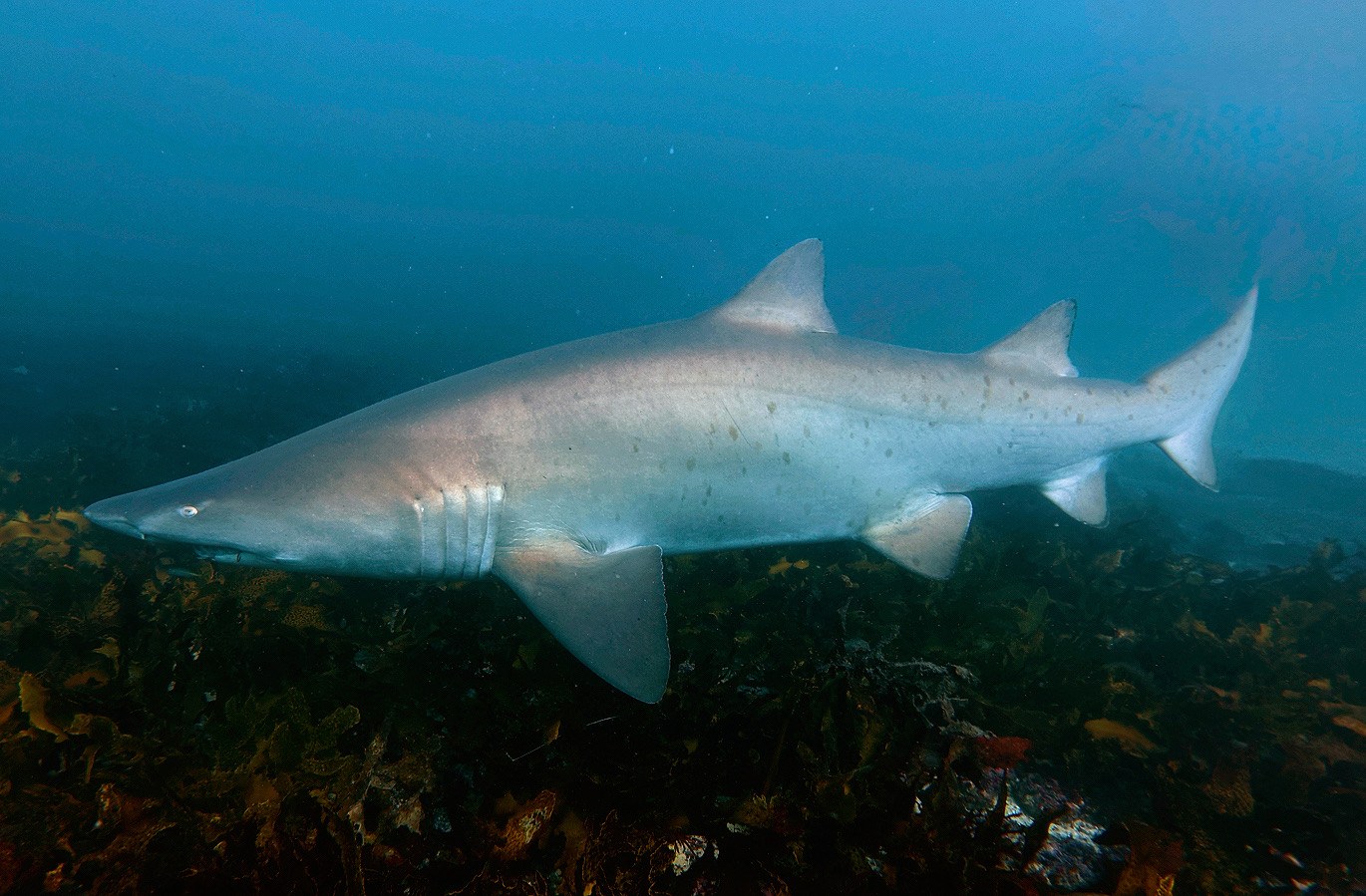
Australia's grey nurse is the same ragged-toothed species divers meet on North Carolina wrecks and Aliwal's caves, but its story here is distinct and cautionary. Labeled a killer on looks alone, it was speared toward oblivion by the 1970s before becoming one of the world's first protected sharks. Today small aggregations still trace slow ovals through gutters at a handful of east-coast sites, gliding among divers with prehistoric calm. The listed destinations in this atlas brush only the edges of its range (the celebrated aggregation reefs lie along the New South Wales and southern Queensland coast), so treat any sighting elsewhere in Australia as a bonus, not a plan.
Où et quand en observer un
« Résident » signifie que la plupart des plongées sur ce site permettent de les observer ; « saisonnier » signifie qu'ils sont présents de manière fiable durant les mois indiqués ; tout le reste est un bonus, pas une certitude.
Nous n'avons pas encore identifié de sites fiables pour cette espèce. Plutôt que d'estimer, nous laissons cet espace vide jusqu'à ce qu'une source soit disponible.
Les comprendre
Habitat: Sandy gutters, bommies, and cave mouths along rocky reefs of the Australian coast; the same air-gulping hover as its overseas populations
Aire de répartition: Australian name for the sand tiger shark, Carcharias taurus. Two Australian populations: a small east-coast population from southern Queensland through New South Wales, and a distinct, poorly known west-coast population
Comportement: Days are spent circling slowly in traditional gutters and around pinnacles in loose aggregations, mouths bristling, bodies nearly still in the surge. Individuals return to the same handful of sites for years, which concentrates both divers and risk in the same places.
Régime alimentaire: Reef and pelagic fish, rays, and small sharks, taken mostly at night
Taille: généralement autour de 2.5 m; documenté jusqu'à 3.2 m (total length).
Comment se comporter avec lui
Australian critical-habitat rules are specific: no blocking gutters or cave entrances, no chasing or touching, approach along the side rather than head-on, keep group sizes modest, and no scooters or feeding at aggregation sites.
Conservation
The east Australian population is listed Critically Endangered nationally, numbering in the low thousands at best; protected since 1984 in NSW, with designated critical-habitat sites carrying enforceable approach rules.
Sites répertoriés connus pour leur présence
Les sites mis en évidence ont été cartographiés pour cette espèce par nos éditeurs ; les chiffres correspondent aux occurrences GBIF enregistrées dans un rayon d'environ 5 km d'un site depuis 1990.
Regarder
Depuis les canaux officiels

Wildlife of Monterey | New film in our auditorium

Live Aviary Cam | Monterey Bay Aquarium

Live Aviary Cam | Monterey Bay Aquarium
Les vidéos sont des liens intégrés vers les chaînes de leurs créateurs. Nous n'hébergeons rien et créditons tout.