Siti di immersione, stagioni e fauna marina — ricercati, mappati, pianificati.
Menu
Destinazioni Siti di immersione Vita marina Relitti Notizie
Pianifica un viaggio Pianificatore di viaggi Quando immergersi Calcolatore dei costi Confronti Calendario della fauna marina Temperatura dell'acqua Liveaboard Operatori & resort Parchi marini Camere iperbariche Mappa del mondo
Regioni Australia, Nuova Zelanda e Asia OrientaleCaraibi e Atlantico occidentaleEuropa, Atlantico e MediterraneoOceano Indiano e Africa OrientaleIsole del Pacifico & MicronesiaMar Rosso & Medio OrienteAsia meridionale e Triangolo dei CoralliLe Americhe e il Pacifico orientale Paesi
Impara e strumenti Tutte le guide Brevetti Guide all'attrezzatura Video Interroga i dati AI Agent API
Informazioni Chi siamo Metodologia Disclaimer Contatti
La tua vista
★ Salvato

Le tue destinazioni, siti e specie preferiti — salvati in questo browser.

API GATEWAY

Accesso JSON gratuito in sola lettura ai dati in cache dell'atlante.

Modalità scura

🧭 Visualizzazione Guidata
Sei nuovo alle immersioni — profondità, correnti, livelli di brevetto? Spieghiamo ogni termine mentre navighi, in modo semplice e chiaro. Gli stessi dati, con il supporto integrato.

⚡ Visualizzazione Esperta
Conosci già la differenza tra una parete e una drift dive. Solo i dati — chiari, rapidi e compatti. Questa è la visualizzazione predefinita.

Lingua dell'interfaccia
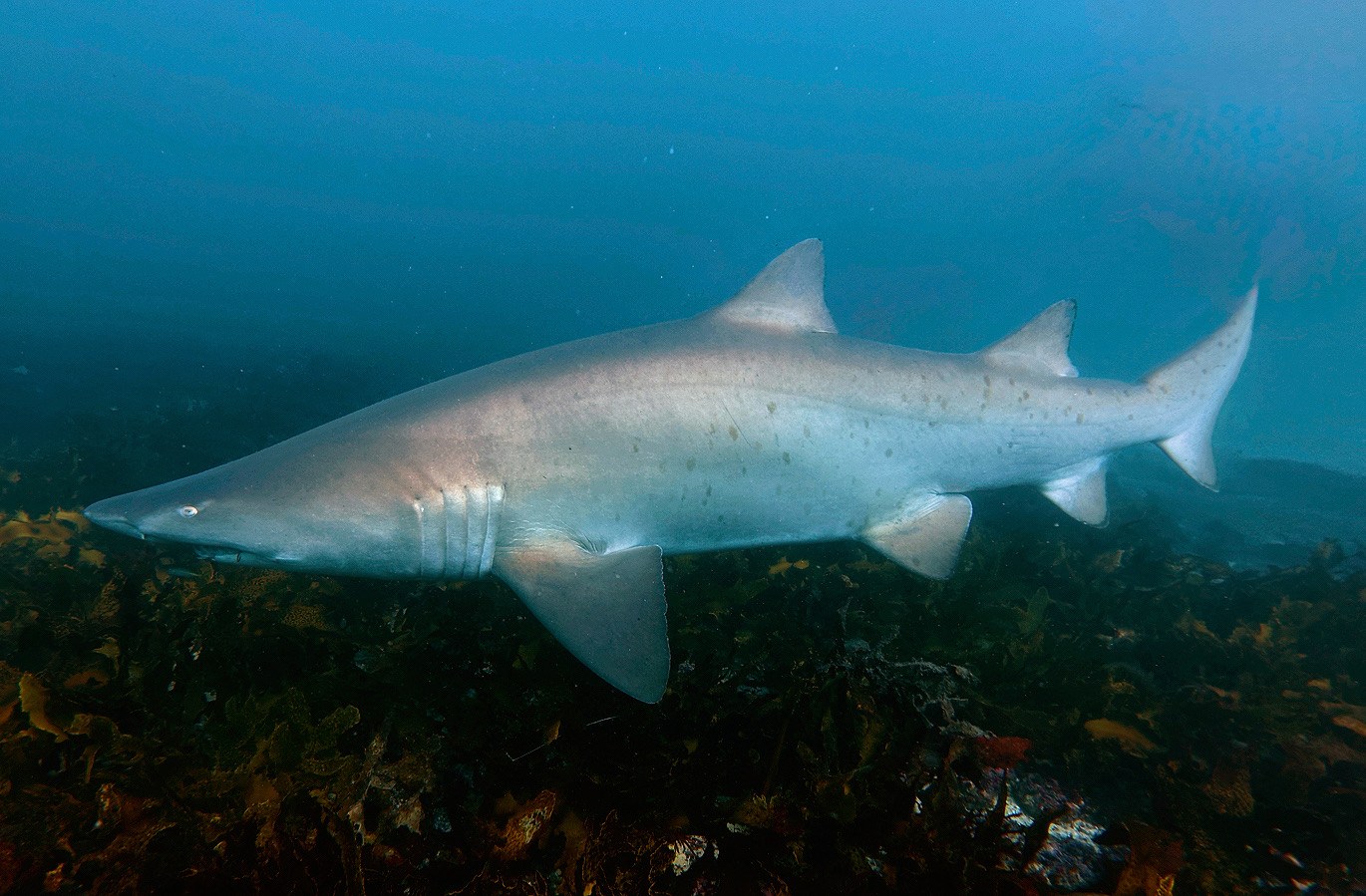
Grey Nurse Shark — illustration
Illustrazione generata dall'AI per The Scuba Atlas — a scopo illustrativo, non fotografia documentaria.

Sharks

Grey Nurse Shark

Carcharias taurus · Cartilaginous fish — family Odontaspididae

IUCN: CR (decreasing) ~2.5 m total length 5–40 m fascia di profondità Ben documentato

Australia's grey nurse is the same ragged-toothed species divers meet on North Carolina wrecks and Aliwal's caves, but its story here is distinct and cautionary. Labeled a killer on looks alone, it was speared toward oblivion by the 1970s before becoming one of the world's first protected sharks. Today small aggregations still trace slow ovals through gutters at a handful of east-coast sites, gliding among divers with prehistoric calm. The listed destinations in this atlas brush only the edges of its range — the celebrated aggregation reefs lie along the New South Wales and southern Queensland coast — so treat any sighting elsewhere in Australia as a bonus, not a plan.

Fattore di rispetto: LowDocile despite the teeth; historic 'man-eater' branding led to spearfishing campaigns that nearly erased the east-coast population. Modern incidents essentially all involve bait or interference.

Dove e quando avvistarne uno

"Residente" significa che la maggior parte delle immersioni in quella destinazione li incontra; "stagionale" significa che sono presenti in modo affidabile nei mesi indicati; qualsiasi altra cosa è un bonus, non un piano.

Non abbiamo ancora verificato luoghi affidabili per questa specie — piuttosto che ipotizzare, lasciamo questo campo vuoto finché non avremo una fonte certa.

Capirle

Habitat: Sandy gutters, bommies, and cave mouths along rocky reefs of the Australian coast; the same air-gulping hover as its overseas populations

Distribuzione: Australian name for the sand tiger shark, Carcharias taurus. Two Australian populations: a small east-coast population from southern Queensland through New South Wales, and a distinct, poorly known west-coast population

Comportamento: Days are spent circling slowly in traditional gutters and around pinnacles in loose aggregations, mouths bristling, bodies nearly still in the surge. Individuals return to the same handful of sites for years, which concentrates both divers and risk in the same places.

Dieta: Reef and pelagic fish, rays, and small sharks, taken mostly at night

Dimensioni: tipicamente intorno a 2.5 m; documentato fino a 3.2 m (total length).

Come comportarsi in sua presenza

Australian critical-habitat rules are specific: no blocking gutters or cave entrances, no chasing or touching, approach along the side rather than head-on, keep group sizes modest, and no scooters or feeding at aggregation sites.

Conservazione

The east Australian population is listed Critically Endangered nationally, numbering in the low thousands at best; protected since 1984 in NSW, with designated critical-habitat sites carrying enforceable approach rules.

Siti mappati noti per avvistamenti

Guarda

Dai canali ufficiali

Tutti i video →

I video sono link incorporati ai canali dei rispettivi autori — non ospitiamo nulla e diamo sempre credito a tutti.

Fonti: NSW Department of Primary Industries ↗IUCN Red List ↗ · Dati verificati rispetto alle fonti indicate; i campi privi di riscontro sono contrassegnati come non ancora verificati.

Australia, Nuova Zelanda e Asia Orientale

Cairns & the Ribbon ReefsNingaloo ReefCoral Sea & Osprey ReefOkinawa & the Kerama IslandsPoor Knights IslandsTownsville & the YongalaGreen IslandIzu Peninsula

Caraibi e Atlantico occidentale

BonaireCozumelRiviera Maya & the CenotesBelize Barrier ReefGrand CaymanIsla Mujeres & CancúnRoatánTiger Beach & Grand Bahama

Europa, Atlantico e Mediterraneo

Malta & GozoSilfra & IcelandThe AzoresCanary IslandsLarnaca & the ZenobiaScapa FlowArctic NorwayMadeira

Oceano Indiano e Africa Orientale

North & South Malé AtollsAri AtollBaa Atoll & Hanifaru BayAliwal Shoal & UmkomaasMafia IslandMauritiusSeychellesSodwana Bay

Isole del Pacifico & Micronesia

PalauChuuk (Truk) LagoonFakaravaKona, HawaiʻiRangiroaTaveuni & Rainbow ReefBeqa Lagoon & Pacific HarbourEspiritu Santo

Mar Rosso & Medio Oriente

Sharm El Sheikh & Ras MohammedBrothers, Daedalus & St John'sDahabHurghada & El GounaMarsa Alam & the Deep SouthAqabaDaymaniyat IslandsMusandam Peninsula

Asia meridionale e Triangolo dei Coralli

Bali & Nusa PenidaKomodoRaja AmpatSipadan & MabulAnilaoCoronKoh TaoLembeh Strait

Le Americhe e il Pacifico orientale

Galápagos IslandsCocos IslandFlorida KeysSea of Cortez & Cabo PulmoSocorro & the RevillagigedosBritish ColumbiaCalifornia Channel IslandsCosta Rica Pacific Coast