Sharks
Grey Nurse Shark
Carcharias taurus · Cartilaginous fish, family Odontaspididae
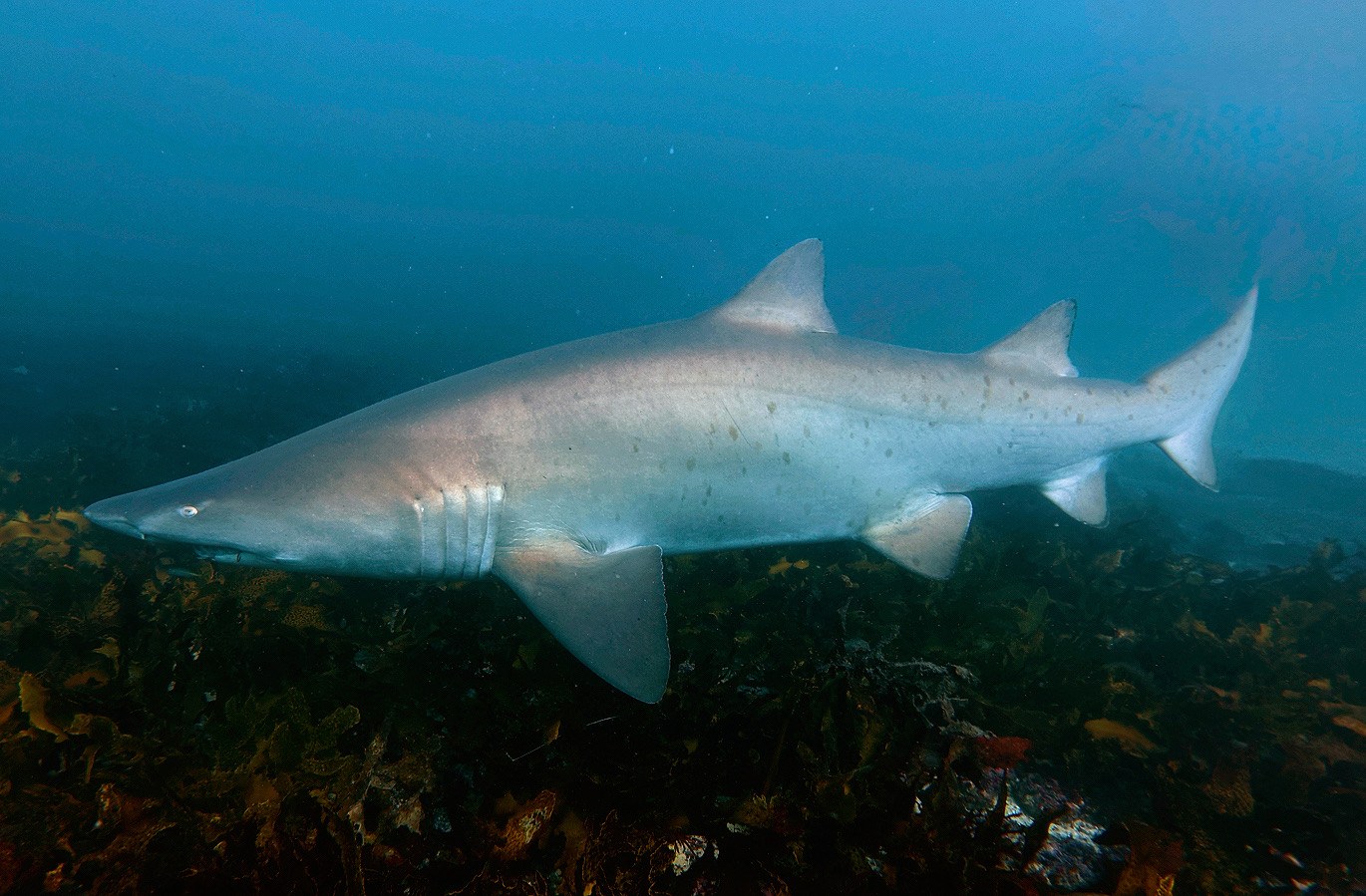
Australia's grey nurse is the same ragged-toothed species divers meet on North Carolina wrecks and Aliwal's caves, but its story here is distinct and cautionary. Labeled a killer on looks alone, it was speared toward oblivion by the 1970s before becoming one of the world's first protected sharks. Today small aggregations still trace slow ovals through gutters at a handful of east-coast sites, gliding among divers with prehistoric calm. The listed destinations in this atlas brush only the edges of its range (the celebrated aggregation reefs lie along the New South Wales and southern Queensland coast), so treat any sighting elsewhere in Australia as a bonus, not a plan.
Nơi và thời điểm có thể gặp
"Thường trú" nghĩa là hầu hết các lần lặn tại điểm đó đều gặp được chúng; "theo mùa" nghĩa là chúng xuất hiện đáng tin cậy trong các tháng được liệt kê; bất kỳ điều gì ngoài ra là điểm thưởng, không phải kế hoạch.
Chúng tôi chưa xác minh được địa điểm đáng tin cậy nào cho loài này. Thay vì đoán, chúng tôi để trống cho đến khi có nguồn xác thực.
Tìm hiểu về chúng
Môi trường sống: Sandy gutters, bommies, and cave mouths along rocky reefs of the Australian coast; the same air-gulping hover as its overseas populations
Phạm vi phân bố: Australian name for the sand tiger shark, Carcharias taurus. Two Australian populations: a small east-coast population from southern Queensland through New South Wales, and a distinct, poorly known west-coast population
Hành vi: Days are spent circling slowly in traditional gutters and around pinnacles in loose aggregations, mouths bristling, bodies nearly still in the surge. Individuals return to the same handful of sites for years, which concentrates both divers and risk in the same places.
Chế độ ăn: Reef and pelagic fish, rays, and small sharks, taken mostly at night
Kích thước: thường vào khoảng 2.5 m; ghi nhận đến độ sâu 3.2 m (total length).
Cách ứng xử khi ở gần loài này
Australian critical-habitat rules are specific: no blocking gutters or cave entrances, no chasing or touching, approach along the side rather than head-on, keep group sizes modest, and no scooters or feeding at aggregation sites.
Bảo tồn
The east Australian population is listed Critically Endangered nationally, numbering in the low thousands at best; protected since 1984 in NSW, with designated critical-habitat sites carrying enforceable approach rules.
Các điểm lặn đã ghi nhận có loài này
Các điểm được làm nổi bật là những điểm đã được ban biên tập ghi chép cho loài này; các con số là bản ghi xuất hiện từ GBIF được ghi nhận trong phạm vi khoảng 5 km của điểm lặn kể từ năm 1990.
Xem
Từ kênh chính thức

Wildlife of Monterey | New film in our auditorium

Live Aviary Cam | Monterey Bay Aquarium

Live Aviary Cam | Monterey Bay Aquarium
Video là các liên kết nhúng dẫn đến kênh của chính tác giả. Chúng tôi không lưu trữ gì và ghi công đầy đủ.