Crustaceans
Harlequin Shrimp
Hymenocera picta · Crustacean, family Palaemonidae; a sea-star-eating specialist shrimp
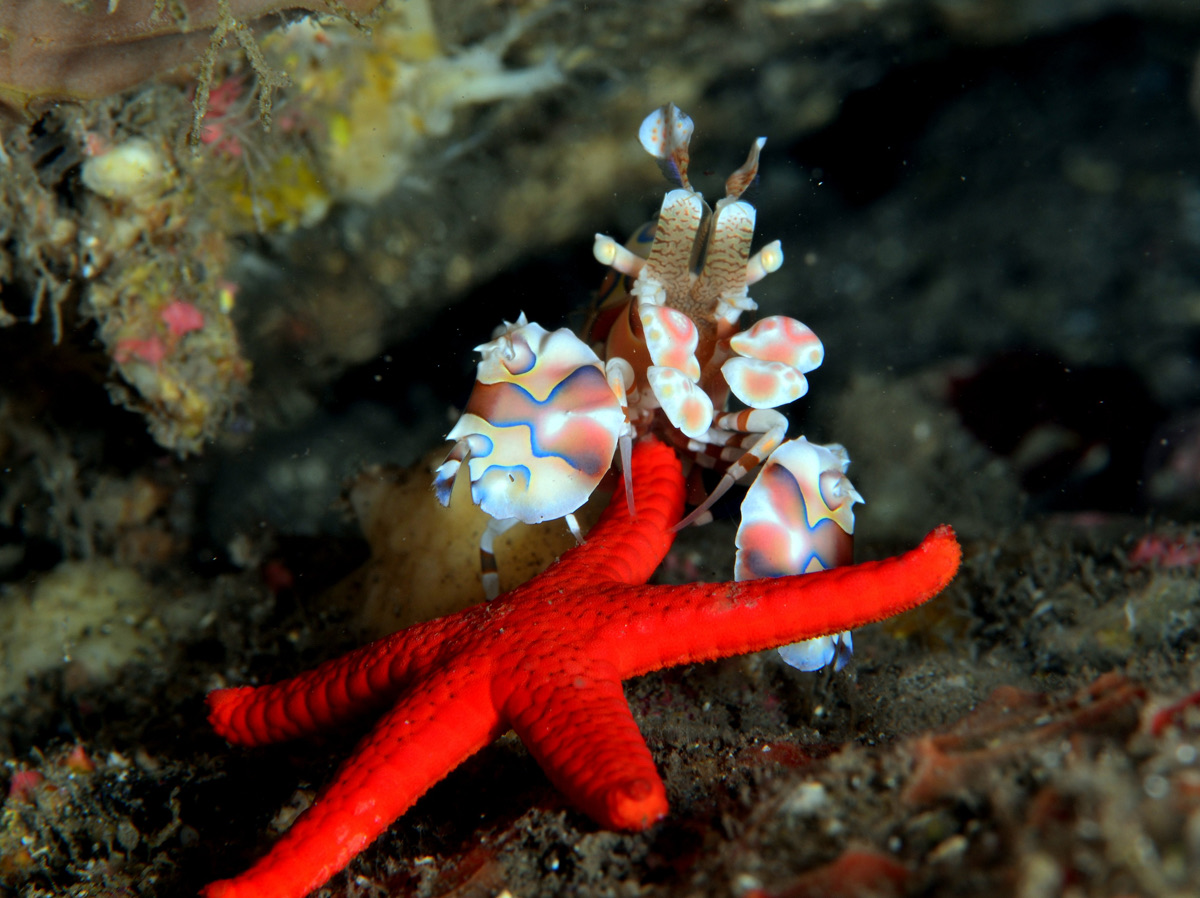
Harlequin shrimp look painted for a festival and live like specialists on a dare: they eat sea stars, only sea stars, and work in mated pairs to do it. A pair (porcelain white splashed with mauve-blue in the Pacific form) finds a star by scent, grips an arm, and levers the whole animal over to reach the tube feet, then walks it back toward the burrow. Feeding starts at the arm tips, and stars often survive long enough to regrow or escape; pairs have been seen keeping a Linckia alive as a larder. Territories are tiny and stable, so once a site's guides know a pair, sightings stay dependable for months. At two knuckles long they demand a slow search of rubble undercuts. Resist any urge to deliver a star for the camera: staged feedings are manipulation, not luck.
Dónde y cuándo ver uno
"Residente" significa que la mayoría de las inmersiones en ese destino tienen encuentros con ellos; "estacional" significa que su presencia es fiable en los meses indicados; cualquier otra cosa es un extra, no algo con lo que contar.
| Destino | Fiabilidad | Meses | Notas |
|---|---|---|---|
| Bali & Nusa PenidaIndonesia | Occasional | Todo el año | |
| Kona, HawaiʻiUnited States | Occasional | Todo el año | |
| Lembeh StraitIndonesia | Occasional | Todo el año | |
| AnilaoPhilippines | Occasional | Todo el año | |
| Dumaguete, Dauin & Apo IslandPhilippines | Occasional | Todo el año |
El mejor mes, de un vistazo
Comprendiéndolos
Hábitat: Rubble undercuts, boulder gaps, and coral crevices on reefs and muck margins, in small, stable territories.
Rango: Indo-Pacific from East Africa to Hawaii and the eastern Pacific fringe; Pacific animals wear mauve-blue blotches, Indian Ocean animals more purple-red.
Comportamiento: Lives in monogamous pairs that locate stars by scent, lever them over to reach the tube feet, and feed from the arm tips over days; territories stay stable for months.
Dieta: Sea stars exclusively, from Linckia to juvenile crown-of-thorns; pairs sometimes keep a star as a living larder.
Tamaño: normalmente alrededor de 0.04 m; documentado hasta 0.05 m (body length).
Cómo comportarse cerca de uno
Never collect a sea star and drop it in front of a pair to stage a feeding photo: moving animals to bait behavior is manipulation, and known pairs get enough attention as it is.
Conservación
Not formally assessed; aquarium collection is the main direct pressure, and its prey-specialist lifestyle ties it to healthy sea-star populations.
Puntos conocidos por avistamientos
Los puntos destacados fueron registrados para esta especie por nuestros editores; los números son registros de ocurrencia de GBIF anotados en un radio de unos 5 km de un punto desde 1990.
Ver
Desde los canales oficiales

Wildlife of Monterey | New film in our auditorium

Live Aviary Cam | Monterey Bay Aquarium

Live Aviary Cam | Monterey Bay Aquarium
Los vídeos son enlaces insertados a los canales de sus propios creadores. No alojamos nada y acreditamos todo.