Cold Water
Leafy Seadragon
Phycodurus eques · Bony fish, family Syngnathidae; an Australian endemic seadragon and South Australia's marine emblem
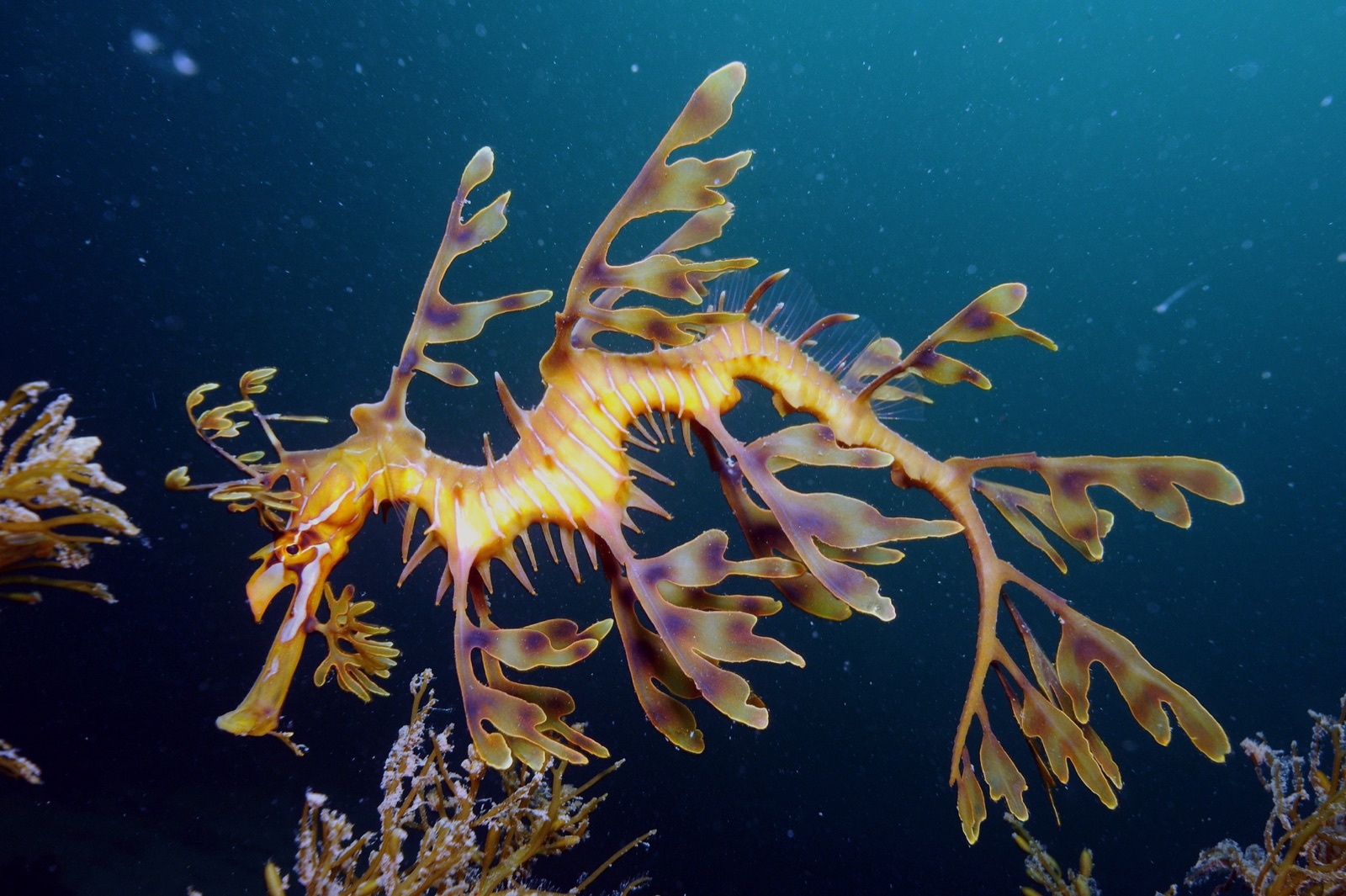
The leafy seadragon does not look like a fish even while you watch it swim. Leaf-shaped skin lobes sprout from head, trunk, and tail until the animal reads as drifting kelp; propulsion comes from small, nearly transparent fins, so it hangs and pivots like weed obeying a private current. Leafies live only along Australia's southern coast, working kelp lines, seagrass edges, and jetty piles for mysid shrimp taken through a pipette snout. Males carry the brood, eggs pressed onto a patch beneath the tail for six to eight weeks. South Australian jetty and bay dives made the species a pilgrimage animal, and the rules reflect its status: fully protected, never touched, never herded into open water for a photograph. Move with the swell, keep the lights low and brief, and let the kelp keep pretending.
Dónde y cuándo ver uno
"Residente" significa que la mayoría de las inmersiones en ese destino tienen encuentros con ellos; "estacional" significa que su presencia es fiable en los meses indicados; cualquier otra cosa es un extra, no algo con lo que contar.
| Destino | Fiabilidad | Meses | Notas |
|---|---|---|---|
| South AustraliaAustralia | Resident: seen on most dives | Todo el año |
El mejor mes, de un vistazo
| Mes | Destinos fiables |
|---|---|
| January | South Australia |
| February | South Australia |
| March | South Australia |
| April | South Australia |
| May | South Australia |
| June | South Australia |
| July | South Australia |
| August | South Australia |
| September | South Australia |
| October | South Australia |
| November | South Australia |
| December | South Australia |
Comprendiéndolos
Hábitat: Kelp and macroalgae beds, seagrass edges, and jetty piles over sand in cool southern Australian water.
Rango: Southern Australian coast only, roughly from South Australia's gulfs west into southern Western Australia.
Comportamiento: Drifts among weed on nearly transparent fins, relying wholly on its leafy costume; males brood the eggs, carried on a patch under the tail for roughly six to eight weeks.
Dieta: Mysid shrimp and other small crustaceans sucked through the pipette snout in vast numbers.
Tamaño: normalmente alrededor de 0.24 m; documentado hasta 0.35 m (total length).
Cómo comportarse cerca de uno
Fully protected: never touch, herd into open water, or crowd for a cleaner backdrop; move with the swell, keep lights brief, and stay at the animal's level rather than above it.
Conservación
Least Concern under its current assessment and fully protected in Australian waters; habitat loss along the southern coast and past curio collection drove the protections.
Puntos conocidos por avistamientos
Los puntos destacados fueron registrados para esta especie por nuestros editores; los números son registros de ocurrencia de GBIF anotados en un radio de unos 5 km de un punto desde 1990.
Ver
Desde los canales oficiales

Wildlife of Monterey | New film in our auditorium

Live Aviary Cam | Monterey Bay Aquarium

Live Aviary Cam | Monterey Bay Aquarium
Los vídeos son enlaces insertados a los canales de sus propios creadores. No alojamos nada y acreditamos todo.